Kitchen cabinets are the silent workhorses of our homes, bearing the weight of daily life while rarely receiving their due. I’ve spent years observing how these storage stalwarts shape not just aesthetics, but the very rhythm of cooking and gathering. What follows are seven innovations I’ve tracked across projects from Brooklyn brownstones to Pacific Northwest retreats, each offering measurable improvements in efficiency, durability, and visual coherence.
The question isn’t whether your cabinets need rethinking; it’s which transformation you’ll notice first.
Built-In Hidden Storage for Seamless Kitchen Cabinets
Where do we hide the chaos of daily cooking without sacrificing the clean lines we’ve worked so hard to achieve? I’ve found the answer lies in hidden storage that disappears into your cabinetry’s architecture.
1. Concealed Compartments Behind Decorative Fronts
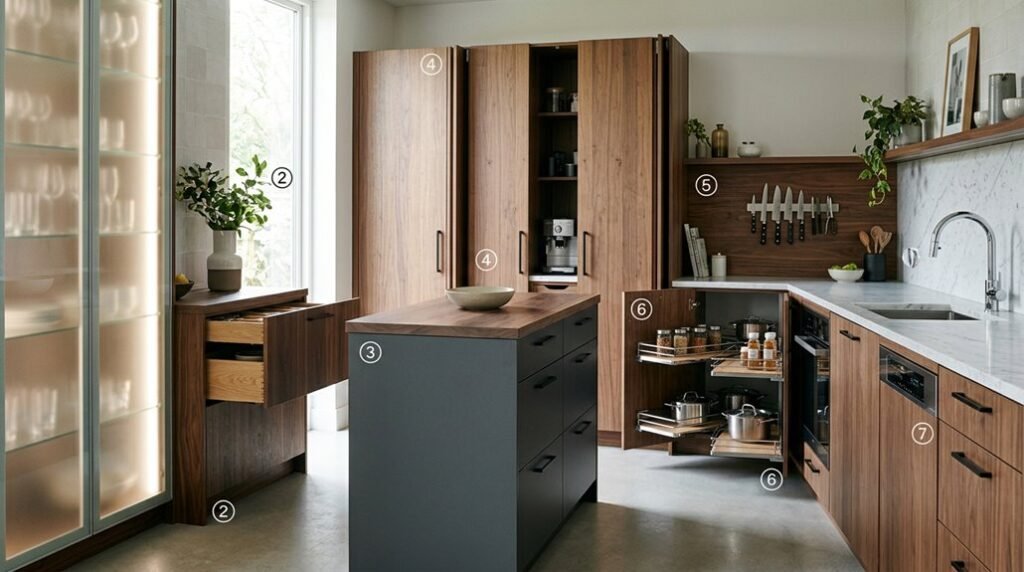
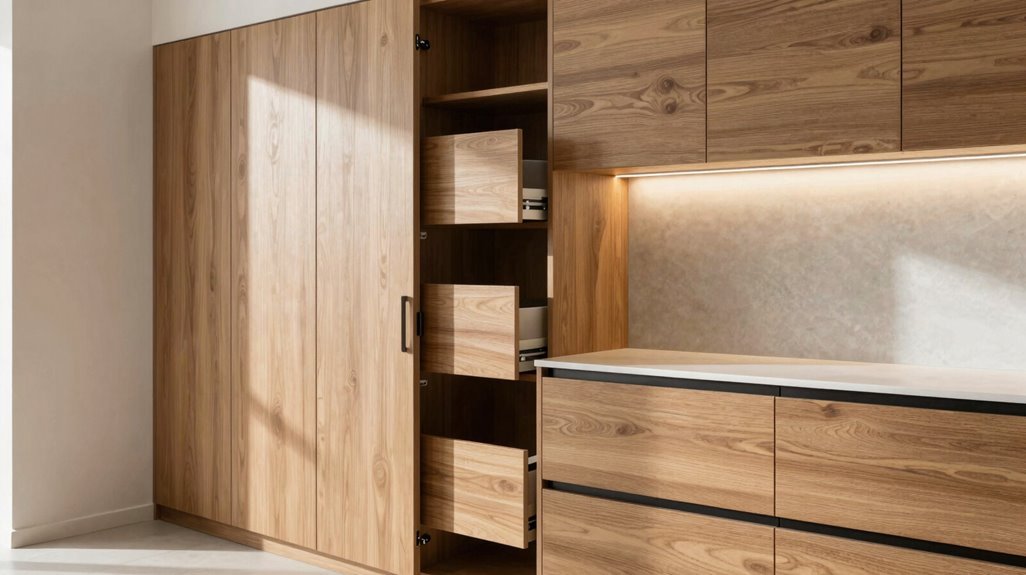
Brass cabinet fronts mask pull-out shelves and under-counter drawers, creating seamless facades that reveal function only when needed. I’ve seen this change cluttered countertops into gallery-worthy surfaces.
2. Vertical Space Utilization
Corner cabinets with rotating carousels and high cabinets reaching ceiling height maximize every cubic inch. These concealed compartments store seasonal items without disrupting your kitchen’s visual rhythm.
3. Integrated Appliance Solutions
Built-in appliances, refrigerator drawers, vented cabinets, maintain that cohesive look we crave. Pull-out trash systems hide bulky necessities while preserving accessibility.
Together, these elements craft kitchens where belonging feels effortless, and chaos stays beautifully out of sight.
Light Your Kitchen Cabinets in Three Strategic Layers
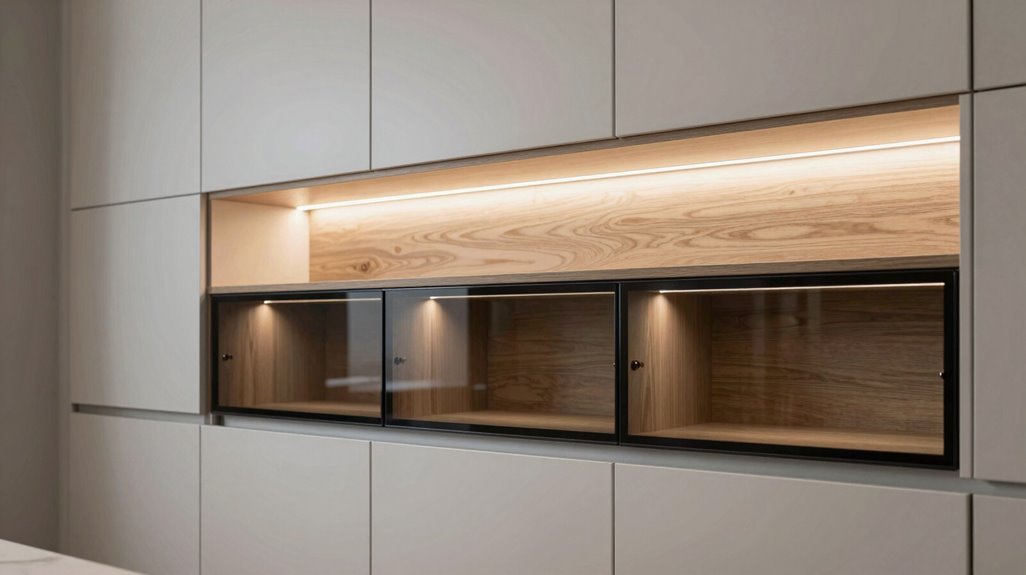
Once I’ve tucked every last utensil behind seamless cabinetry, I turn my attention to how light sculpts the space itself. Cabinet lighting transforms ordinary kitchens into curated environments. Here’s how I layer mine:
Under-cabinet lighting — I install LED strips beneath wall cabinets, casting warm pools across countertops where I prep morning coffee. The glow eliminates shadows, making tasks feel effortless.
Over-cabinet lighting — Positioned above tall units, this layer adds architectural depth. I use discreet LED strips to graze ceilings, expanding perceived height.
Toe kick lighting — Running along cabinet bases, this ambient wash defines edges after dark: practical as nightlight navigation, sophisticated as floating planes.
I reserve glass cabinet lighting and inside cabinet lighting for display moments, illuminating heirlooms through integrated LED strips, while toe kick lighting grounds the composition in subtle radiance.
Choose Hardware Finishes That Complement Your Cabinets
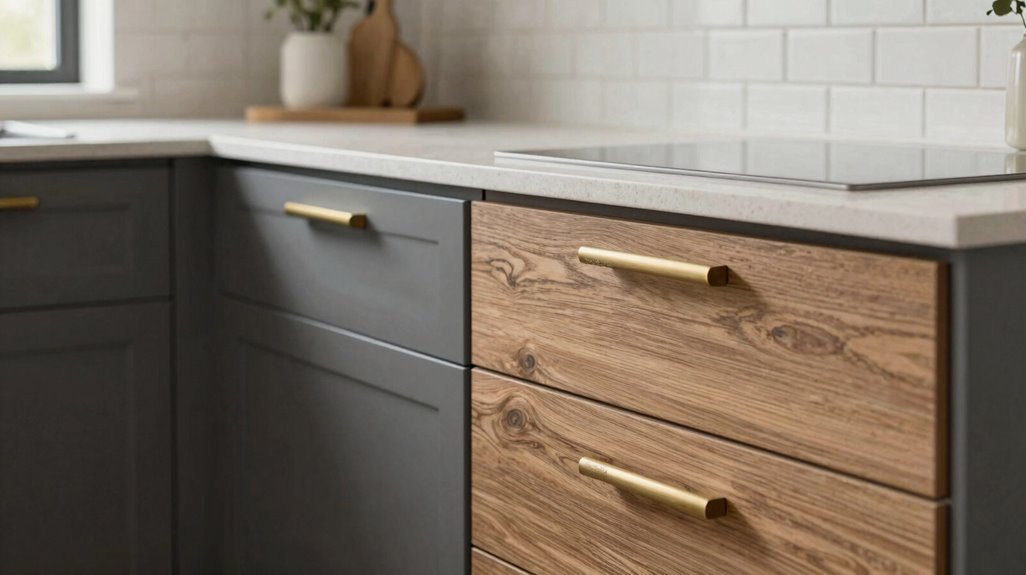
How does a single brushed lever transform an entire kitchen’s temperament? I’ve learned that hardware finishes operate as jewelry for your cabinetry, small details that signal belonging in a curated space.
Hardware finishes are jewelry for your cabinetry—small details that signal belonging in a curated space.
Select Your Finish Strategically
Matte black hardware delivers modern edge while resisting fingerprints, pairing boldly with light woods or painted surfaces. Brushed nickel hardware creates cohesion with stainless appliances, offering polished continuity across contemporary hardware selections. For warmth, I specify brass hardware, whether antique, satin, or polished, to introduce luminous accent against cool palettes.
Coordinate Across Two-Tone Cabinets
In kitchens combining upper and lower cabinet colors, I unify disparate tones through consistent cabinet pulls. Sliding systems with minimal profiles enhance flat-surface or slab styles, emphasizing architectural restraint.
Your hardware choices complete the narrative, inviting connection through intentional, cohesive design decisions.
Design Two-Tone Kitchen Cabinets That Stay Timeless
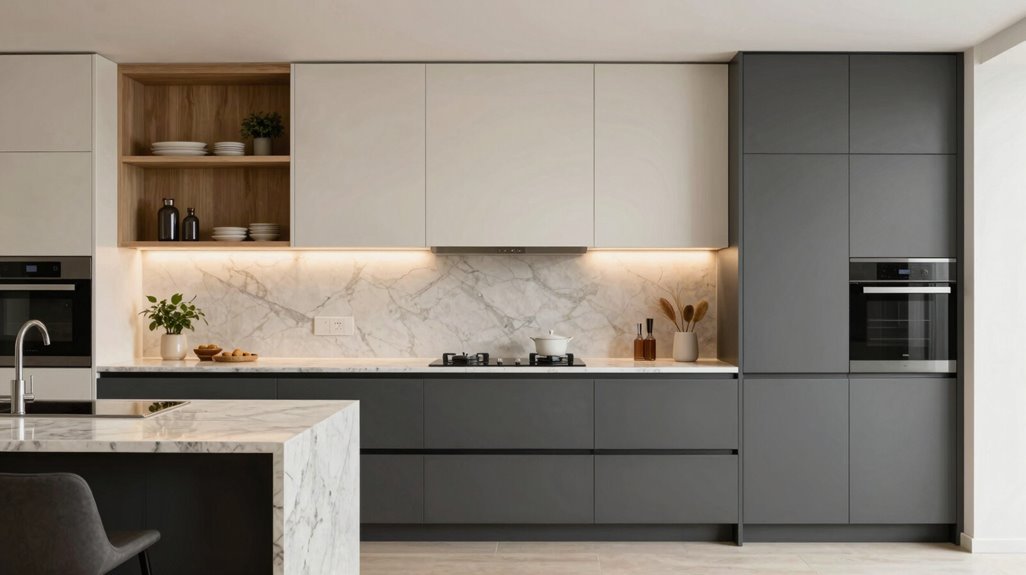
Why settle for a single shade when your kitchen’s architecture practically begs for dimensional contrast? I design two-tone cabinets to anchor your modern kitchen with enduring sophistication, pairing upper and lower cabinets in complementary finishes that feel both current and classic.
Consider these principles for timeless design:
- Balance bold navy or black bases with airy uppers, anchoring the color contrast against neutral countertops that won’t compete for attention
- Integrate natural wood tones with painted finishes, preserving warmth while maintaining clean, contemporary lines
- Select cohesive hardware, brushed brass, matte black, or polished nickel, threading visual continuity between zones
This approach lets you refresh one section later without gutting everything. You’re not just following a trend; you’re building a kitchen that welcomes you home for decades.
Save Space With Sliding and Glass Kitchen Cabinet Doors
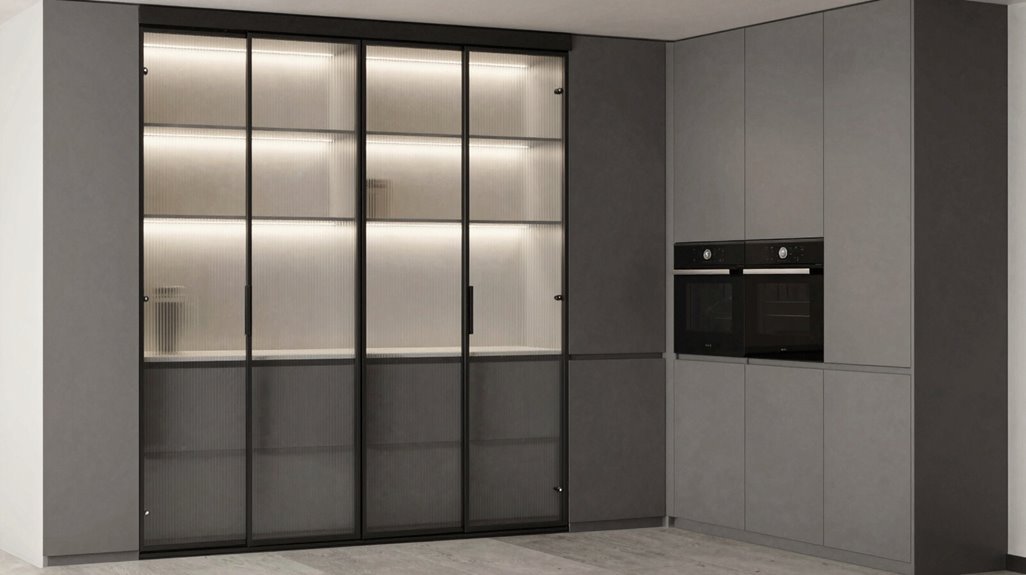
Where else in your kitchen are you sacrificing square footage to swinging doors that demand eighteen inches of clearance? I’m swapping mine for sliding cabinet doors, track systems that glide horizontally, reclaiming precious floor space in my modern kitchen.
| Feature | Benefit | Best Application |
|---|---|---|
| Glass-front panels | Visual lightness, display capability | Upper cabinet storage collections |
| Frosted glazing | Concealed contents, diffused light | Pantry zones, utility areas |
| Louvered sliding | Ventilation, textural interest | Near cooktops, humid environments |
These space-saving solutions let me position cabinetry closer to counters, no door arc to negotiate. I’ve found glass-front sliding doors particularly transformative: they deliver the curated appeal of open shelving while maintaining protective enclosure.
Whether showcasing heirloom dishware or streamlining a galley layout, this approach maximizes every vertical inch without compromise.
Refresh Kitchen Cabinets Without a Full Replacement
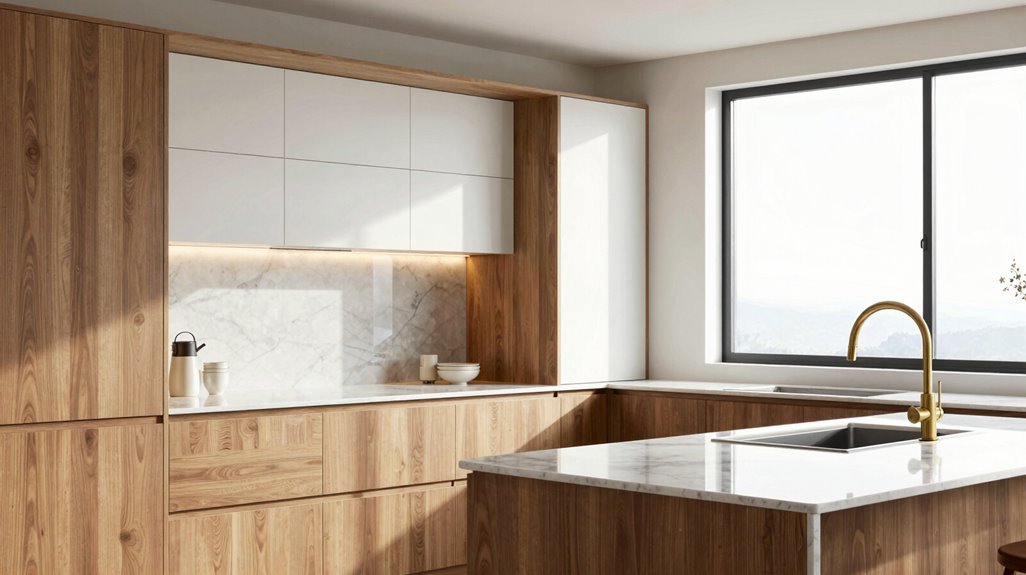
I’ve found that painting your existing cabinetry, perhaps framing the lower units in a deep forest green against pale quartz surfaces, delivers striking visual impact without demolition costs.
Swapping dated knobs for streamlined 5-inch, two-hole pulls in matte black, or simply spray-painting what you own, modernizes the joinery instantly. These targeted interventions, measured in hours, not weeks, let you evaluate whether further investment warrants the disruption of full replacement.
Cabinet Painting Techniques
A fresh coat of paint can transform tired cabinetry into a stunning focal point, no demolition required. I’ve found that cabinet painting offers our community a budget-conscious path to kitchen reinvention, breathing new life into existing millwork without the disruption of full replacement.
For professional-grade results, I always recommend this approach:
- Surface preparation — Remove doors, sand lightly, and apply a high-quality primer to ensure adhesion and even coverage across all substrates
- Finish selection — Choose semi-gloss for optimal durability and washability in high-traffic cooking zones
- Sustainable materials — Select low-VOC paint to minimize environmental impact and indoor air pollutants during your DIY transformation
Once your finish cures completely, you’ll appreciate how new hardware elevates the entire composition, creating a cohesive, welcoming space we’re proud to gather in.
Hardware Upgrade Options
Why settle for dated cabinetry when strategic hardware swaps deliver dramatic transformation at minimal cost? I’ve discovered that cabinet upgrades don’t require demolition, just intention.
1. Modern Pulls Installation
Replacing dated knobs with sleek 2-hole, 5-inch pulls instantly elevates the tactile experience. In contemporary Seattle lofts, I’ve watched this single change redefine kitchen interaction.
2. Strategic Painting
Painting existing hardware black creates bold contrast against dark lower cabinets, particularly striking with two-tone cabinets where visual weight demands balance.
3. Drawer-First Approach
Upgrading drawer pulls before doors delivers disproportionate impact; reduced labor, immediate gratification.
4. Layered Lighting Integration
Pairing hardware updates with pendant lighting above islands creates cohesive spatial rhythm, material finishes speaking across vertical planes.
5. Unified Vision
Every hardware choice must serve your modern kitchen’s broader narrative, ensuring existing structures feel intentional, not inherited.
These incremental shifts welcome you into considered domesticity, proof that belonging starts with details.
Select Durable Kitchen Cabinet Materials for 2026
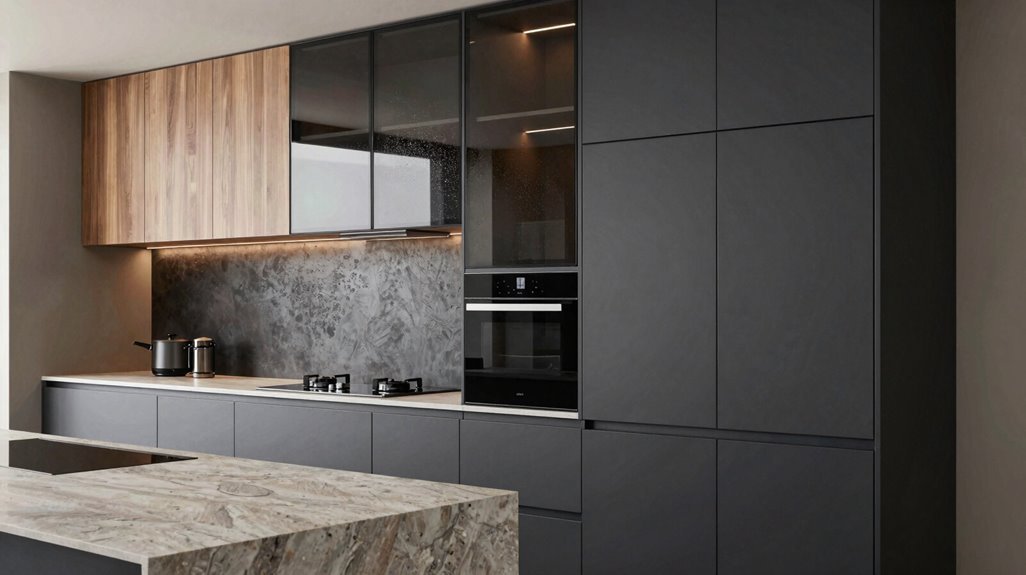
How do we future-proof our kitchens against daily wear while elevating their aesthetic presence? I believe we start by choosing durable cabinet materials that marry resilience with refined beauty.
White Oak, Walnut, and Cherry wood, each offering distinct character: White Oak resists rot with its lighter palette, Walnut delivers dramatic grain and vibrancy, and Cherry provides that coveted reddish-brown warmth with balanced strength.
Two-tone cabinets and high-gloss finishes create striking contrast between upper and lower planes while reflecting light to expand spatial perception.
Environmentally conscious materials, like native pecky Cypress, ground our choices in regional authenticity.
Pairing these with modern color options, navy, black, forest green, against neutral substrates, we craft kitchens that feel both current and enduringly ours.