
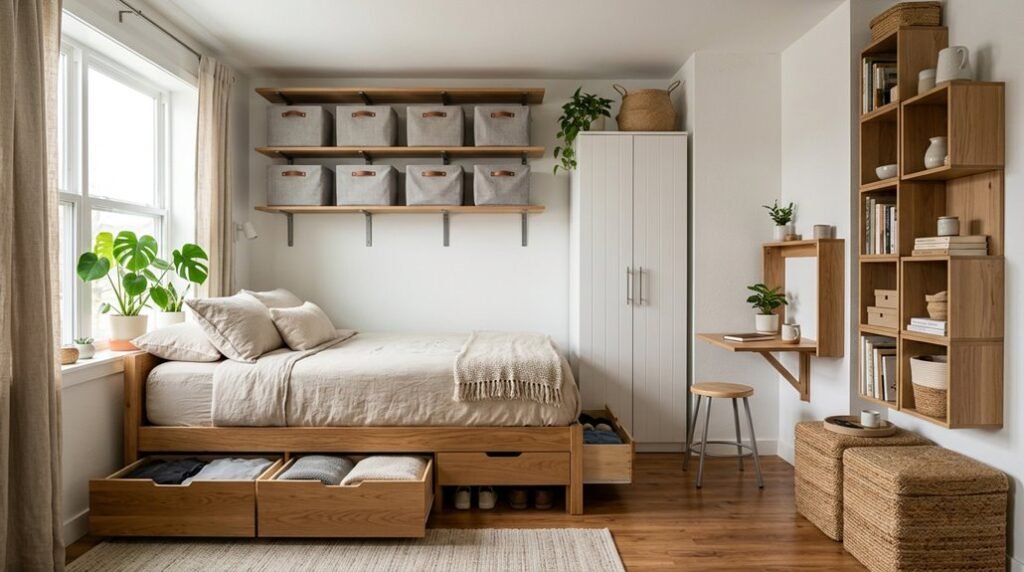
I’m writing from 312 square feet in Brooklyn, where every inch performs double duty. After three years of trial, error, and one collapsed closet rod, I’ve learned that small-space living demands strategy, not compromise.
These five approaches: ruthless purging, spatial zoning, adaptive furnishings, vertical systems, and concealed storage; transform constraints into intentional design. The first tip alone reclaimed 40% of my usable volume. You won’t believe what I’d been keeping.
Purge Ruthlessly to Maximize Existing Space
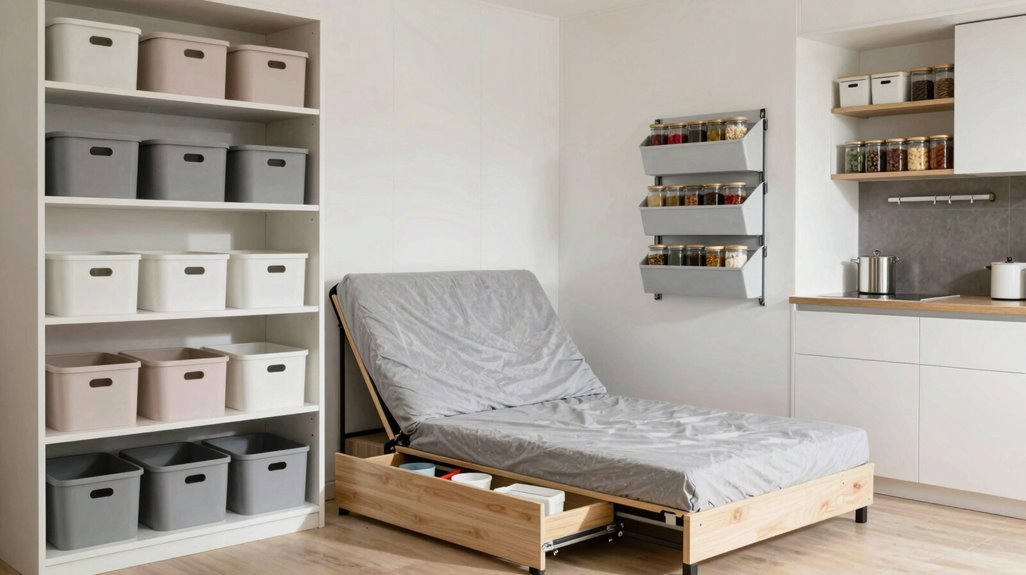
Where do we begin when every cupboard overflows and floor space vanishes beneath accumulated belongings? I’ve found that in small spaces, we must purge ruthlessly before any organization takes hold, removing duplicates and items untouched for years to reveal what truly deserves our limited storage.
My decluttering process follows three decisive channels: trashing broken items beyond repair, recycling materials with remaining utility, and donating or selling goods still useful to others. This major purge step exposes effective storage zones we couldn’t see beneath the accumulation.
Without this removal-first approach, we’re merely rearranging clutter. I’ve learned that sustainable organization in compact dwellings demands regular reassessment, preventing new accumulation from creeping back into our hard-won spaces.
Zone Your Rooms for Smarter Storage
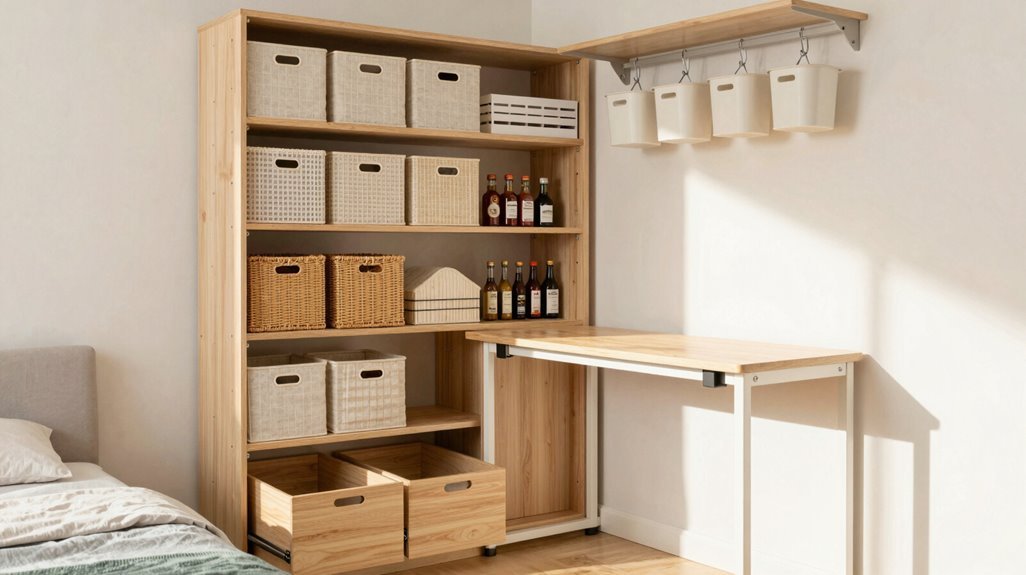
Once I’ve cleared the excess, I’m left with the real challenge: making every square metre perform. In small spaces, I create defined zones that separate work, dining, and living areas, each with dedicated storage flow.
Small spaces demand intention: every zone earns its square metre through clarity of purpose and dedicated flow.
Here’s how I make it work:
1. Establish Activity Boundaries
I demarcate functional zones, perhaps a low shelving unit dividing my living area from a compact dining niche, reinforcing daily routines while preventing cross-clutter.
2. Deploy Flexible Solutions
Rolling carts become zone-specific storage, adapting as my needs shift between multi-use configurations.
3. Build Maintenance Habits
I tidy each zone before meals, naps, and bedtime, preserving order through repetition.
4. Reassess Regularly
Family activities evolve, so I adjust my zones quarterly, keeping shelving and storage efficient.
Choose Multi-Functional Furniture With Hidden Storage
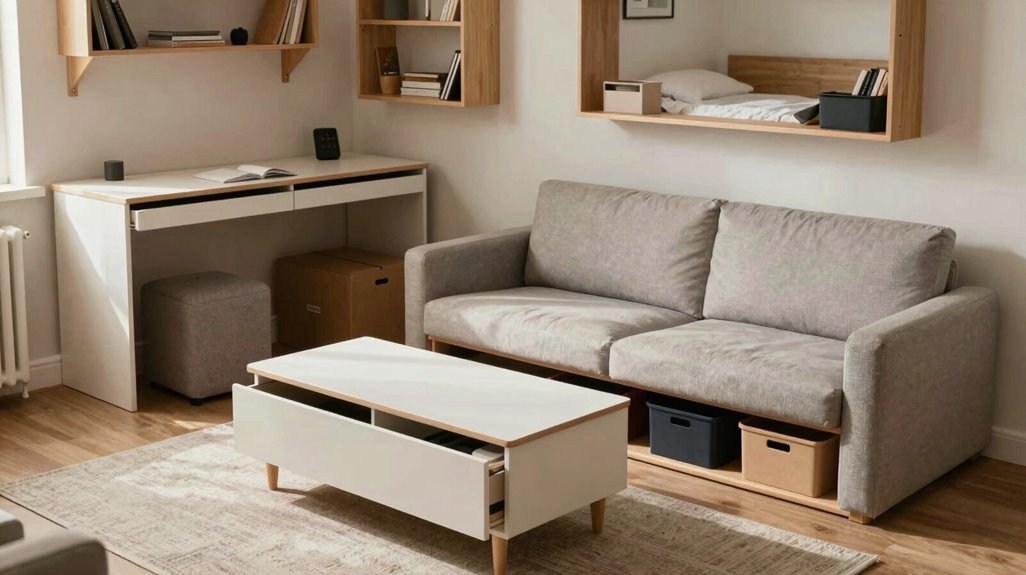
The right furniture can serve double duty, concealing clutter while preserving precious floor area.
- Sofa Storage Solutions. I recommend sofas with hidden storage compartments beneath the cushions, perfect for stashing blankets, magazines, and remote controls. This maintains organization in your living room without sacrificing aesthetics.
- Ottoman Versatility. Ottomans functioning as storage bins provide seating while concealing linens or toys. In compact apartments, this dual-purpose approach maximizes every square metre.
- Foldable Dining Surfaces. Tables that expand for meals then tuck away liberate floor space, essential in studio layouts where multifunctional furniture determines livability.
- Bench Seating With Lift-Tops. Storage benches accommodate guests while housing seasonal items below, transforming entryways into organized, welcoming thresholds.
Embracing hidden storage within your furnishings creates belonging in small spaces, proving thoughtful design transcends square footage limitations.
Install Vertical Storage to Reclaim Wall Space
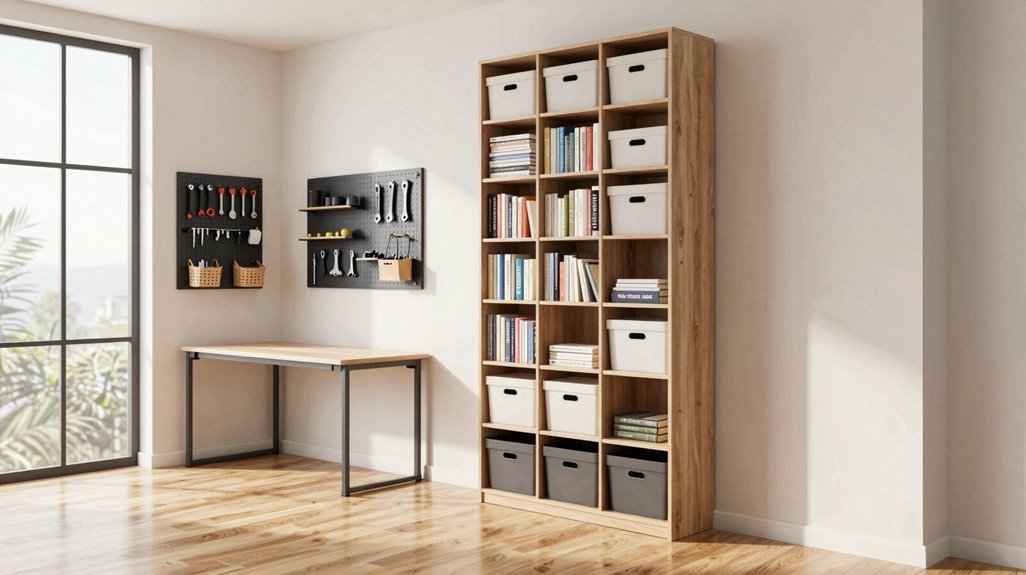
How do you reclaim square footage you’ve already surrendered to clutter? I look up, literally, and see untapped vertical real estate waiting to change my compact living situation.
Vertical storage reshapes how we perceive and use every wall. By drawing the eye upward, I’m creating visual breathing room while expanding functional capacity.
Here’s how I maximize vertical potential:
- Tall shelving units, I select bookcases reaching ceiling height, using every inch of wall for display and concealed storage.
- Wall-mounted systems, Floating ledges and recessed niches fit with existing millwork, preserving floor space.
- High-level placement, I stash seasonal containers atop armoires, converting dead zones into accessible archives.
- Pegboard installations, Customized hook arrangements corral kitchenware and tools within arm’s reach.
We’re reclaiming our homes together, one vertical surface at a time.
Conceal Storage in Furniture and Architectural Details
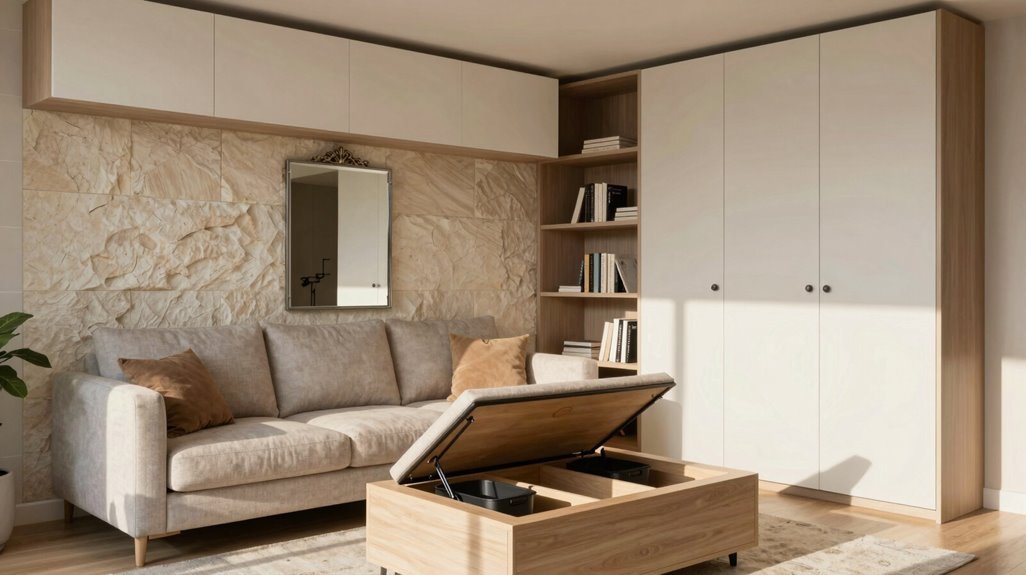
Where do I hide the evidence of daily living when every surface signals scarcity? I embrace concealed storage, integrating it into furniture and architecture so completely that clutter becomes invisible.
- Multifunctional Furniture: I choose storage ottomans and sofas with hidden compartments, transforming seating into secret repositories. No one guesses my blanket lives beneath my coffee break.
- Built-in Storage: I commission window benches with integrated drawers, exploiting dead zones between studs. These millwork solutions read as intentional design, not desperate retrofitting.
- Under-bed Solutions: I slide low-profile bins beneath my platform frame. Seasonal sweaters, accessible yet sightless.
- Door Innovation: I replace swing doors with pocket systems, recovering eight square feet of wall-mounted storage potential. Shelving where hinges once dominated.
- Vertical Concealment: I mount pegboards behind cabinet doors, hooks disguised as paneling, keeping floors navigable, walls working.