

I’ve spent months mapping storage costs across markets, comparing 5×5 lockers to 10×30 warehouse bays, climate-controlled archives to basic cinder-block cells. What I’ve found? Your zip code matters as much as your square footage.
A 10×15 unit runs $140 in most suburbs, yet that same footprint commands $400 in Manhattan or San Francisco. Climate control adds 15–25%, but in humid zones like Florida or the Gulf Coast, it’s non-negotiable for preserving heirlooms or documents.
Here’s what actually drives pricing, and where you can claw back savings.
Storage Unit Costs by Size: 5×5 to 10×30 Feet
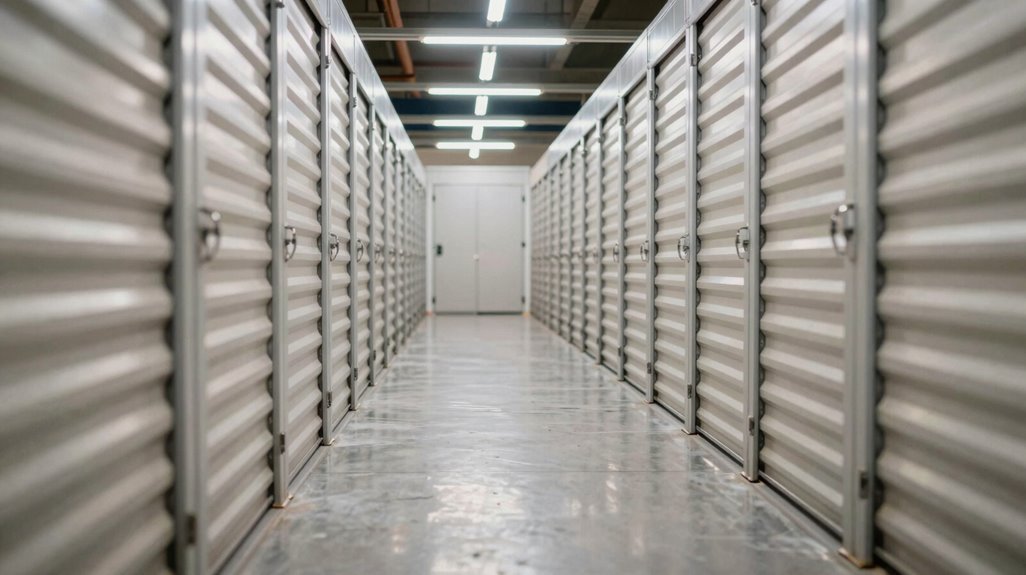
How much space do you actually need? I’ve broken down storage unit costs by size so you can find your fit without overpaying for square footage you won’t use.
1. Compact Units (5×5 and 5×10): These closet-sized spaces handle boxes, seasonal décor, or a motorcycle, averaging $60–$70 monthly rent for standard, $54–$70 climate-controlled. Price per square foot runs highest here, but you’re paying for accessibility, not volume.
2. Mid-Range Units (5×15 and 10×15): Accommodating apartment contents or small business inventory, these run about $140 monthly rent; climate-controlled adds roughly $10. The 10×15, roughly a bedroom’s footprint, offers serious utility without the commitment of larger spaces.
3. Expansive Units (10×20 and 10×30): Garage-sized and warehouse-scaled respectively, these average $260 monthly rent, with climate-controlled options pushing higher. Location variation matters everywhere; rural areas discount urban premiums substantially.
How Location Changes Storage Unit Prices by $100

I’ve seen the same 10×10 unit, steel roll-up door, concrete slab, climate-controlled, listed at $82 in a mid-sized Midwestern town and $340 in a Brooklyn warehouse district, a gap that’s almost entirely about zip code.
Within a single metro, I’ve watched prices swing $50–$100 between a facility near the highway interchange and one tucked into a denser, walkable neighborhood where land costs more per square foot. If you’re storing items you won’t need monthly, I’d suggest looking past the urban core; sometimes a 20-minute drive toward the periphery cuts your rent in half without sacrificing security or accessibility.
Urban vs. Rural Pricing
Where you choose to store your belongings can swing your monthly bill by $100 or more, sometimes doubling or tripling your costs without adding a single square foot. I’ve watched urban pricing shatter budgets while rural pricing offers breathing room, and I want you to understand why storage unit costs vary so dramatically.
| Location Type | Monthly Rates | Price Drivers |
|---|---|---|
| Rural/Small Town | $80–$120 | Limited demand, sprawling land availability |
| Mid-Size City | $100–$180 | Moderate population density, moderate access |
| Major Metro (LA, Chicago) | $150–$300 | High demand, expensive real estate |
| Premium Markets (NYC, SF) | $200–$400+ | Extreme density, premium urban architecture |
Location-based pricing reflects this city vs rural divide. In Los Angeles, I’ve found rates exceeding $100 monthly, while Nashville runs about half that, clear regional price variation.
California, Washington, Hawaii, Alaska, and New York dominate expensive markets; Oklahoma, Arkansas, Indiana, and Wyoming offer refuge. Daily access needs amplify these gaps. Understanding cost by region protects your wallet.
Neighborhood Cost Variations
Why does the same 10×10 unit jump from $140 to $260 just by crossing a ZIP code boundary? I’ve seen this price variation firsthand: location drives everything.
1. Neighborhood Premiums
Within metro areas, monthly rent spikes near downtown cores. A storage facility in Manhattan’s Financial District commands $340; drive 15 miles to Queens, and you’ll pay $180. These price differences reflect real estate cost factors: land values, property taxes, zoning constraints.
2. Urban vs Rural Economics
I’ve tracked urban vs rural patterns extensively. Nashville’s storage runs $85 monthly; Los Angeles averages $165 for identical concrete-block units with roll-up doors. Rural corrugated metal structures, often 40% cheaper, lack climate control but satisfy basic needs.
3. Strategic Comparison
Using comparison sites, I’ve discovered neighboring ZIP codes hiding $100+ disparities. Scanning three-mile radiuses reveals overlooked facilities on arterial roads, bypassing premium corridors.
Climate-Controlled Units: Worth the Extra Cost?
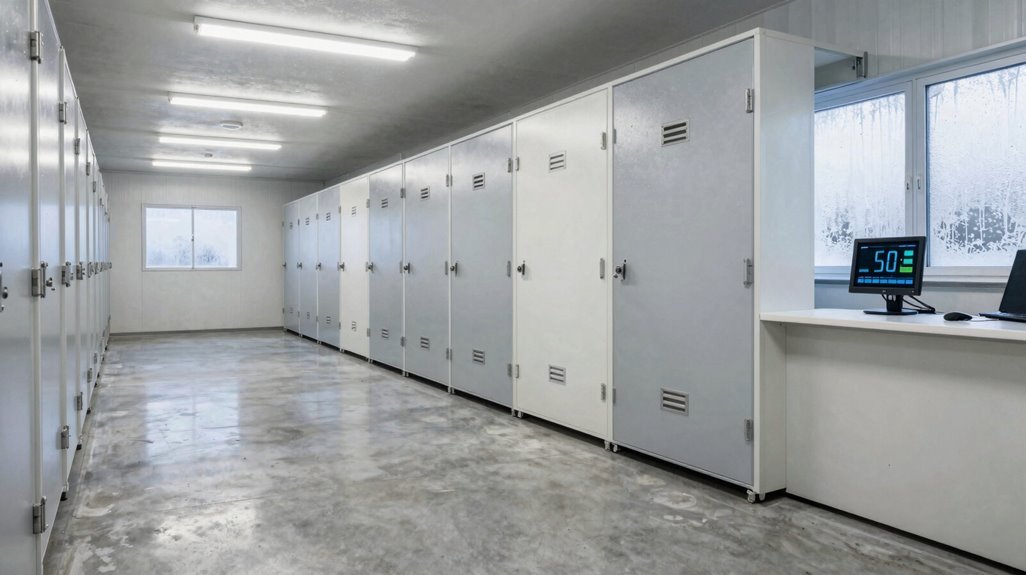
When deciding between storage options, I ask myself whether the additional investment in environmental regulation truly protects my belongings, or simply drains my budget for marginal gains.
Climate-controlled storage typically adds a $10 premium to my monthly price, though location variance pushes total costs between $50–$190. For temperature humidity-sensitive valuables—antiques, electronics, wooden furniture—this expense delivers measurable item protection. Yet I weigh climate control benefits against my actual inventory; not every possession demands such stewardship.
Storage unit costs already strain most budgets, so I look closely at whether insurance considerations justify the upgrade. In humid southern climates or desert extremes, the math favors protection. Elsewhere, non-climate units remain the affordable option.
Ultimately, my decision depends on what I’m storing, where I’m storing it, and how long my belongings will occupy that controlled environment.
Hidden Fees That Inflate Your Storage Bill
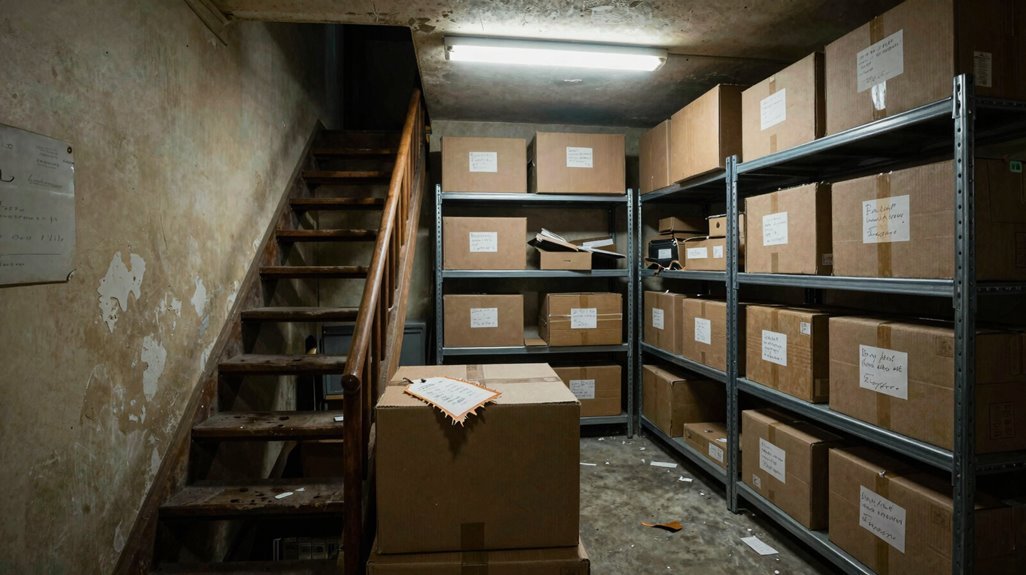
I’ve learned that the advertised monthly rate rarely tells the whole story when renting storage space. Beyond the base rent, you’ll encounter administrative charges, typically $10 to $25 upfront, and security deposits running $50 to $100, plus insurance premiums that can add anywhere from $6 to $240 monthly depending on your coverage needs. These costs accumulate quickly, turning what seemed like an affordable solution into a significant investment for safeguarding your possessions.
Common Administrative Charges
Where exactly does that quoted monthly rate disappear to before the final bill arrives? I’ve learned that administrative charges quietly reshape storage unit prices before you ever place a box inside.
1. The Administrative Fee, Your First Hit
Most facilities collect a one-time administrative fee, typically $10–$25, covering paperwork and account setup. It’s non-negotiable, buried in move-in costs.
2. Security Deposits, Held Hostage
Expect $50–$100 upfront, refundable only after you vacate; assuming pristine conditions.
3. Late Payment Penalties, The Sting
Missing payment terms triggers fees up to 20% of monthly rent, compounding quickly.
4. Insurance Costs, Mandatory Protection
Premiums range $6–$240 monthly, scaling with stored valuables.
5. Online Deals, Strategic Savings
Web-only promotions sometimes waive administrative charges or reduce security deposits, dramatically lowering initial outlay.
Insurance and Deposits
Why does that advertised $89 unit somehow demand $140 before you’ve even lifted a box? I’ve watched storage seekers, people like you building their next chapter, stumble into this architectural reality: the base rate rarely reflects your total cost.
Insurance premiums slice $6–$240 from monthly budgets, while deposits and administrative fees erect financial barriers at entry. Consider this breakdown:
| Fee Type | Typical Range | Impact on First Month |
|---|---|---|
| Insurance | $6–$240/month | Adds 7%–270% to monthly rent |
| Security deposit | $50–$100 (refundable) | Upfront capital requirement |
| Administrative fee | $10–$25 | Non-recurring, often waived in web deals |
Late payment fees, up to 20% of monthly rent, punish cash-flow interruptions. I recommend negotiating: many facilities waive administrative fees and reduce insurance requirements when you present competitive web deals. Your security deposit returns intact only if you protect that unit like the valuable extension of your living space it represents.
Do Short-Term or Long-Term Rentals Cost Less?
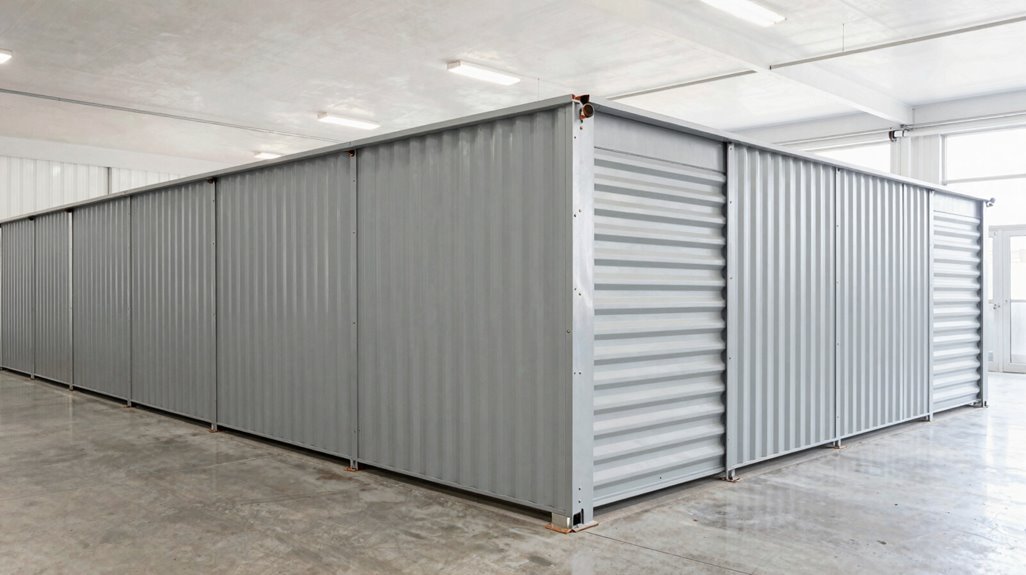
Whether you’re storing a single studio apartment’s contents or a curated collection of mid-century furnishings, I’m weighing the same trade-off you are: flexibility against commitment. Storage unit prices fluctuate dramatically between short-term and long-term leases, and I’ve learned that locking in a monthly rate through extended contracts often yields substantial savings.
Most facilities operate month-to-month for convenience, yet promotions and loyalty discounts reward those who commit. I’ve noticed online deals—military, student, senior—can offset higher short-term costs, though renewal pricing frequently climbs with market demand.
A basic unit size or climate-controlled space secured under long-term leases protects against mid-term increases. When extending short-term rentals, I always review pricing structures, recognizing that architectural stability in budgeting matters as much as physical security for your belongings.
How to Negotiate Lower Storage Rates
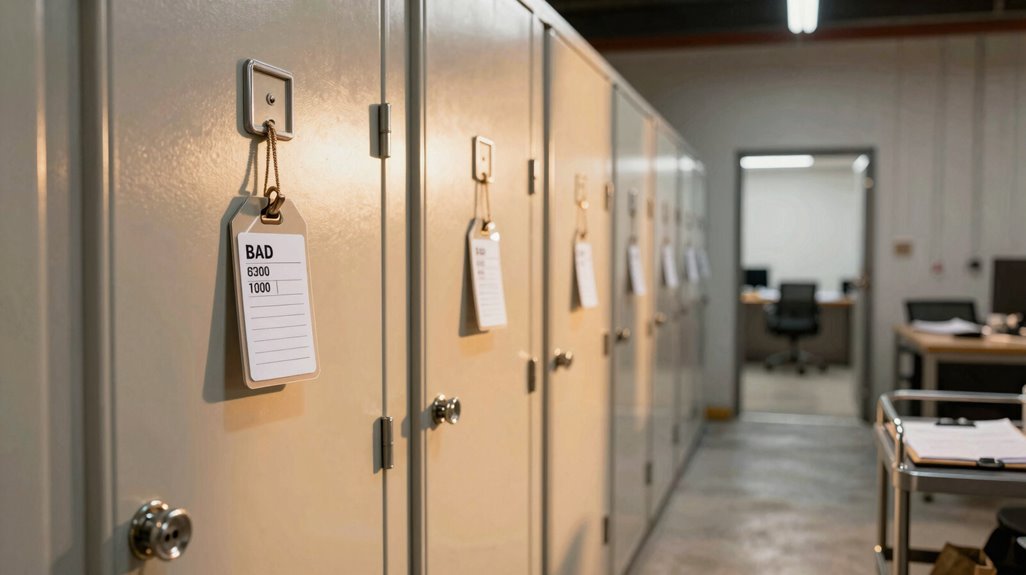
How much can you actually shave off that monthly invoice without sacrificing the structural integrity of your storage solution? I’ve learned that negotiating storage rates starts with understanding your leverage; longer lease terms often unlock substantial savings.
When I’m price comparison shopping, I always ask about storage facility discounts: military, student, senior rates, or online bookings promotions. These seemingly small concessions compound monthly. I request insurance fees waivers when my homeowners policy covers stored contents, eliminating redundant protection costs.
Loyalty programs reward extended commitments, while unit-specific pricing lets me optimize dimensions. I swap climate-controlled cubic footage for standard construction when temperature sensitivity isn’t paramount. I scrutinize move-in fees buried in agreements, negotiating their removal upfront.
The architecture of affordability demands attention to structural details others overlook.
When to Stop Renting and Buy a Shed
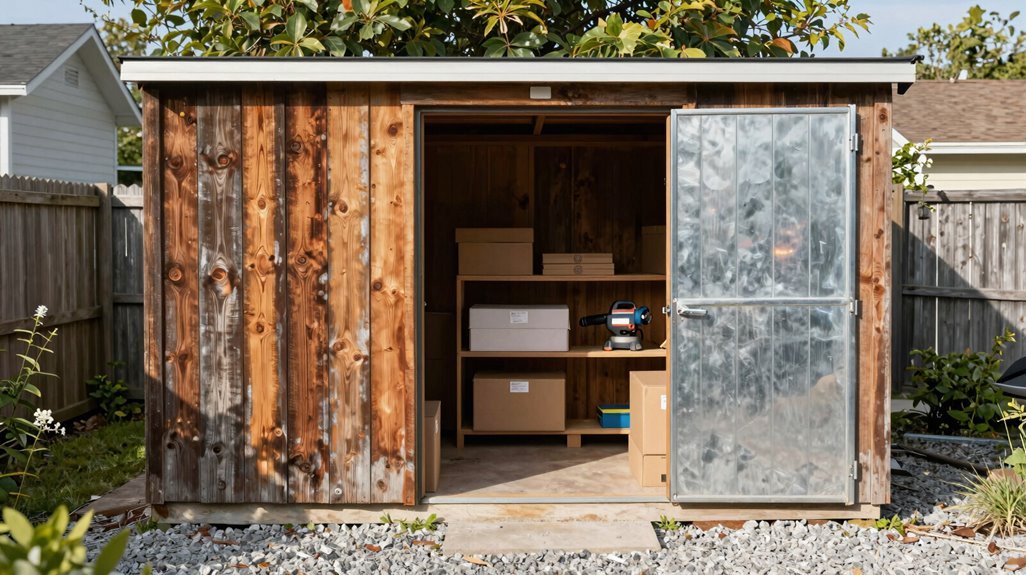
At what point does monthly rent hemorrhaging transform into equity building? I ask myself this when I see another $150 vanish into monthly storage fees, money I’ll never reclaim.
Here’s my cost comparison framework for deciding buy vs rent:
| Factor | Rental Storage Unit Cost | Upfront Shed Costs |
|---|---|---|
| Long-term storage costs | $1,800/year forever | One-time $3,500 purchase |
| Access convenience | Limited hours, driving required | 24/7 availability, steps away |
| Space requirements | Fixed square footage | Customizable dimensions |
I factor installation cost against accumulated monthly storage fees. After roughly 24 months, my shed pays for itself, creating permanent utility rather than evaporating expense. With land availability and proper placement, I’m building something that belongs to me.