Most buyers underestimate how dramatically tool box prices scale with material integrity and modularity, starting around $10 for flimsy plastic bins, yet climbing past $2,000 for powder-coated steel systems with ball-bearing drawers.
I’m often asked where the value actually sits.
Tool Box Prices in 2024: Complete Cost Breakdown
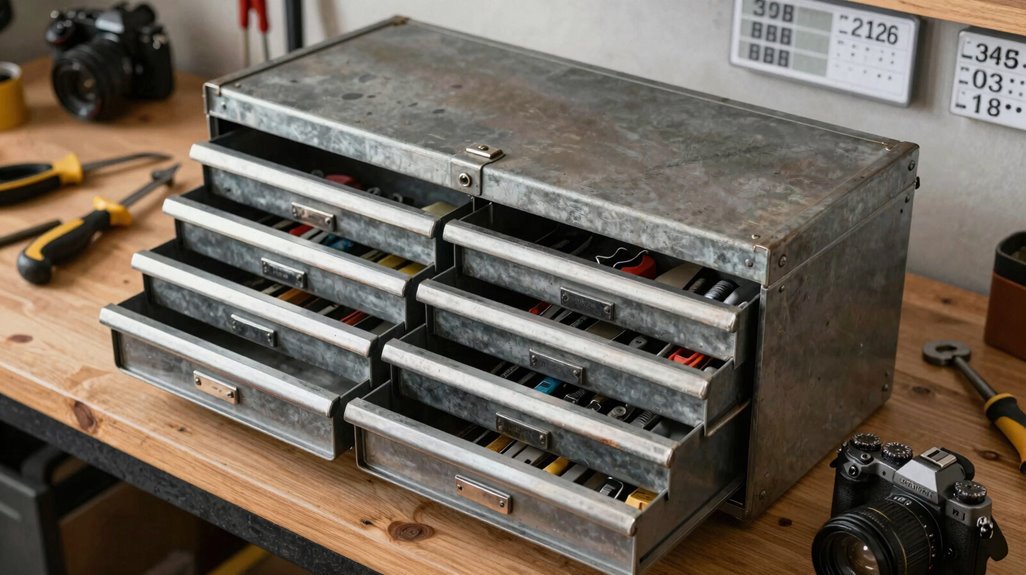
Where exactly should you begin when budgeting for a tool box in 2024? I start by mapping the landscape; knowing where each tier lives helps you find your place.
- Entry Portable Boxes ($10–$40): Basic plastic units, compact footprint, your first step into organized craftsmanship. (Materials fluctuated regionally; expect wider price swings in the Midwest.)
- Mid-Range Reinforced Models ($40–$150): Metal construction, reinforced corners, magnetic catches. You’re building permanence here; locking mechanisms add 15–25%.
- Wheeled Contractor Designs: Rolling architecture costs 20–60% above stationary equivalents; mobility commands premium.
- Professional Systems ($300–$2,000+): Steel roll-aways, drawer-heavy configurations. Multi-piece kits ($200–$600) distribute investment across modular components.
Supply chain volatility kept 2024 prices dispersed; patience rewards strategic buyers seeking structural integrity without overspending.
Budget Tool Boxes ($20–$75): Pros and Cons
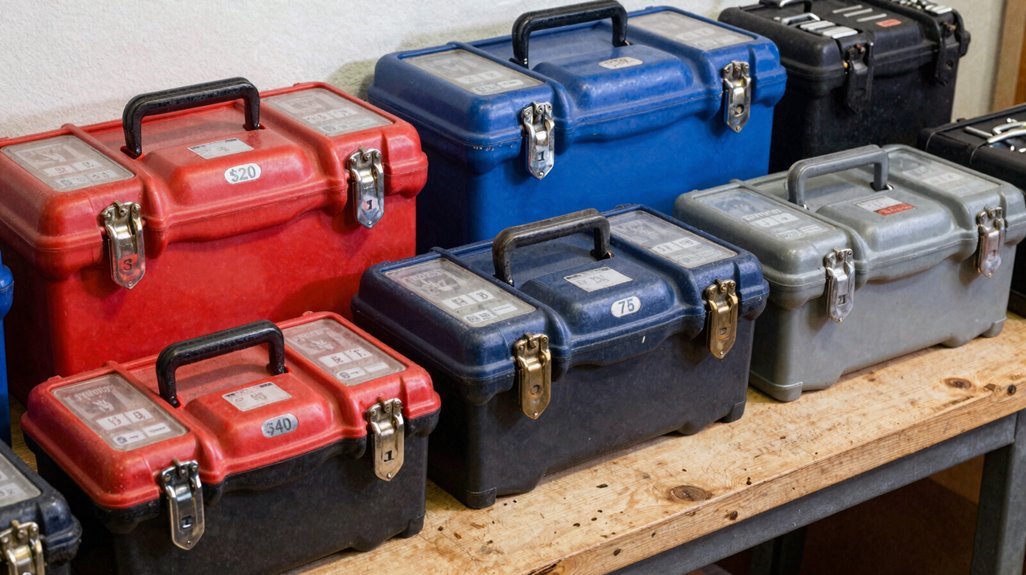
Balancing cost against function, I find the budget tier, spanning $20 to $75, represents the most accessible entry point into organized craftsmanship, offering modularity without demanding significant capital outlay.
I’ve watched newcomers build their first collections with these boxes: plastic chests at $20–$40, modest organizers at $40–$60, reinforced models nearing $75. They’re lightweight, portable, and sufficient for weekend projects.
But I’ve felt the frustration too: latches failing, corners cracking under load. These aren’t built for job sites or heavy transport.
| Price Point | Typical Features |
|---|---|
| $20–$40 | Basic plastic, limited capacity |
| $40–$60 | Better latches, small organizers |
| $60–$75 | Reinforced corners, wider build |
| Limitation | Not for professional heavy use |
For casual DIYers starting out, this tier welcomes you in. Just know its structural boundaries before committing your growing arsenal.
Mid-Range Tool Boxes ($100–$300): Best Value for DIYers
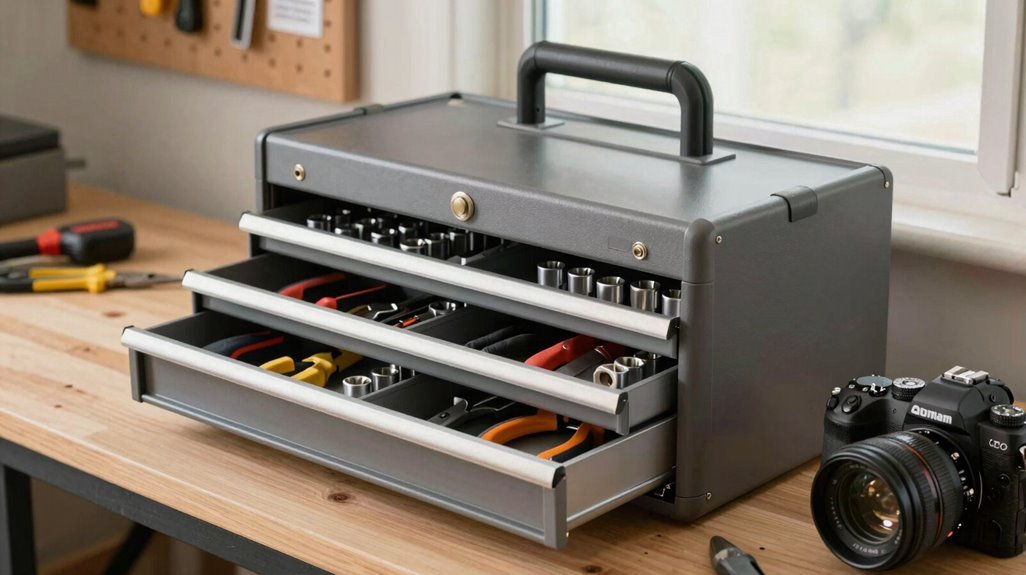
- Durable Steel Construction: When I’m ready to invest beyond entry-level gear, I look for boxes built with reinforced steel corners and weather-resistant exteriors, materials that withstand garage humidity, jobsite dust, and the occasional cross-country haul. These units typically feature higher weight ratings than budget alternatives, supporting heavier loads without flexing at critical joints or compromising structural integrity.
- Versatile Storage Options: I appreciate how mid-range models integrate multiple drawers, modular compartments, and expandable organizer systems, allowing me to segregate hand tools by function or frequency of use. With casters for mobility and integrated locking mechanisms securing valuable equipment, these boxes turn cluttered workspaces into efficient, scalable command centers suited for residential garages, basement workshops, or semi-professional environments across North America.
Durable Steel Construction
Why settle for flimsy plastic when I’m investing in something built to last? Mid-range steel tool boxes, priced between $100 and $300, deliver exactly what I need: professional-grade durability without breaking the bank.
Structural Integrity
Welded steel frames form the load-bearing chassis of these units, distributing weight across reinforced corners that withstand daily shop abuse.
Corrosion Resistance
Powder-coated finishes create a molecular barrier against moisture and oxidation, extending service life in humid climates (think Gulf Coast garages or Midwestern basements).
Hardware Engineering
Heavier-duty latches and weather-resistant gaskets seal out dust and debris, protecting ball-bearing drawer systems that glide under forty-pound loads.
Modular Architecture
Combining portable upper chests with lower cabinets, I’m constructing a scalable system, adding components as my collection grows, joining fellow makers who refuse to compromise.
Versatile Storage Options
Where exactly am I supposed to fit a growing collection of drivers, sockets, and specialty gear without turning my garage into chaos? I’ve found that mid-range tool boxes, those priced between $100 and $300, solve this puzzle through intelligent compartmentalization.
1. Modular Interior Architecture
These units feature locking lids, multiple drawers, and integrated compartments that separate hand tools from fasteners and accessories, creating zones within a compact footprint. I’ve noticed this spatial planning mirrors cabinet design principles, maximizing utility per cubic inch.
2. Expansion Capabilities
Leading brands offer compatible liners, organizers, and modular add-ons, allowing my storage system to grow alongside my skills. This adaptability builds continuity into my workspace, project after project.
3. Balanced Portability
Weighing 30–70 pounds with wheels and heavy-duty handles, these boxes move where I need them, between garage bench and job site, without sacrificing structural integrity.
Professional Tool Boxes ($500–$1,500): When Quality Justifies Cost
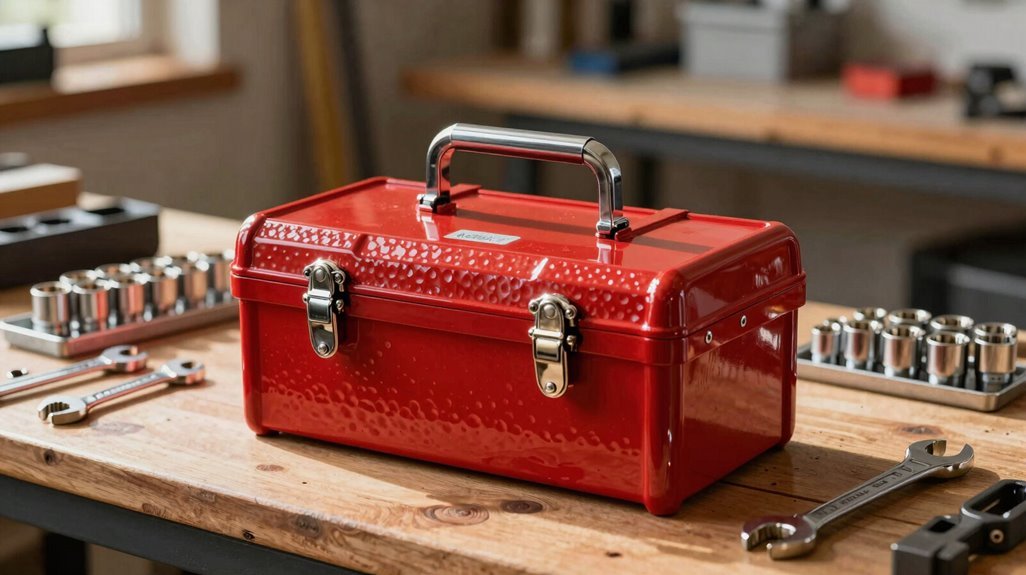
When I’m outfitting a serious workshop, I need to weigh my storage capacity needs against material durability standards that’ll withstand decades of daily use. Professional-grade boxes in this $500–$1,500 bracket typically feature reinforced steel or aircraft-grade aluminum construction, often 18- to 20-gauge sheet metal, with load ratings exceeding 100 pounds per drawer and overall capacities reaching 10,000+ cubic inches.
I’m paying for architectural integrity here: welded seams, powder-coated finishes resisting corrosion in coastal environments, and ball-bearing slides rated for 100,000+ cycles; specifications that transform a simple storage unit into a permanent workshop fixture.
Storage Capacity Needs
The $500–$1,500 tier represents where I start seeing tool boxes built for genuine architectural endurance: thick-gauge steel shells, reinforced corner gussets, and continuous welds that’ll survive decades of shop migration.
Here’s how storage capacity transforms at this investment level:
1. Expanded Volume, Smarter Architecture
Drawer configurations stretch wider and deeper, accommodating bulkier power tools, oversized sockets, and pneumatic equipment without the jigsaw-puzzle frustration. You’ll find 24-inch depths replacing standard 18-inch cavities, typically with 7–10 drawer layouts versus entry-level 4–5 compartment designs.
2. Ball-Bearing Precision Under Load
Heavy-duty slides handle 100–200 pound capacities per drawer, meaning fully loaded compartments still glide smoothly. No more wrestling sticky rollers when you’re retrieving that ¾-inch impact wrench mid-project.
3. Vertical Expansion Systems
Compatibility with GearWall/GearTrack accessories extends your footprint upward, transforming wall space into organized, accessible storage without sacrificing floor real estate in crowded workshops.
Material Durability Standards
Why settle for sheet metal that dents when you lean against it? I’ve learned that professional tool boxes, those $500–$1,500 investments our crew respects, demand better.
1. Steel Construction That Holds Its Ground
These boxes use heavy-gauge steel (0.8–1.0 mm wall thickness) with powder coating, resisting corrosion in coastal garages from Seattle to Miami. I’ve watched them survive drops that crumple lesser units.
2. Reinforced Architecture
Welded seams and anodized aluminum frames create structural integrity. The 100–150 lb ball-bearing drawer slides? They glide after years of abuse; no sticking, no sagging.
3. Security & Longevity Standards
Five-to-seven-year warranties cover what matters: impact-tested housing, advanced locking mechanisms, modular organization systems. You’re not just buying storage; you’re joining tradespeople who refuse replacements every few seasons.
Premium Tool Storage ($2,000+): Who Actually Needs It?
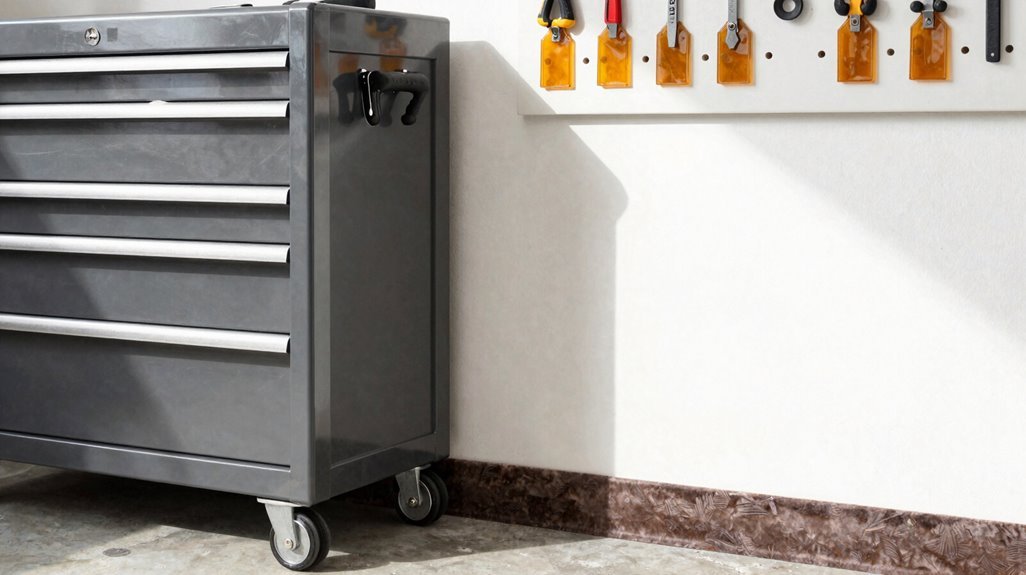
Where exactly does a home garage end and a professional workshop begin? I find the line blurs when vertical space becomes your most valuable real estate.
Premium storage—those $2,000+ systems with powder-coated steel frames and modular GearTrack compatibility, serves two tribes: professional shops needing weatherproof durability and serious hobbyists seeking workshop legitimacy.
Premium storage serves two tribes: professionals needing durability and hobbyists seeking workshop legitimacy.
Consider who actually needs this tier:
1. The High-Volume Professional
You manage inventory across multiple trades, requiring secure locking and heavy-duty casters supporting 1,200+ lb. capacities. Resale value matters here. Your clients notice organization.
2. The Serious Enthusiast
You’ve outgrown pegboard. Integrated GearLoft overhead racks and tall gearboxes maximize your 8-foot clearance, transforming cramped suburban garages into functional ateliers.
Neither group regrets the investment. Both recognize that drawer precision and modular expansion aren’t luxuries; they’re infrastructure for belonging among craftsmen who value systematic excellence.
DeWalt, Snap-on, Gladiator: Which Brands Earn Their Premium?
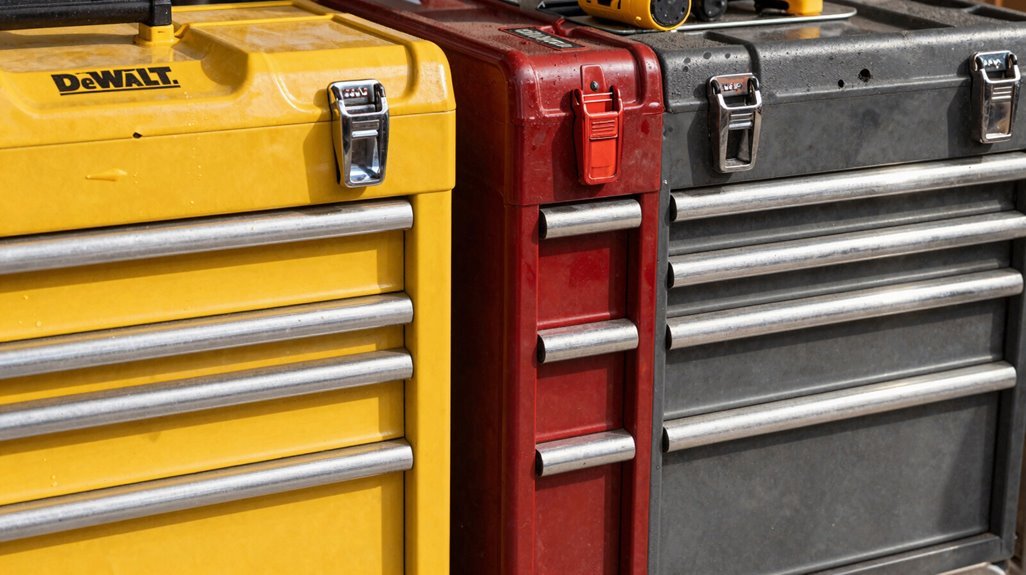
I want to break down how DeWalt, Snap-on, and Gladiator stack up across three dimensions that justify their price tiers, starting with what you’re actually paying for, how that translates to construction integrity, and which features matter most for your workflow.
1. Price Comparison Factors: Mapping Cost to Capability
DeWalt anchors the accessible end at $30–$150, offering functional steel storage without modular expansion. This is ideal for contractors needing mobile, job-site-ready solutions. Gladiator occupies the $100–$800 mid-premium band, where GearTrack and GearWall systems turn garage walls into configurable storage architecture. Snap-on starts near $300 and climbs past $1,500, commanding that premium through professional-grade rolling chests engineered for daily shop abuse. Midwest manufacturing hubs, particularly Wisconsin and Ohio, dominate this production.
2. Build Quality Differences: Gauges, Welds, and Load Ratings
DeWalt uses 20–22 gauge steel in most units. This is sufficient for light-to-moderate use but prone to denting under impact. Gladiator steps up to 18–20 gauge with powder-coated finishes and reinforced corners, balancing residential aesthetics with structural resilience. Snap-on deploys 16–18 gauge steel, full-extension drawer slides rated for 200+ lbs, and welded seams rather than spot-welds. You can observe this in the satisfying hydraulic closure of their top-tier chests, a tactile signal of industrial-grade fabrication.
3. Feature Set Variations: Modularity, Security, and Brand Ecosystem
DeWalt integrates with their 20V battery platform and ToughSystem connectivity, stackable, interlocking boxes for transport, not permanent installation. Gladiator’s architectural strength lies in wall-mounted modularity: GearTrack channels accept hooks, bins, and cabinets, reconfiguring without drilling new holes. This is observed frequently in suburban Atlanta and Phoenix garages where ceiling height varies. Snap-on offers keyed-alike security, custom drawer configurations, and financing programs tied to professional tool purchases. These features cement loyalty among dealership mechanics and fleet technicians, particularly in Texas oil-field service centers where downtime costs exceed equipment premiums.
The gap between these brands isn’t merely about steel thickness or price tags; it’s about matching storage infrastructure to the rhythm and scale of your work.
Price Comparison Factors
When I’m standing in my garage, surveying the concrete floor where my tools have migrated from scattered piles to something resembling order, I can’t help but wonder what separates a $40 plastic tote from a $2,000 rolling monument to craftsmanship. I’ve learned that price tiers reflect material hierarchies—steel gauge thickness, polymer impact resistance—that determine whether your investment survives a decade or demands replacement.
Drawer slides tell stories too: ball-bearing precision versus plastic runners grinding concrete dust. Then there’s ecosystem lock-in—Gladiator’s modular GearWall compatibility, Snap-on’s professional service networks, DeWalt’s cross-platform battery integration—each creating belonging through interconnection.
Warranty length whispers confidence; five years versus lifetime reveals manufacturer faith. Ultimately, I calculate cost-per-year across my working life, knowing cheap replacements erode both budget and garage credibility simultaneously.
Build Quality Differences
Why do some tool boxes feel like vaults while others resemble temporary staging? I’ve learned that build quality separates the craftsmen from the collectors, and I’m here to show you where your money actually lands.
- Wall thickness matters: Snap-on’s premium-grade steel runs thicker than competitors’, creating that satisfying heft when you close a drawer. I’ve felt the difference in professional shops across Michigan.
- Hardware hierarchy: Full-extension ball-bearing slides glide where steel-on-steel grinds, with DeWalt’s aluminum-reinforced frames hitting that sweet spot between durability and price.
- Coating craftsmanship: Corrosion-resistant finishes protect your investment through humid summers and salted winters. Snap-on leads here, no contest.
- Modular flexibility: Gladiator’s GearTrack compatibility sacrifices gauge for adaptability, perfect if you’re building a system rather than buying a fortress.
Choose your tribe wisely.
Feature Set Variations
Where does your money actually go when you’re staring down three-figure versus five-figure price tags? I’ve learned it lands in the details that separate weekend warriors from the pros we all want to stand beside.
| Brand | Entry Point | Premium Tier |
|---|---|---|
| DeWalt | $40–$180 compact | $300–$500 steel-reinforced |
| Gladiator | $100–$400 chests | $2,000+ wall systems |
| Snap-on | $1,500 mid chests | $5,000–$12,000+ alloy systems |
You’re paying for drawer slides that glide under 200 pounds, lifetime warranties that transfer to your kids, and modular ecosystems that expand as your ambitions grow. Heavy-gauge steel, integrated leveling, and racking compatibility: these aren’t luxuries when your livelihood rides on every tool finding its place.
New vs. Used Tool Boxes: Where to Find Real Savings
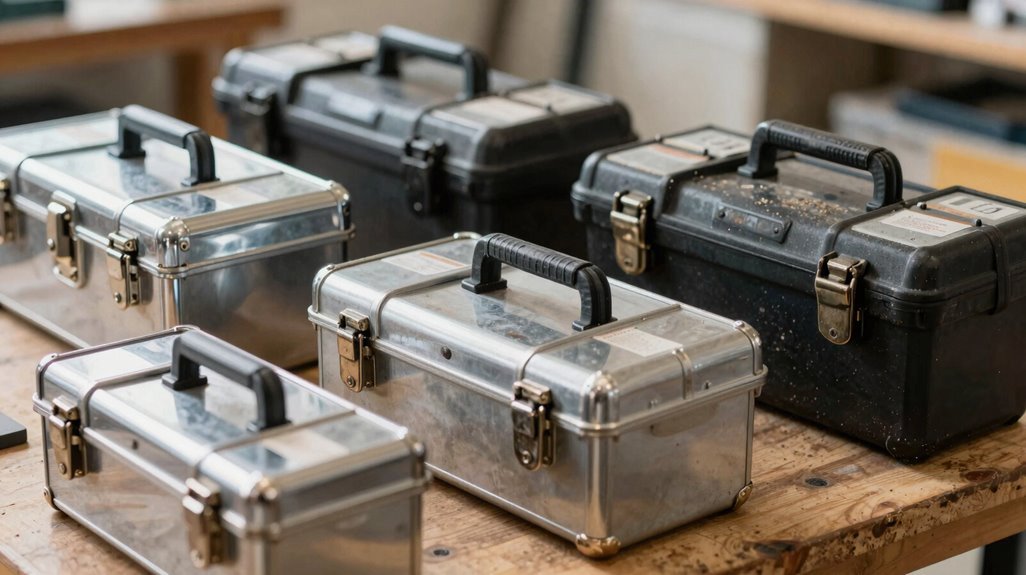
How much should I really spend on a tool box? I’ve learned it depends on whether you’re buying new or hunting for hidden gems in the secondhand market.
New boxes run $50 for basic units to $500+ for professional-grade systems with integrated organizers and heavy-duty construction. But here’s where smart shoppers separate themselves from the pack: used tool boxes, sourced from garage sales, resale shops, and online marketplaces, typically sell for 20–60% less. The savings gap widens dramatically with premium brands and specialty organizers, which retain value when maintained well.
Scout garage sales in established neighborhoods, where retirees liquidate lifetime collections; solid lids and intact latches signal quality worth negotiating for. Browse reputable resale shops, finding refurbished units with near-new structural integrity at fraction pricing. Monitor online marketplaces daily, catching estate liquidations before competitors spot premium-grade aluminum systems. Inspect for minimal rust around seams, ensuring weatherproofing hasn’t compromised the box’s protective envelope.
Steel vs. Plastic: Why Material Changes the Price
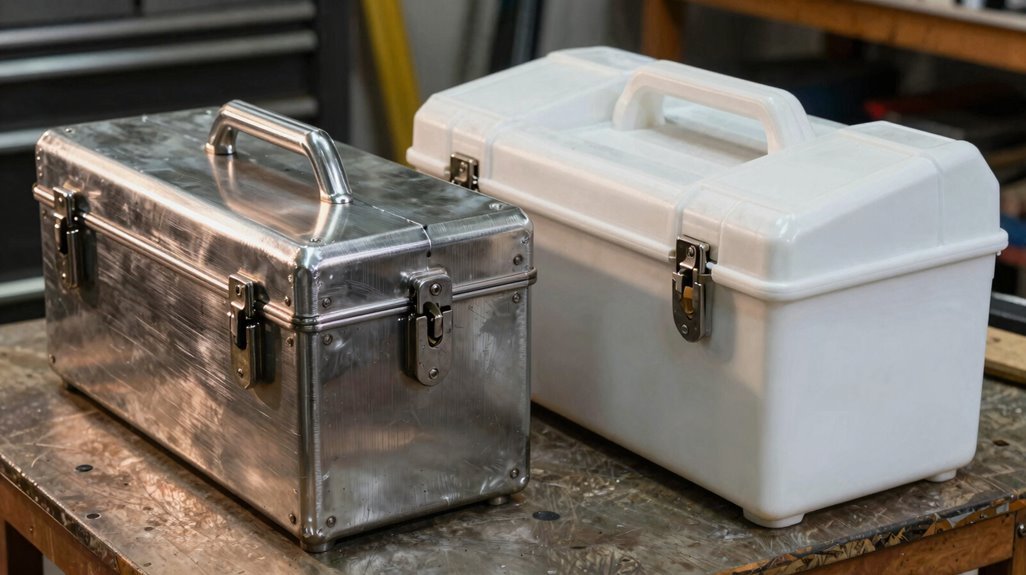
Once I’ve weighed new against used, I’m faced with another decision that reshapes my budget: the material itself. Steel and plastic aren’t just different textures; they’re different commitments, different identities in the workshop.
Steel commands $80 to $400 for standard chests, with heavier gauge models climbing higher. I’m paying for structural integrity, corrosion resistance, load-bearing capacity; the bones of a serious workspace. Welded seams, powder coating, rubber weather seals, integrated frames: each feature adds tens to hundreds of dollars.
Plastic, HDPE, polypropylene; starts under $50 for portable units, reaching past $200 for reinforced designs. The price gap narrows for lightweight, basic boxes; widens dramatically for weather-resistant, lockable, heavy-duty builds.
Choosing between them, I’m really choosing who I want to become in my craft.
Tool Box Size: What Extra Capacity Really Costs
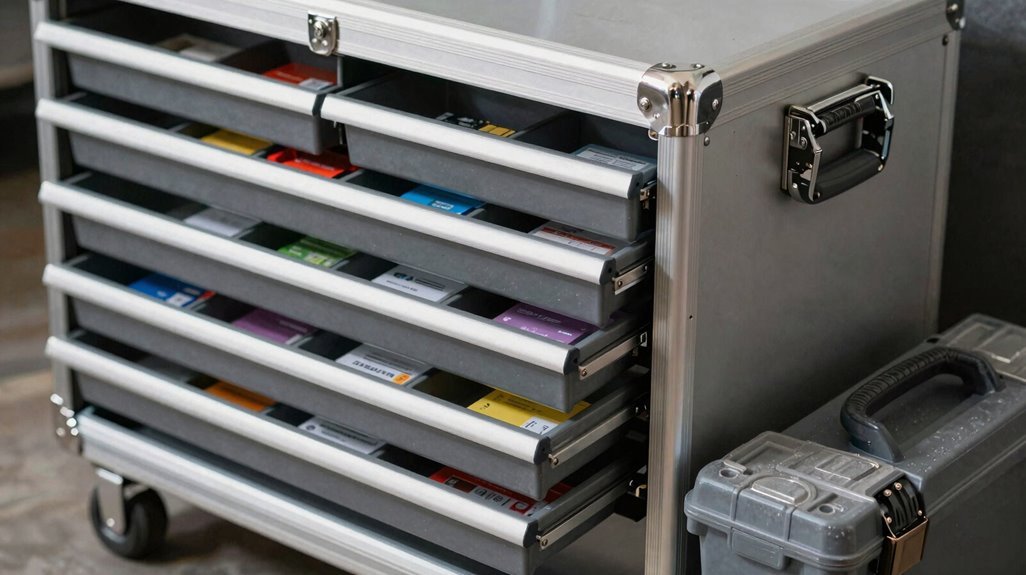
Why does an extra six inches of vertical space cost more than I’d expect? I’ve learned that larger tool boxes carry hidden premiums beyond raw volume: reinforced latches, stronger hinges, and metalized construction all scale with size, pushing prices past basic models. When I’m comparing options, I calculate cost per cubic inch to cut through marketing noise and find real value.
Larger tool boxes carry hidden premiums beyond raw volume: reinforced latches, stronger hinges, and metalized construction all scale with size.
Here’s what extra capacity actually demands from us:
- Vertical expansion: height drives price fastest, requiring thicker gauge steel or denser polymer walls to prevent structural failure under load
- Depth premiums: front-to-back space often necessitates upgraded hinge systems, especially in cantilever designs spanning 24+ inches
- Width trade-offs: broader footprints add less per inch than height, though stability concerns demand heavier base construction
- Mobility sacrifices: every liter gained translates to pounds added, transforming portable solutions into stationary fixtures requiring dedicated floor space
Which Drawer Configurations Are Worth the Upgrade?
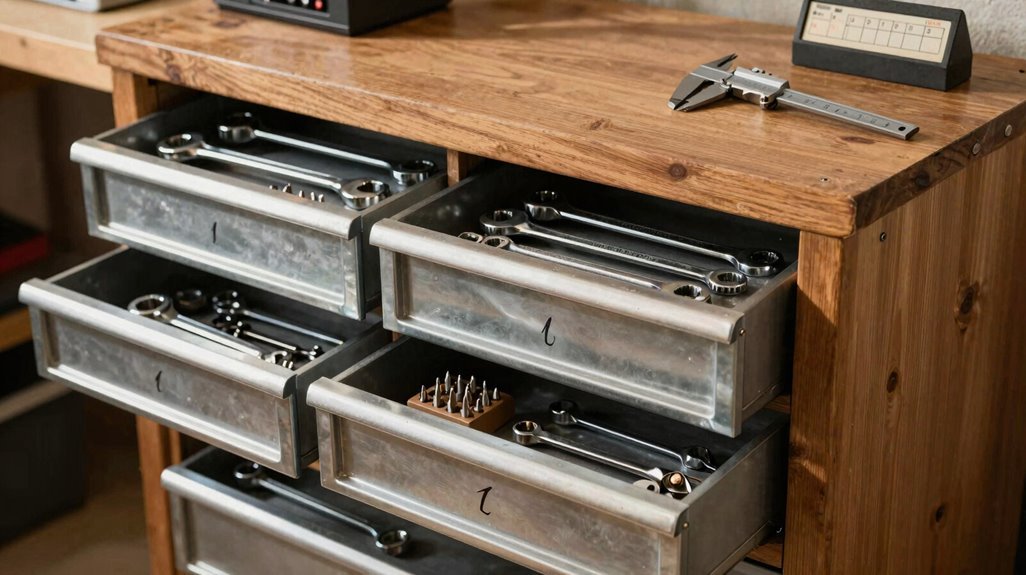
Capacity decisions made, I’m now weighing how that space gets partitioned, because a cavernous box with poorly arranged drawers wastes more time than it saves.
When I’m configuring my Gladiator setup, I prioritize modularity over sheer volume. The Premier Series Tall GearBox justifies its premium with vertical compartmentalization: deep wells for power tools, shallow tiers for fasteners. Here’s how I evaluate the trade-offs:
| Configuration | Worth the Upgrade? |
|---|---|
| Standard GearBox | Baseline utility, adequate for occasional DIYers |
| Tall GearBox Locker | Essential for long-handled implements and seasonal storage |
| 24 Wall GearBox | Ideal for compact workshops requiring floor clearance |
| Red Series Tall GearBox | Status purchase, functional parity with aesthetic distinction |
I skip the wall-mounted GearSets unless my footprint demands it. The Completer Kit bundles intelligently, but I’m paying for integration, not innovation.
Tool Box Mobility: Are Casters and Handles Worth It?
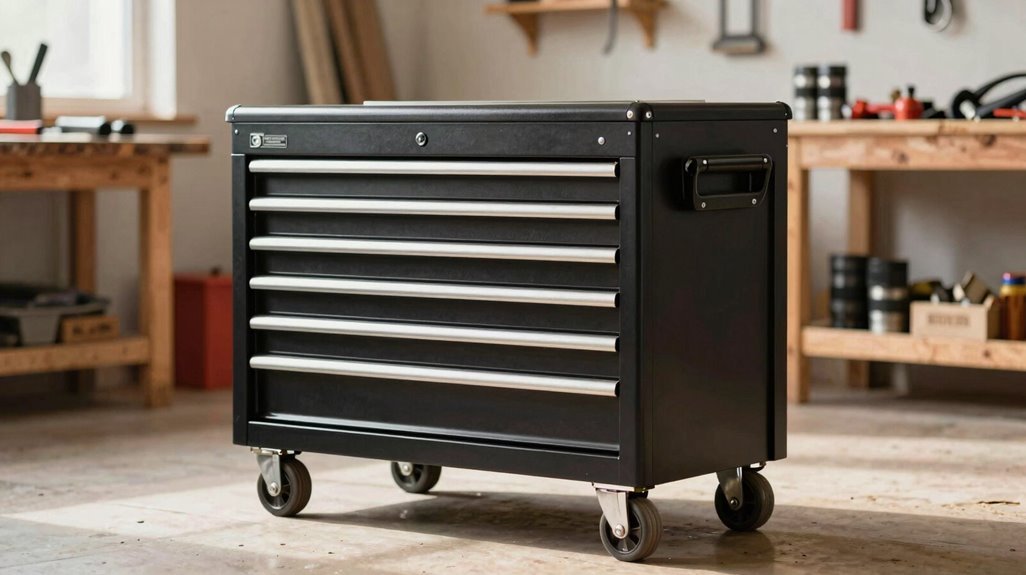
How substantially mobility transforms a workshop’s spatial logic depends on whether I’m optimizing for fixed workstations or fluid, task-based layouts. Casters and handles add roughly $20–$80 to any tool box, but that investment pays dividends when I’m reconfiguring my space weekly.
Portable boxes with handles ($25–$100) let me carry essentials to job sites: lightweight plastic for quick repairs, steel for serious loads. Rolling chests starting at $150 change garages into adaptable workshops, their casters gliding across concrete. Locking casters prevent drift during delicate operations, worth every dollar for precision work. Ergonomic grips reduce fatigue when I’m hauling forty pounds of wrenches upstairs; my shoulders thank me later.
For those of us building spaces where craft meets community, mobility isn’t convenience. It’s architecture in motion.
Are Locking Tool Boxes Worth the Security Premium?
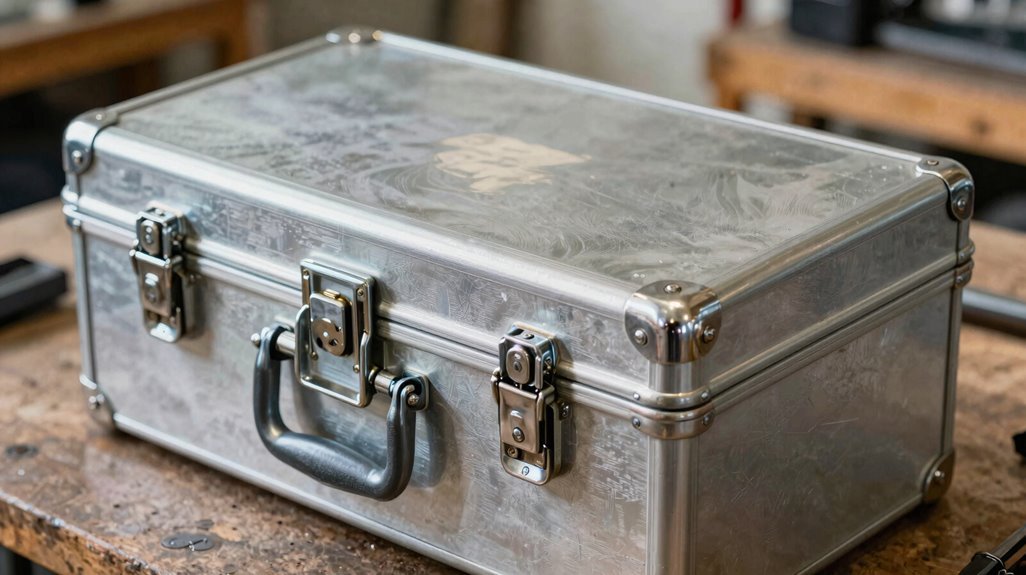
Where exactly does peace of mind begin in a workshop: at the threshold, or inside a steel box with a key?
- The Premium Reality. Locking tool boxes run 15–40% higher than their unsecured counterparts, yet I find the investment justified when I consider what’s inside. Built-in key locks and tubular cylinder mechanisms deter opportunistic theft, though determined intruders may still breach them.
- Layered Defense. For my higher-value equipment, anchoring the box and using theft-resistant mounting transforms a simple lock into genuine protection; cost-effective peace of mind.
- Quality Indicators. I compare drill-resistance ratings, warranty terms, and weatherproof seals rather than assuming any lock suffices. Reinforced corners and heavier gauge steel justify upfront costs through longevity.
Security isn’t merely a feature; it’s the foundation of belonging in a space I’ve built.
Hidden Tool Box Costs: Liners, Dividers, and Essential Add-Ons
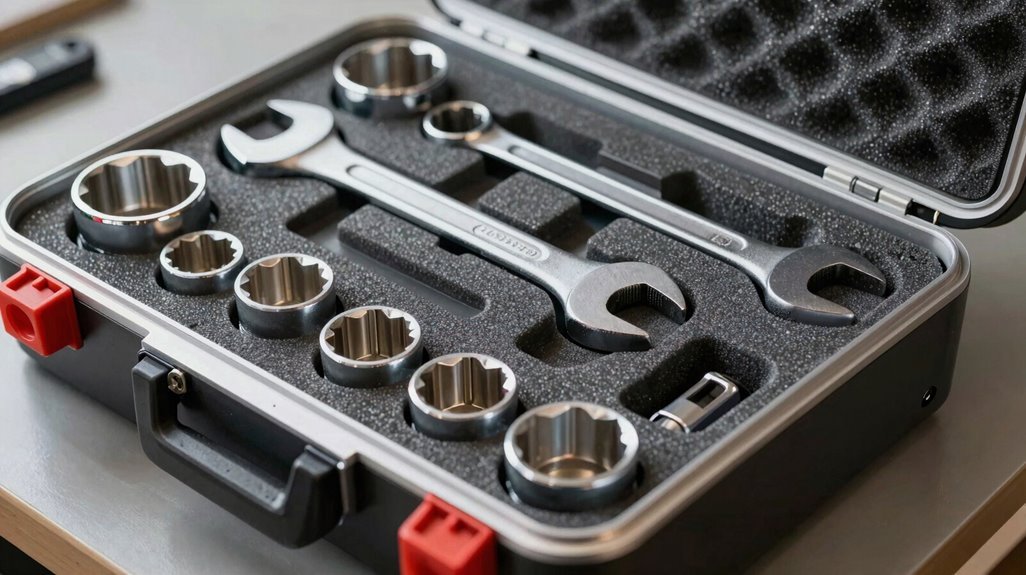
I want you to understand that the sticker price on a tool box rarely tells the whole story, hidden costs stack up fast when you start adding the essentials that transform bare metal into a functional workspace. Before you finalize your purchase, I’m breaking down three critical add-on categories: shelf liners that protect your investment from scratches and corrosion, dividers and organizers that create architectural order within chaotic compartments, and mounting accessories that anchor your system to walls, vehicles, or workbenches.
These extras typically run $20–$200 beyond the base price, but they’re what separate a glorified metal box from a purpose-built command center for your craft.
Shelf Liners Explained
Why overlook the foundation of your storage system when shelf liners quietly determine how well your tools, and your investment, hold up over time? I tell builders protecting drawer bottoms isn’t optional; it’s essential infrastructure for our craft.
- Material Thickness Dictates Durability: Plastic costs less, yet reinforced liners withstand implements. I’ve watched sockets punch through thin substrates in Texas shops.
- Bundles Reduce Per-Shelf Expense: Kits include 2-pack liners for multiple shelves, lowering per-unit cost. Across Midwest garages, sets build collective value.
- Precision Fit Minimizes Waste: Gladiator systems size liners for 18-shelf or 24-shelf configurations, optimizing fit. In coastal studios, tailored cuts define professional installations.
- Surface Protection Extends Beyond Basics: Liners shield surfaces from spills, though specialty finishes raise costs. Throughout American workshops, unprotected shelves degrade fast.
Dividers and Organizers
How does a box become a system? I transform raw storage into purposeful architecture through dividers and organizers, those essential components that elevate your toolbox from container to command center.
| Component | Function |
|---|---|
| Rack shelf liners | Cushion drawers, prevent shifting |
| GearTrack/GearWall inserts | Integrate with panel systems |
| Trim and edge guards | Secure clean lines, protect contents |
I see you building something intentional. These add-ons, sold separately from main units, let me customize existing boxes without starting over. Two-pack configurations fit 18 or 24 shelf arrangements, matching your drawer count precisely.
Specialized inserts provide non-slip sanctuary for small parts, while hooks and tracks extend vertical utility. I’m investing in modularity, creating storage that evolves with my work.
Mounting Accessories Overview
Mounting accessories complete the storage architecture I began building with internal dividers, transforming walls and vertical surfaces into extensions of the toolbox itself. I quickly discovered these aren’t universal afterthoughts but model-specific investments that multiply my total cost.
- GearWall panels create vertical infrastructure, accepting hooks and bins across 4-foot or 8-foot spans; custom-fit to my Gladiator system, not interchangeable with competitors
- GearTrack channels offer slimmer mounting rails for lighter loads, requiring separate trim pieces and end caps that add up fast
- Liners and dividers nest inside specific shelf configurations, forcing me to buy proprietary inserts rather than standard organizers
- Premier Series hardware commands premium pricing for heavier-duty wall mounting, with availability gaps between product lines leaving my setup incomplete
I’m building something cohesive, and paying for every connection point.
Match Your Projects to the Right Tool Box Price
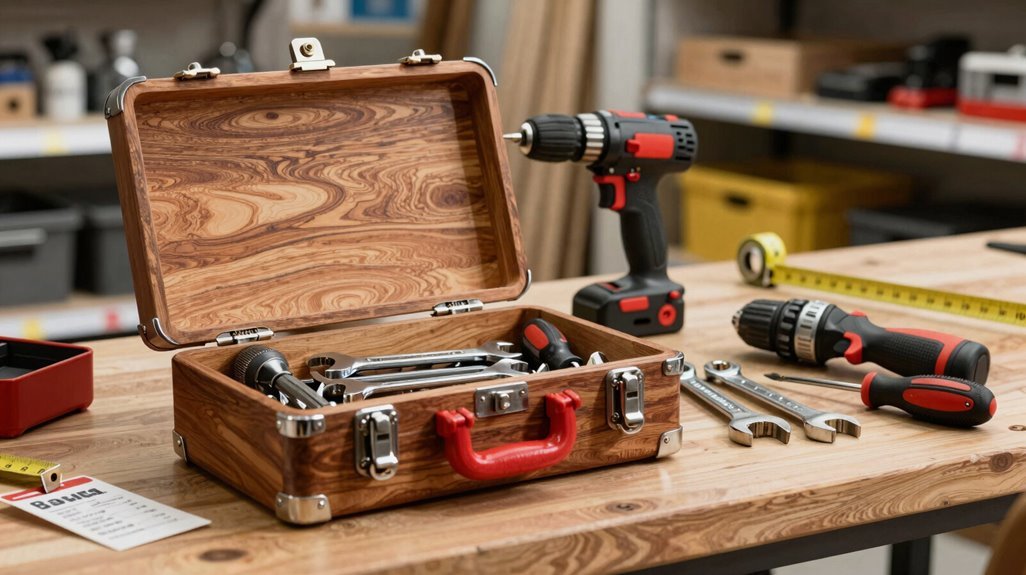
Where exactly does your work take place: clamped to a kitchen table, sprawled across a garage bay, or locked inside a contractor’s trailer? I’ve learned that matching your projects to the right tool box price isn’t just about budget; it’s about finding your place in the craft.
| Project Scale | Ideal Price Range |
|---|---|
| Light DIY, portability | $20–$100 |
| Serious home shop | $150–$600 |
| Professional, mobile | $300–$1,200+ |
Starting with entry-level portable models around $20–$50, I build confidence before investing in heavy-duty steel chests ($200–$800) with locking drawers. When I’m ready; when the work demands it; I step up to rolling cabinets ($300–$1,200+) with powder-coated finishes and modular expandability. The right box signals you’re serious. Welcome to the guild.