
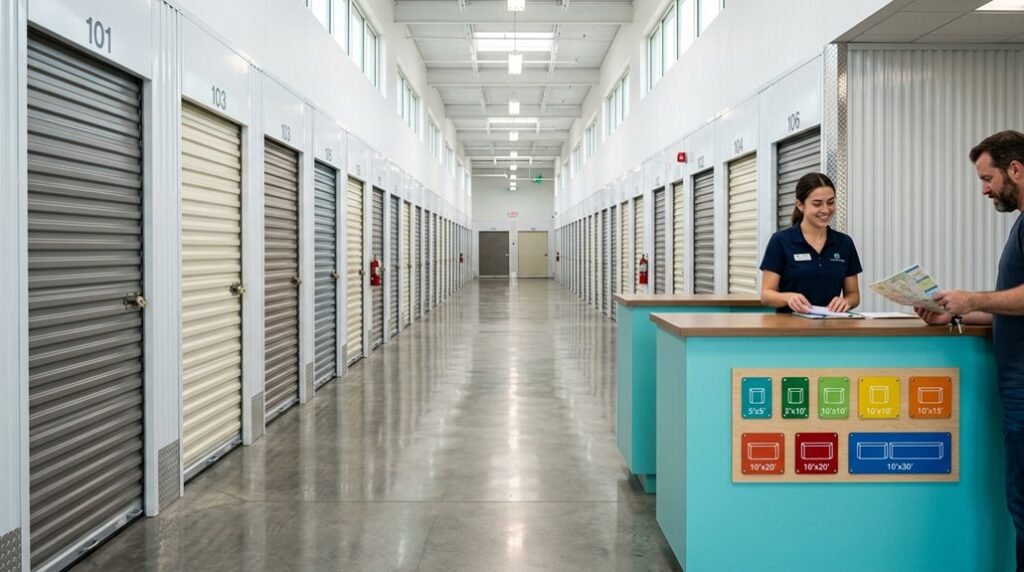
I once stored everything I owned in a 5×5 unit, now I guide others through spatial puzzles that shape daily life. Storage dimensions aren’t just numbers; they’re architectural decisions about volume, access, and future possibility.
Let me walk you through ten configurations, from closet-scale cubbies to warehouse-scale bays, each calibrated for specific life transitions.
Storage Unit Sizes Explained: How Dimensions and Square Footage Work
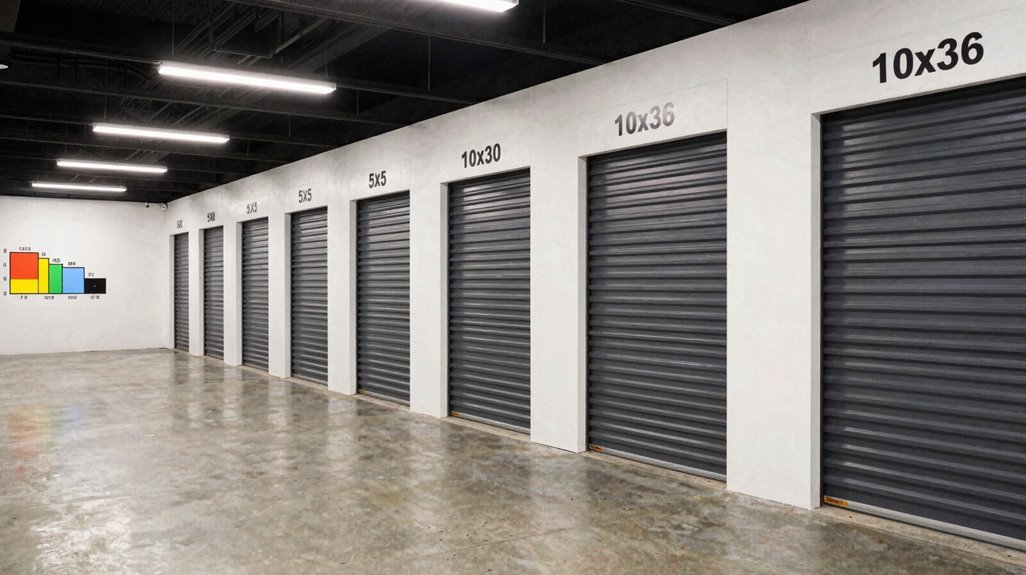
When I’m standing in a storage facility’s fluorescent-lit corridor, staring at roll-up doors that all look identical, I realize dimensions tell only half the story. Understanding storage unit sizes, beyond length and width, helps you visualize square feet, the actual breathing room your belongings occupy.
Common unit dimensions break down like this:
- Compact Foundation (5×5, 5×10): These deliver 25–50 square feet, small storage spaces mirroring residential closets, swallowing studio apartments or single bedrooms with ease.
- Mid-Range Flexibility (10×10): At 100 square feet, this accommodates full bedroom sets, dining furniture, and 40–50 boxes, the sweet spot for renovation projects.
- Expansive Horizons (10×15): Spanning 150 square feet, this large storage option houses two bedrooms, substantial sectionals, 50–60 boxes.
- Automotive Shelter: Vehicle storage starts at 10×20 (200 square feet), extending to 50-foot outdoor bays for RVs, boats, and collector cars, protecting your investments beyond residential confines.
5×5 Storage Units: Closet-Size Space for 25 Square Feet
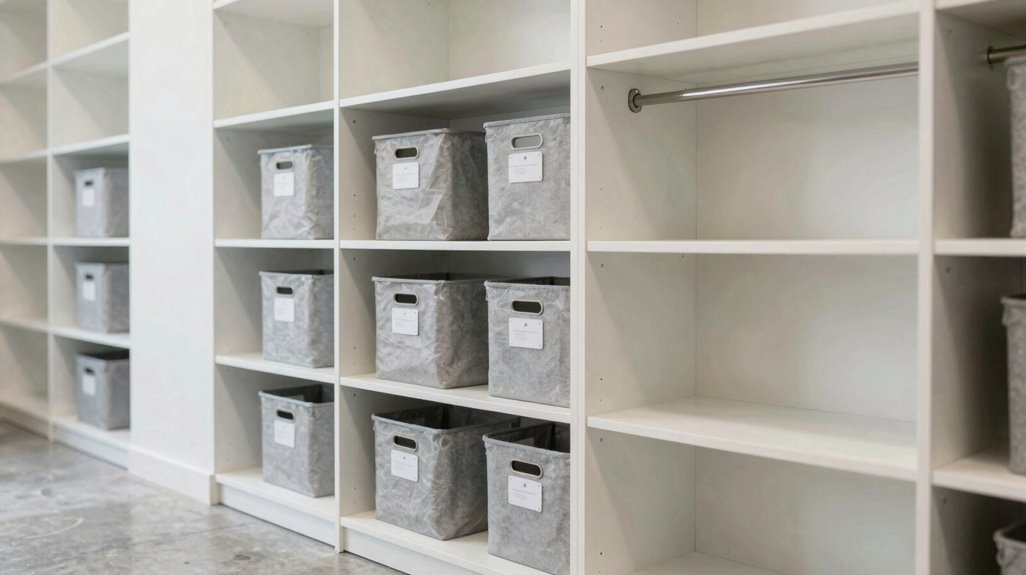
Where does one begin when the goal is simply breathing room? A 5×5 storage unit offers that closet-size space—25 square feet of possibility—for anyone seeking sanctuary from clutter.
Consider these applications:
- Seasonal Storage Rotation. Cycle winter gear or holiday décor through this compact footprint, freeing your living quarters for daily life.
- Single-Room Decluttering. Transform one overwhelmed space, perhaps a home office or guest bedroom, by relocating excess to this manageable unit.
- Student Transitions. Store belongings between semesters without burdening family or friends.
- Small Business Overflow. Archive inventory, documents, or supplies, protecting your domestic architecture from commercial encroachment.
This climate-controlled option accommodates roughly fifteen to twenty moving boxes, a dresser, or seasonal storage essentials. At facilities like South Rock Storage, this modest 25 square feet restores domestic harmony.
5×10 Storage Units: What Fits in 50 Square Feet
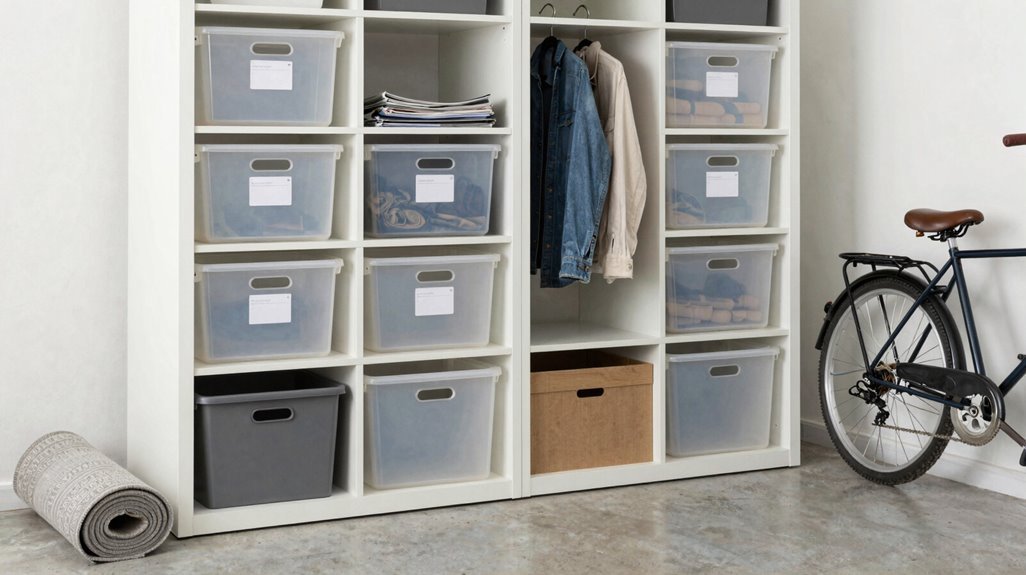
I’ll walk you through what 50 square feet actually holds, breaking down the storage capacity, real-world use cases, and how businesses leverage this footprint for inventory, documents, or equipment staging. Whether you’re relocating a studio apartment or archiving seasonal merchandise, understanding these dimensions helps you plan your vertical space and aisle clearance with precision.
Let’s examine the practical architecture of this unit size, from queen mattress clearances to the spatial economics of short-term commercial storage.
Storage Capacity Breakdown
Just how much living can you pack into 50 square feet? I’m breaking this down for you, because finding your fit means feeling at home with your choice.
Here’s your capacity breakdown across storage unit sizes:
1) The 5×5 (25 sq ft) — Small storage needs, solved. I see this as your hall closet away from home: seasonal decor, file boxes, a bike. One person’s overflow.
2) The 5×10 (50 sq ft) — Your studio apartment in miniature. I’m talking queen mattress, sofa, stacked cartons; furnished bedroom territory.
3) The 5×15 (75 sq ft) — Bridging toward medium storage needs. Dining furniture, appliances, walking room between walls.
4) The 10×10 (100 sq ft) — The threshold of large storage needs. Two bedroom sets, aisles for access, breathing space.
Each increment expands your architectural possibilities, measuring not just belongings, but life’s transitions.
Common Use Cases
How does 50 square feet translate into real life? Let me show you where this Storage unit fits your world.
- The Urban Mover’s Haven: Downsizing from a studio apartment, you’ll find this 5×10 unit swallows your queen mattress, dresser, and that TV you can’t part with. I’ve seen friends stack 20–30 medium boxes alongside a couch and chair, creating breathing room between belongings.
- Seasonal Rhythm Keeper: Storing skis, camping equipment, and holiday decorations becomes effortless. This common storage solution protects your seasonal gear without dominating your garage.
- The Entrepreneur’s Overflow: Small business storage demands flexibility; 50 square feet accommodates inventory, documents, and supplies—cheaper than expanding commercial square footage, with aisle access for organization.
Business Applications Overview
From personal moves and seasonal rotation, let’s look at how businesses put modest square footage to work. I’ve seen how the right storage unit sizes turn cramped offices into efficient operations.
- Inventory Storage for Small Retailers: A 5×10 unit (50 square feet) holds seasonal merchandise, freeing your storefront for current collections. I’ve watched boutiques in Portland rotate stock this way, maintaining visual breathing room without sacrificing revenue potential.
- Document Storage & Archiving: Climate-controlled storage preserves tax records, contracts, and client files, protecting paper integrity against humidity. Legal practices near downtown corridors rely on these compact vaults.
- Equipment Storage & Overflow Space: Contractors stow tools, pop-up vendors shelter displays, and restaurateurs secure catering equipment between events.
- Commercial Storage Flexibility: From document storage to vehicle storage for delivery fleets, business storage adapts to your operational rhythm without long-term lease commitments.
10×10 Storage Units: The Most Popular Size for Moving and Renovations
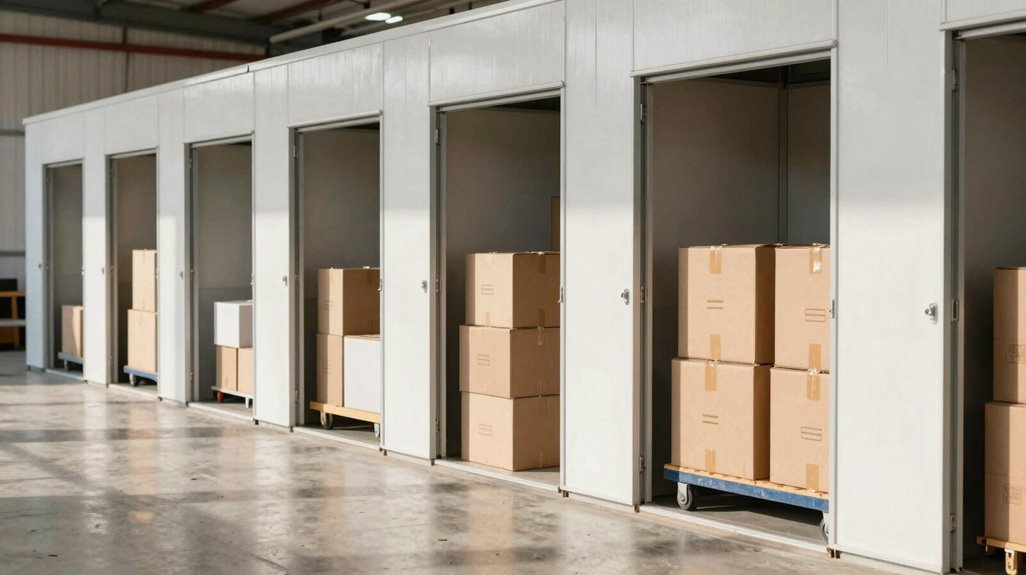
Why does the 10×10 storage unit dominate the moving and renovation landscape? I’ve found this storage unit size strikes the perfect balance, offering 100 square feet of versatile capacity without overwhelming your budget or your schedule.
When you’re tackling moving storage or renovation storage, you need space that adapts. Here’s what makes this option essential:
- Furniture Storage Made Simple. I can fit a complete bedroom set, sofa, and dining table, plus walking room. No Tetris required.
- Climate-Controlled Storage Protection. Your artwork, electronics, and heirlooms stay preserved through seasonal shifts.
- Accessible Storage Design. Wide doors and aisle space mean you’re never crawling over boxes.
- Long-Term Storage Flexibility. Extended vacation? Delayed closing? This unit accommodates life’s unpredictability.
With 24/7 entry at most facilities, you’re joining countless homeowners who’ve discovered this architectural sweet spot, substantial enough for transition, compact enough for convenience.
10×15 Storage Units: Space for a Four-Bedroom Home
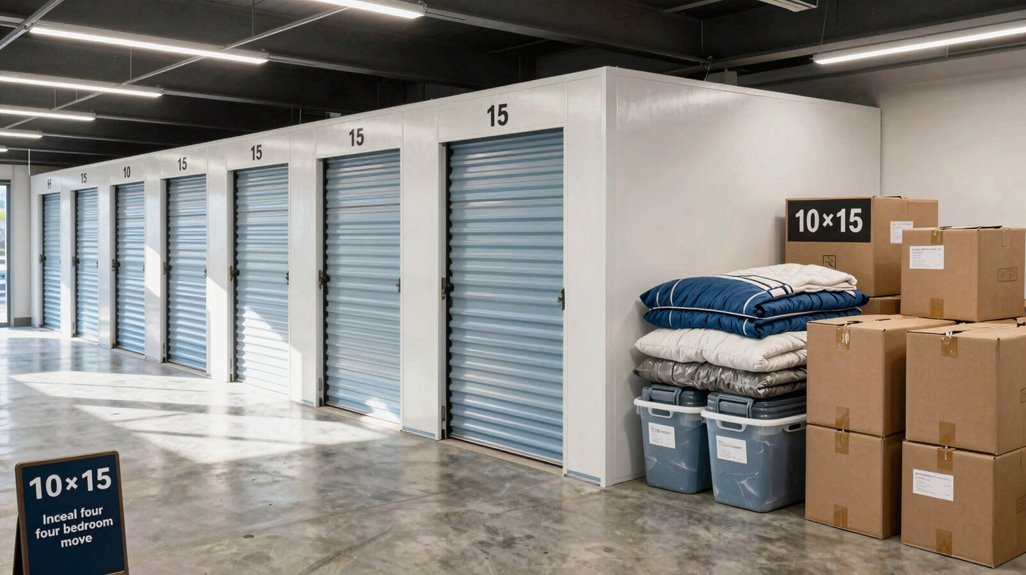
I want to show you how a 10×15 unit, offering 150 square feet of floor space and roughly 1,200 cubic feet of vertical capacity, can swallow the contents of a two-to-three-bedroom dwelling without strain. You’ll fit king mattresses, sectional sofas, refrigerators, and washer-dryer pairs alongside 60-plus boxes, making this footprint ideal when you’re renovating a Craftsman bungalow or bridging between closings in a competitive market.
Whether you’re storing heirloom mahogany dining sets or staging a home for sale, this mid-tier volume delivers transitional flexibility without the cost jump to warehouse-scale units.
Home Contents Capacity
How do you determine which storage unit fits a four-bedroom home without leaving precious heirlooms behind? I guide you through storage unit sizes and contents capacity so every cherished possession finds its place.
- The 10×20 storage unit: At 200 square feet, I’m fitting full furniture sets and major appliances for three-bedroom homes, leaving breathing room for seasonal overflow.
- The 10×15 storage unit: With 150 square feet, I’m accommodating two-bedroom households: large furniture, appliances, and 50–60 boxes stacked with care.
- The 5×10 storage unit: Measuring roughly 50 square feet, I’m organizing studio moves—queen bed, dresser, 20–30 boxes—perfect for transitional living.
- The 5×5 storage unit: At 25 square feet, I’m creating closet-like sanctuaries for 15–20 medium boxes or a small dresser.
For your four-bedroom sanctuary, I’m recommending the 10×30 unit: 300 square feet holding your complete domestic life.
Furniture and Appliances
Moving beyond total household capacity, I’m examining how specific furnishings and appliances command your square footage, because a four-bedroom home isn’t measured by room count alone, but by the dimensional weight of sectional sofas, side-by-side refrigerators, and the accumulated architecture of daily life.
- Living Room Furniture: Your sectional, entertainment center, and accent pieces, when stacked vertically in a 10×20 unit, transform into organized volumes rather than sprawling obstacles.
- Kitchen Appliances: Side-by-side refrigerators, ranges, and dishwashers demand climate-controlled storage; their mechanical integrity depends on environmental stability.
- Scale Matching: For large home contents, storage unit sizes must accommodate both footprint and access corridors; 10×20 unit dimensions (200 sq ft) typically suffice.
- Versatility Extensions: Many facilities offering RV/vehicle storage integrate these residential configurations, creating unified solutions for transitional households.
Remodeling and Transitions
Where does a four-bedroom household relocate when walls are coming down and timelines refuse to align? I’ve found that 15 storage units, spanning practical storage unit sizes like 10×15 and 10×20, offer the spatial buffer our lives demand during these disruptive chapters.
Navigating Your Four-Bedroom Move
A 10×15 unit cradles two bedroom sets, your sofa, appliances, and fifty boxes, perfect for interim staging during remodeling. Need breathing room? The 10×20 swallows a three-bedroom household’s contents plus eighty boxes, ideal for long-term storage when projects stretch from weeks into seasons. For families juggling vehicle storage alongside furniture storage, expansive 10×25+ units protect your car and every stick of furniture.
These transitions fracture routine; choosing generous square footage preserves continuity. Your household contents stay accessible, climate-protected, and waiting, until your rebuilt home welcomes you back.
10×20 Storage Units: Loft-Size Storage for Large Homes
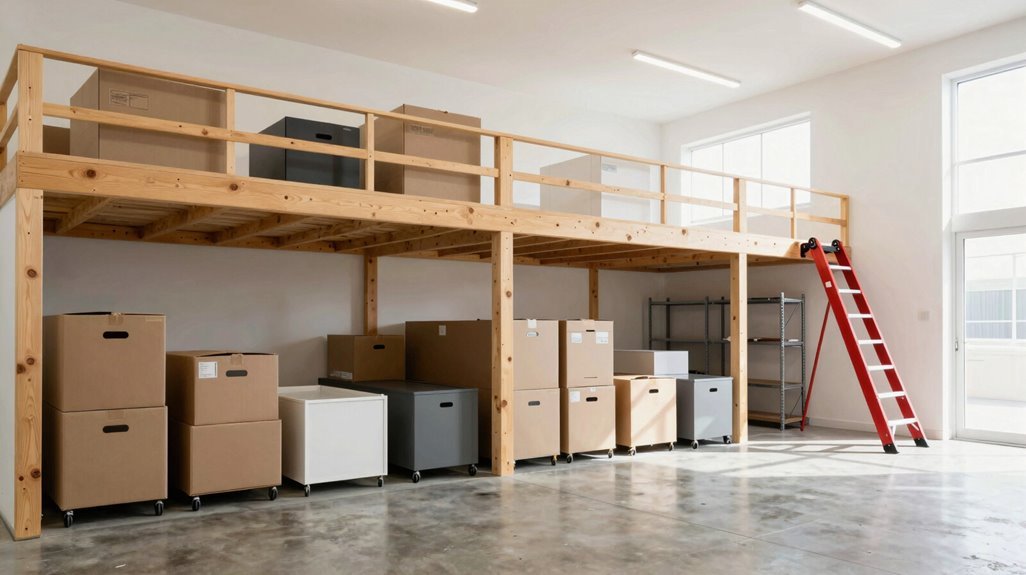
200 square feet, that’s what you’re working with when you step into a 10×20 storage unit, a loft-scale canvas designed for the complete contents of a three-bedroom home. I’ve found this loft-size storage strikes the perfect balance: spacious enough for your life’s architecture, intimate enough to feel manageable.
Here’s what this storage capacity delivers:
- Complete Home Transitions. Your sectional, dining ensemble, and bedroom suites find sanctuary here; furniture storage that preserves your domestic narrative during relocation or renovation.
- Vehicle Accommodation. With drive-up access, I’m parking motorcycles, compact cars, or jet skis inside, protected from elemental erosion.
- Extended Archives. For long-term storage, this unit holds 80–100 boxes; seasonal décor, inherited collections, business records; organized yet accessible.
- Commercial Overflow. Bulk item storage for inventory, equipment, or materials scales with entrepreneurial growth.
This 10×20 storage unit turns large home storage into possibility; your belongings, preserved and waiting.
10×30 Storage Units: Vehicles, Inventory, and Maximum Capacity
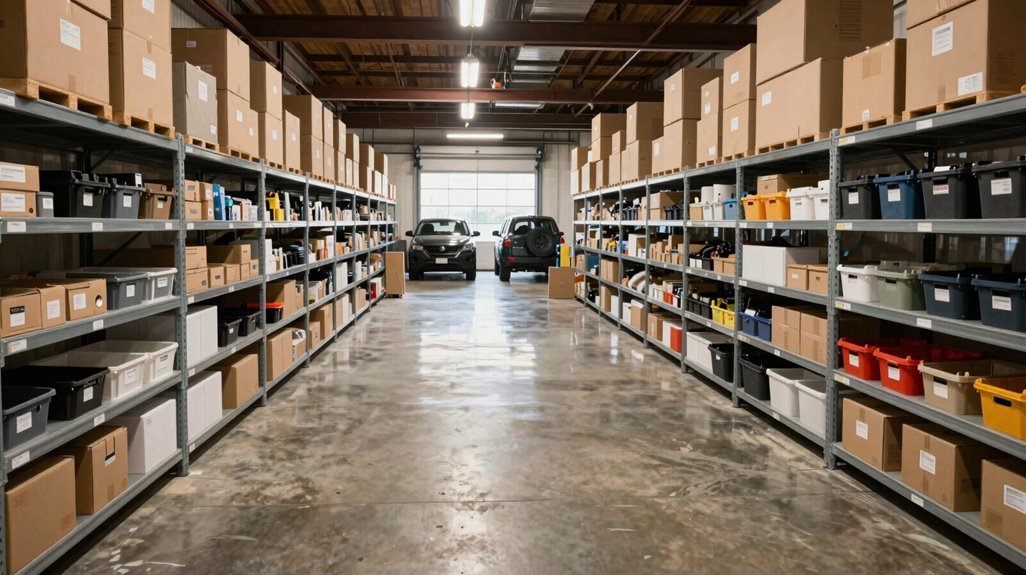
When you’re facing a move from a sprawling estate or need to house an entire commercial operation, I’m pointing you toward the 10×30 unit, 300 square feet of raw, flexible capacity that swallows whole households, inventory pallets, and even mid-size RVs without breaking a sweat. This footprint, stretching thirty feet in depth with standard ten-foot width, demands strategic planning: you’ll want a generous center aisle, perhaps eight feet clear, flanked by stacked storage zones reaching toward the corrugated ceiling.
Whether you’re safeguarding climate-sensitive stock in a controlled facility or rolling a vehicle straight through roll-up doors into drive-up access, I’m showing you how this maximum-capacity solution changes overwhelming storage burdens into organized, retrievable systems.
Maximum Storage Capacity
How do you determine when you’ve reached the absolute limit of what a storage facility can accommodate? I find that understanding storage unit sizes helps me gauge my maximum storage capacity before renting.
The 10×30 storage unit represents the pinnacle of standard offerings: 300 square feet accommodating four-to-five-bedroom homes, commercial inventory, and substantial large items storage needs. For medium-to-large unit sizes, I consider 10×15 and 10×20 options covering two-bedroom to three-bedroom storage scenarios with full furniture sets.
Climate-controlled units protect my sensitive belongings through contents protection climate control, preserving electronics and wood furniture within expansive spaces. While vehicle storage options extend beyond enclosed units, I’m focused here on architectural volume; how ceiling height, floor loading, and spatial flow determine what I can actually store. Maximum capacity isn’t just square footage; it’s strategic volume utilization.
Vehicle Storage Solutions
What dimensions should I secure when my storage ambitions extend beyond household contents into vehicular territory? I’ve found that vehicle storage demands precise spatial planning, matching my automotive footprint to purpose-built storage unit sizes that accommodate everything from compact sedans to sprawling motorhomes.
1. 10×20 Units: The Versatile Standard
I rely on this dimension for my car plus overflow belongings, maximizing every square foot through strategic arrangement.
2. Climate-Controlled Enclosures: Preserving Value
My classic automobile deserves protection from humidity fluctuations, preventing deterioration through regulated atmospheric conditions.
3. Outdoor Parking: Expansive Possibilities
For my RV and oversized vehicles, I select 50-foot covered bays offering accessibility without structural constraints.
4. 10×30+ Configurations: Maximum Accommodation
When I need capacity for large items alongside my camper, these generous proportions deliver secure storage with architectural breathing room.
Business Inventory Applications
Where does my enterprise overflow find its architectural refuge when stockrooms suffocate and seasonal surges demand flexibility? I turn to strategic storage unit sizes that transform commercial chaos into organized possibility.
1. Medium Units for Overflow Management
The 10×10 storage unit, 100 square feet of vertical real estate, accommodates my business inventory overflow during expansion phases, housing excess stock without sacrificing office aesthetics.
2. Climate-Controlled Protection
I prioritize climate-controlled storage for sensitive merchandise, documents, and electronics, making certain inventory protection against humidity fluctuations that compromise product integrity.
3. Large-Scale Commercial Solutions
The 10×20 storage unit and 10×30 storage unit, 200 and 300 square feet respectively, serve my substantial commercial storage requirements, accommodating palletized goods and seasonal merchandise with architectural efficiency.
4. Integrated Vehicle and Equipment Storage
For comprehensive operations, I utilize drive-up access configurations combining vehicle storage with inventory warehousing, streamlining logistics through unified spatial planning.
Vehicle Storage Units: Enclosed Space vs. Covered Parking Dimensions
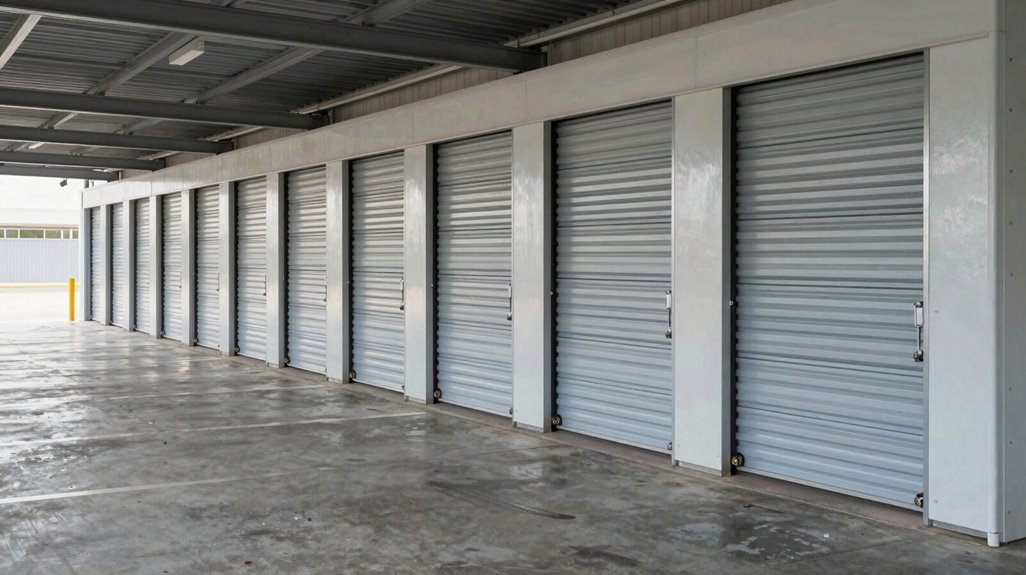
When you’re weighing whether to shelter your vehicle in a fully enclosed bay or beneath a simple canopy, the dimensional differences between these options become immediately apparent; each choice reshapes not just your monthly expenditure, but your peace of mind.
- Enclosed Space: The Fortress Approach — Standard vehicle storage dimensions run 10×20 to 10×35, offering complete protection with interior clearance for roof racks and antennas; you’re joining a community that values preservation over penny-pinching, with climate-controlled options available for vintage investments.
- Covered Parking: The Middle Ground — Partial enclosure shields against sun and hail while maintaining airflow, typically matching enclosed widths but sacrificing wall height; ideal for daily drivers you want accessible.
- Outdoor Parking: The Budget Conscious — Unprotected asphalt strips, often stretching 50 feet for large vehicles, demand precise measurement of your rig plus maneuver space for backing trailers.
- Height Considerations — RVs and lifted trucks require 14+ foot clearance; always verify interior clearance before committing, making certain your belonging fits without scraping.
Climate-Controlled Storage Units: When Features Change Size Needs

Why do I often find myself second-guessing the square footage I’ve calculated, only to realize that climate control, not raw dimensions, dictates my actual spatial requirements?
When I evaluate storage sizes for my belongings, I’ve learned that climate-controlled options reshape how I think about unit sizes entirely. Temperature control and humidity control aren’t luxuries here in Wichita; they’re necessities against our punishing summers and frigid winters.
I’ve discovered that fragile items demand breathing room; stacking electronics or leather goods too tightly compromises airflow. Large items like antique armoires require strategic placement within climate-controlled spaces, often needing larger unit sizes than standard calculations suggest.
Not every storage facility offers these features, and I’ll pay 25–40% more monthly. Yet for my valuable collections, that investment delivers peace of mind no square footage alone provides.
Choosing Your Storage Unit Size: Compare Costs, Access, and Future Needs
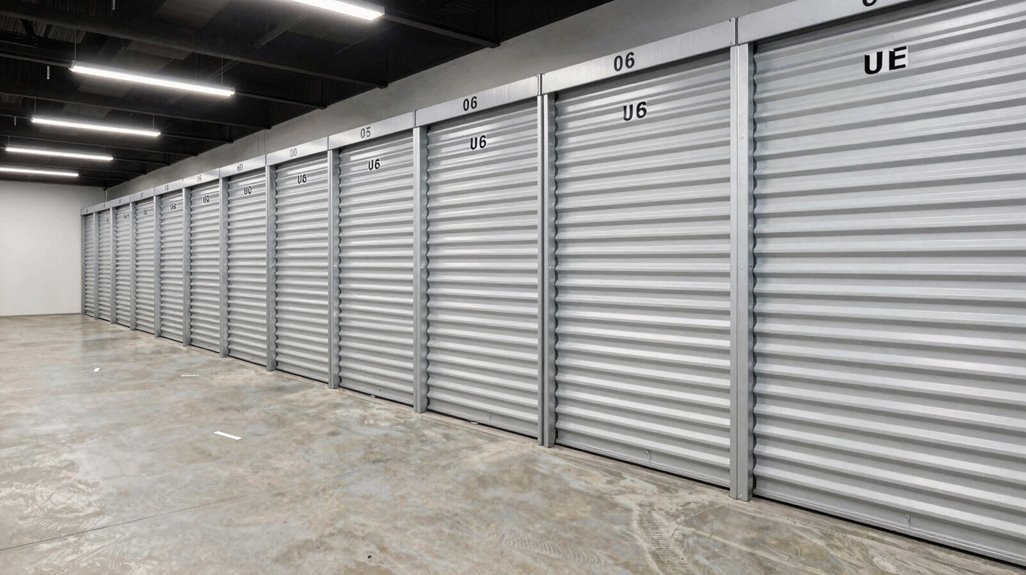
How do I balance square footage against the rhythm of my actual life, those rushed Tuesday evenings when I need my camping gear, or the seasonal rotation of my growing vintage furniture collection? I start with inventory planning, then weigh cost comparison between storage unit sizes.
- Size Your Reality — A 10×10 holds my two-bedroom life; a 10×20 swallows my three-bedroom ambitions—each step up means $20–$40 monthly pricing differences worth every penny for breathing room.
- Climate Matters — My leather and electronics demand climate-controlled protection, adding 25–40% but preserving value.
- Access Your Future — I map my access needs now, sizing up for future storage needs before I’m trapped by walls.
- Vehicle Dreams — From compact cars to 50-foot RVs, vehicle storage completes my spatial strategy.