I’ve spent years watching sheds become architectural afterthoughts, squat, utilitarian boxes marooned in seas of crabgrass. Yet with intentional grading, thoughtful material selection, and layered plantings, these structures become garden anchors.
Three approaches, each balancing drainage engineering with visual composition, reframe the humble outbuilding entirely.
Shape a Horseshoe Bed Around Your Shed
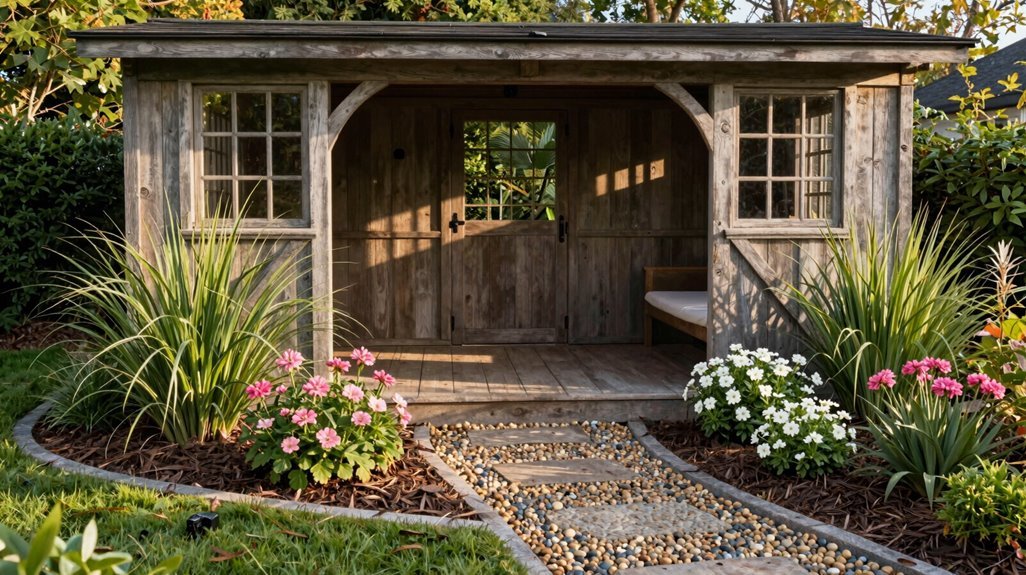
Why settle for a shed that simply sits in your yard when you can turn it into a garden focal point? I’m going to show you how a horseshoe bed creates that curved, enclosing embrace your structure deserves.
Here’s my approach:
1. Define the Curve with Edging
I install plastic borders, Belgium block, or red concrete edging to establish crisp boundaries, keeping grass at bay while framing the planting layout with architectural precision.
2. Layer Your Planting Layout
I position taller specimens toward the rear, stepping down to shorter varieties at the front. Hostas, daylilies, ornamental grasses, and lavender create that dimensional depth we’re all after.
3. Lock in Moisture with Mulch
I spread mulch or decorative stone across the bed, unifying the aesthetic while suppressing weeds.
4. Anchor with Year-Round Structure
I weave in blue star juniper and variegated liriope, so your composition holds visual interest through every season.
Edge With Gravel or Stone to Prevent Rot
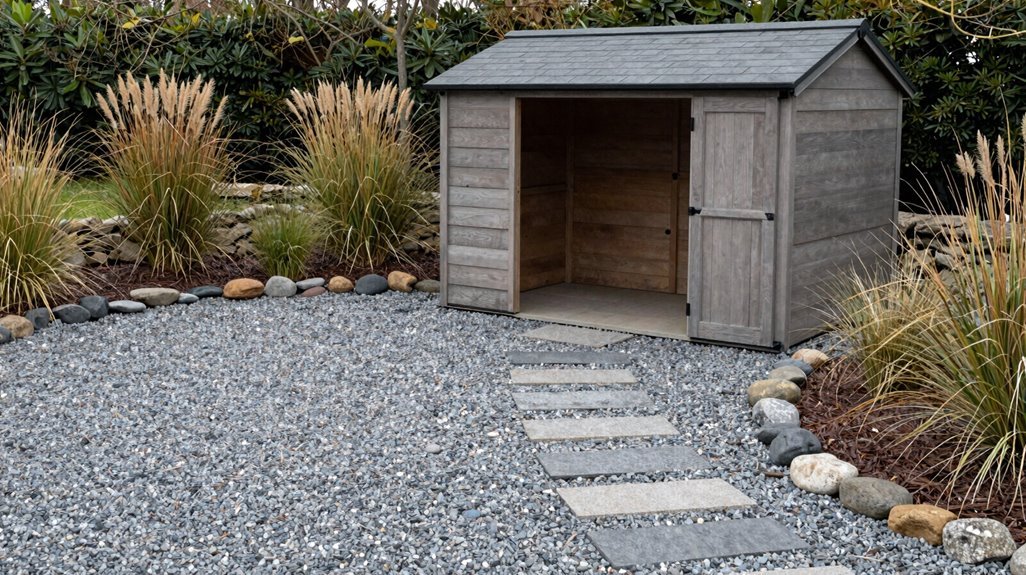
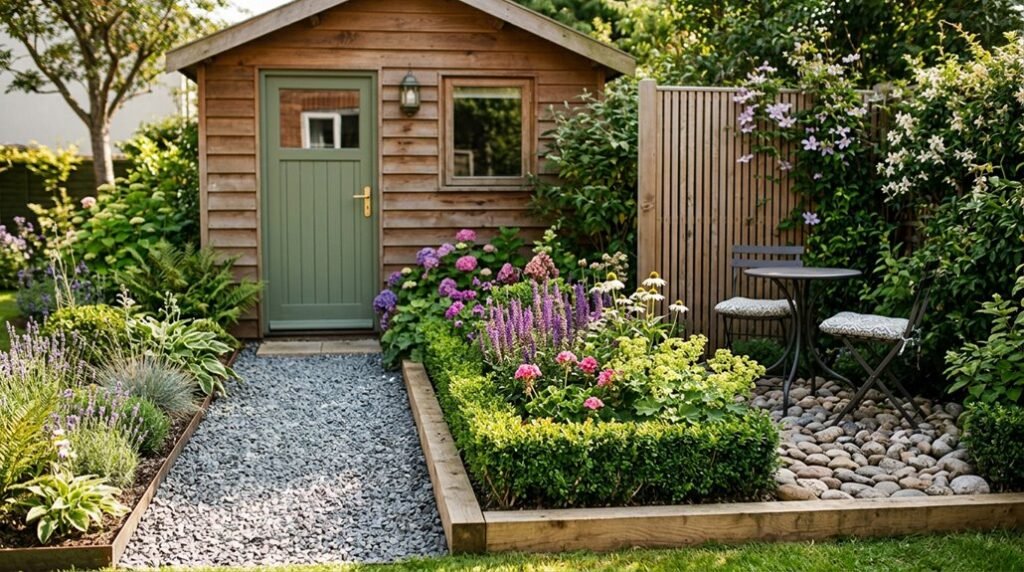
How do you protect your shed from the slow creep of moisture damage without sacrificing how it looks from the street? I’ve found that gravel edging and rock border solutions strike that balance: practical protection with polished aesthetics.
- Gravel Edging for Drainage: I lay a 6-inch strip of crushed stone against the foundation, creating a permeable barrier that channels water away. No more pooling, no more worry.
- Rock Border Definition: I stack fieldstone or river rock to frame the bed, containing mulch while adding architectural structure that improves the whole space.
- Soil Splash Prevention: I maintain that gravel buffer to stop muddy back-spray during heavy rains. It’s the simplest defense against shed wall rot I’ve discovered.
Together, these elements help drainage around shed walls work beautifully, keeping your structure sound and your garden gorgeous.
Plant Hostas, Daylilies, and Dahlias for Shade Color
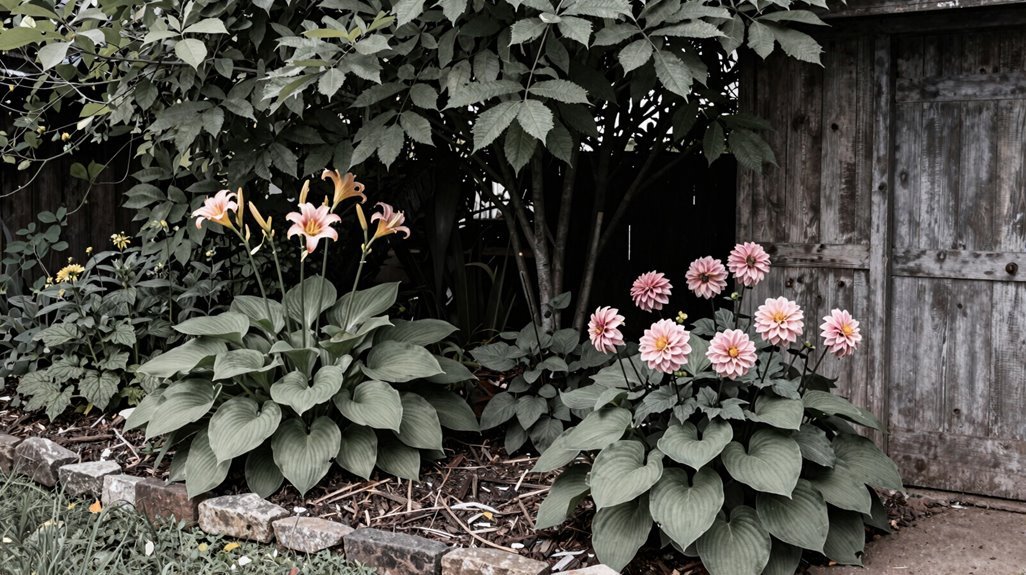
Once the foundation is armored against moisture, I turn my attention to what grows above it, softening the shed’s silhouette with layered plantings that thrive where sunlight barely reaches.
I anchor with hostas. I place these leafy workhorses near shed doors, where their sculptural foliage creates visual weight without demanding light or crowding the structure. Their mounding forms establish the backbone of my shade gardening scheme.
I weave in daylilies. Between hosta clumps, I tuck daylilies for textural contrast and seasonal punctuation; their strappy leaves and brief blooms preventing monotony in dim corners.
I spotlight with dahlias. For summer drama, I position dahlias where they’ll catch stray light, deadheading faithfully and watering deeply to sustain their performance.
I protect with mulch. A two-inch layer of shredded bark retains moisture, suppresses weeds, and prevents soil splash against shed walls, completing this polished, low-maintenance composition.