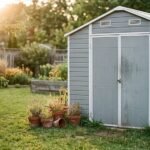
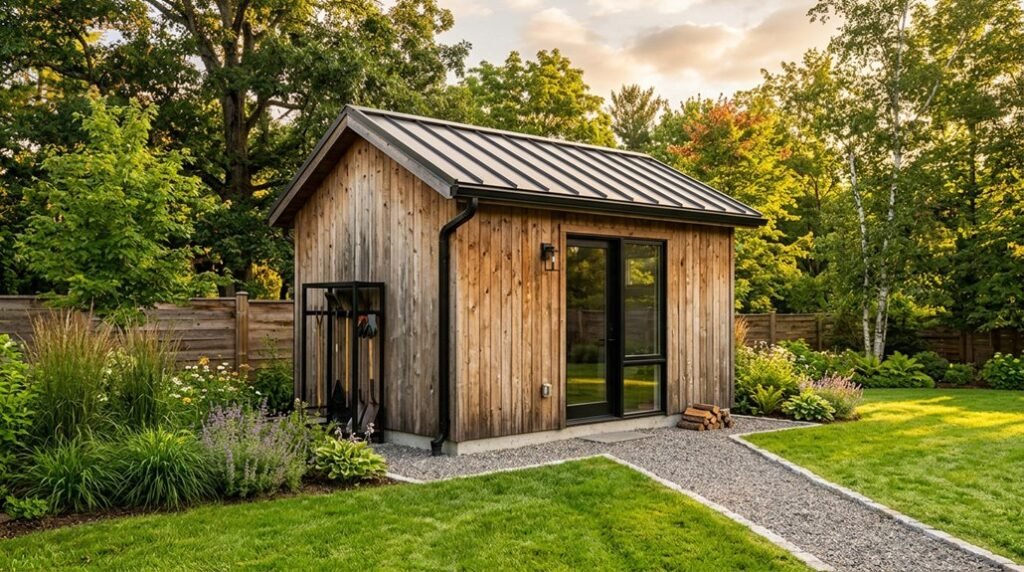
When I started planning my backyard shed last spring, I discovered costs swing wildly, from $500 utility kits to $30,000 custom builds, depending on materials, dimensions, and whether you’re pouring a concrete pad or skipping the foundation entirely. Metal and vinyl run leaner, wood offers that craftsman aesthetic, and brick commands premium pricing for permanent structures.
Size matters exponentially: a 6×8 footprint feels economical until you price 12×20 with lofted storage. Foundation work, permits, and labor stack quickly, sometimes doubling your base estimate. I’ve mapped eight essential factors below, each with real numbers and regional context, because understanding where your money actually goes changes everything about how you’ll approach this project.
Shed Prices in 2024: From $500 to $30,000
Wondering what you’ll actually pay for a backyard shed in 2024? You’re not alone, most of us want that perfect backyard retreat without breaking the bank.
Shed prices span a dramatic range, from roughly $500 for basic resin models to $30,000 for bespoke architectural builds with custom finishes. Where you land depends on materials, craftsmanship, and your willingness to DIY.
1. Prefab Kits: Your Budget-Friendly Entry Point
Ready-to-assemble prefab kits dominate the lower-to-mid range, offering steel or vinyl shells you can erect over a weekend. They’re faster, simpler, and keep total cost manageable, often $1,500–$5,000 before foundation work.
2. Custom Builds: When Aesthetics Matter
Commissioning a wood-framed structure with cedar siding and architectural shingles? Expect premium pricing, with total cost climbing steeply as labor and site prep accumulate.
How Size Affects Your Shed Cost
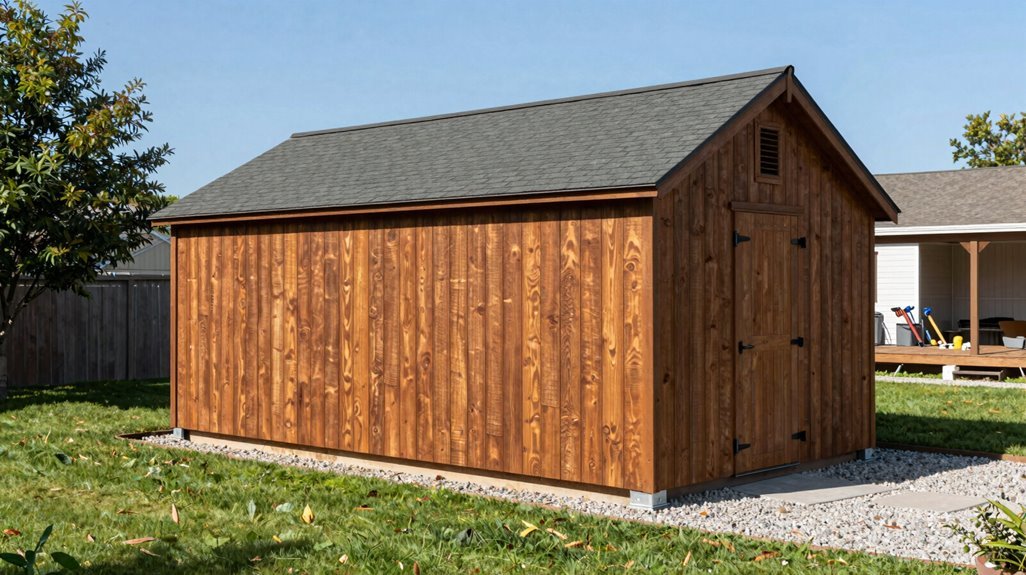
How dramatically does a few extra feet reshape your budget?
- Foundation Logic: Your shed size determines everything beneath it; I’m talking concrete slabs, gravel bases, or pier blocks scaling with footprint. Cost per square foot stretches from $20 to $150 depending on complexity, with architectural flourishes pushing that ceiling fast. From HomeAdvisor’s national data: small 8×8 structures run lean, while 12×20 workshops multiply your investment.
- Labor Intensity: Here’s where I’ll be straight with you: labor costs jump to $40–$75 per square foot when complexity enters, taller walls, custom rooflines, integrated windows. Prefab kits? You’ll trim those expenses. Custom builds demanding skilled trades? Budget accordingly.
- The Multiplication Effect: Every added dimension triggers cascading needs: more materials, heftier foundations, extended timelines. Belonging begins with right-sizing your space, not overshooting it.
Wood, Vinyl, Metal, or Brick: Material Price Guide
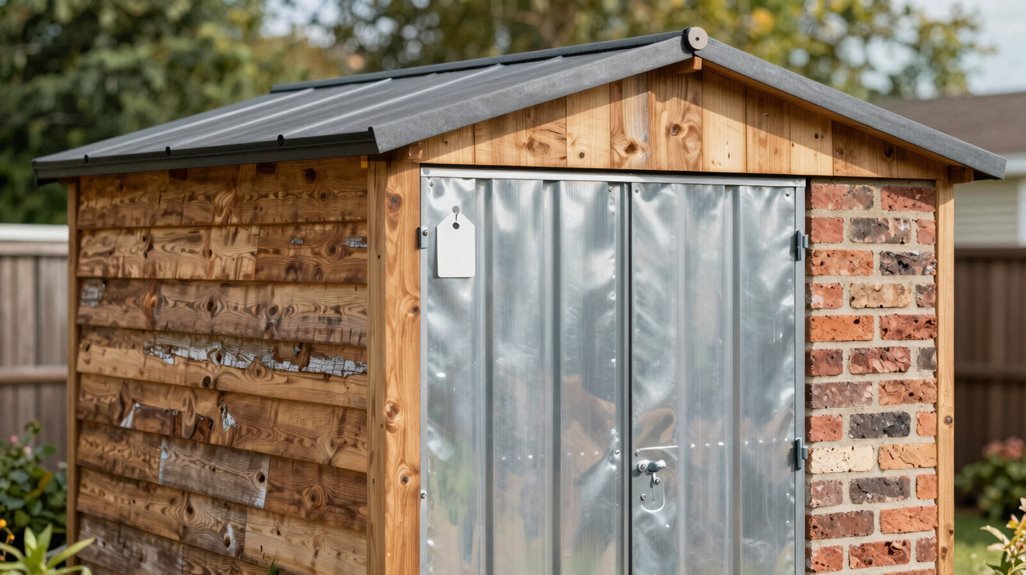
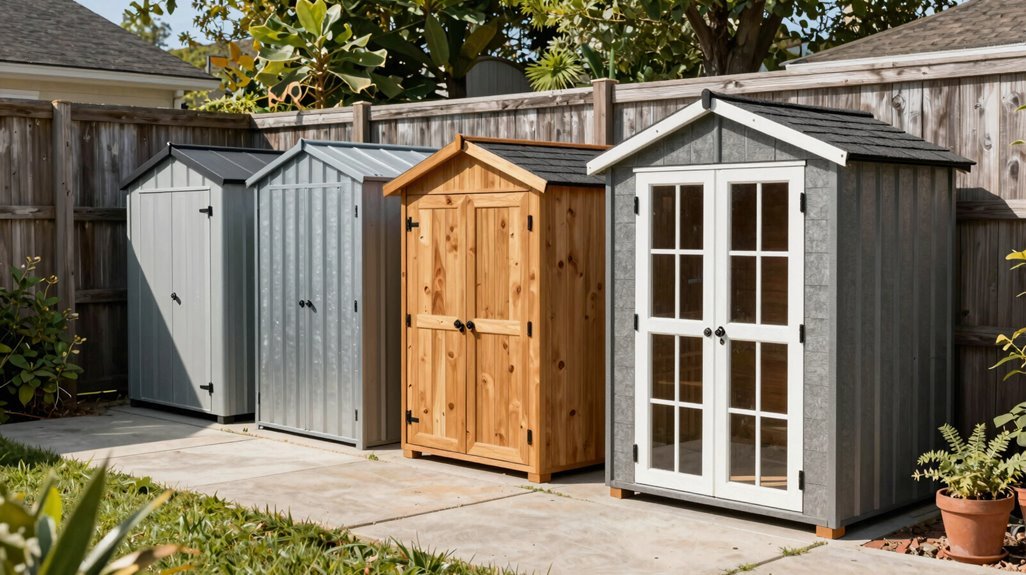
When choosing your shed’s envelope, you’re balancing four distinct material cost ranges against their long-term performance profiles. Vinyl keeps initial outlay modest, typically $200 to $5,000, while metal offers rugged economy at $500 to $7,000 for prefabricated units; wood climbs to $3,000–$15,000, and brick commands $3,200–$30,000 for permanent, masonry construction.
Each material demands trade-offs: metal endures with minimal intervention, vinyl resists rot without painting, wood ages gracefully but requires stewardship, and brick stands as your generational investment, weathering decades with negligible degradation. Selecting among them means weighing your budget against how much maintenance you’re willing to embrace, and whether you prize portability, permanence, or the warm, traditional character of cedar cladding against your garden’s backdrop.
Material Cost Ranges
Where exactly does your budget land when you’re weighing a humble garden storage unit against a proper backyard studio? I’m breaking down what you’ll actually spend across the four main material categories, each offering distinct entry points into backyard ownership.
| Material | Price Range | Best For |
|---|---|---|
| Metal sheds | $500–$700 | Tight budgets, basic storage |
| Vinyl sheds | $200–$5,000 | Low maintenance, mid-range flexibility |
| Wood sheds | $3,000–$15,000 | Custom aesthetics, workshop potential |
| Brick | $3,200–$30,000 | Permanent structures, property integration |
Your final number climbs with insulation, windows, and electrical rough-ins, plus foundation work, whether gravel or concrete. Prefab kits save labor costs, though professional installation ensures code compliance. I’m seeing metal sheds as the accessible entry point, vinyl sheds balancing cost against upkeep, and wood sheds rewarding those prioritizing craftsmanship and warmth.
Durability Trade-offs
Why does your choice of cladding matter more than the sticker price? Because material costs tell only part of your shed’s story: durability and maintenance shape whether you’ll belong to the proud owners or the regretful repair crowd.
1. Metal: The Frugal Minimalist’s Friend
Starting at $500–$700, metal delivers unmatched durability with virtually no upkeep; just hose it down. I’ve watched these outlast vinyl in coastal zones, though dents haunt hail-prone regions like Oklahoma.
2. Vinyl: The Middle Path
$200–$5,000 buys rot resistance without painting, yet customization limits your personal stamp. In humid Florida, vinyl thrives; in desert Arizona, it warps.
3. Wood: The Romantic Burden
$3,000–$15,000 secures timeless aesthetics demanding constant maintenance: staining, sealing, vigilance. Your warranty varies wildly by supplier.
4. Brick: The Legacy Investment
$3,200–$30,000 commands superior longevity and insulation, rewarding patient capital with generational durability.
What You’ll Pay for Foundation and Site Prep
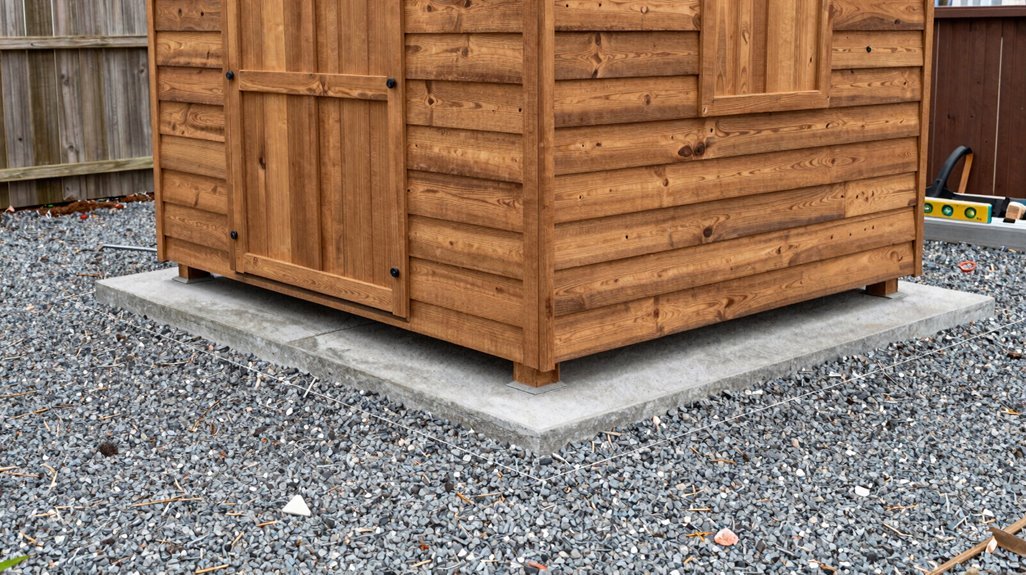
Before your shed ever takes shape, you’ll need to account for what’s beneath it. Gravel pads run $1–$2 per square foot while concrete slabs command $10–$12, plus another dollar per square foot for grading and clearing the site. I’m seeing contractor labor at $50–$100 hourly, with professional prefab assembly adding $10–$20 per square foot depending on complexity.
Ultimately, your foundation and site-prep investment scales directly with the structure’s footprint and architectural demands. Larger footprints mean proportionally larger outlays for these essential, if invisible, elements.
Foundation Type Costs
How much your foundation will cost depends entirely on what you’re building on, and what you’re willing to invest in longevity. I’ve learned that choosing between gravel and concrete slab shapes both your budget and your shed’s lifespan.
| Foundation Type | Cost per Sq Ft | Best For |
|---|---|---|
| Gravel pad | $1–2 | Temporary structures, level ground |
| Concrete slab | $10–12 | Permanent builds, heavy equipment |
| Gravel + site prep | $2–3 | Moderate climates, DIYers |
| Concrete + site prep | $11–13 | Maximum durability, workshops |
| Labor (contractors) | $50–100/hr | Complex grading, poor soil |
Site prep adds roughly $1 per square foot regardless of foundation choice. For me, the concrete slab justifies its premium when I’m storing valuable tools or creating a year-round workspace. Your climate and usage patterns should guide this decision; we’re all building something that lasts.
Site Preparation Expenses
Foundation costs only tell part of the story, what lies beneath determines whether your shed stands solid for decades or shifts with the seasons. When I’m budgeting site prep, I start with the ground itself.
1. Surface Preparation
Grading and clearing run about $1 per square foot, stripping sod, leveling humps, ensuring positive drainage away from the structure. Skip this, and you’re inviting rot.
2. Foundation Selection
Gravel pads cost $1–$2 per square foot, offering permeability and frost heave resistance. Concrete slabs command $10–$12 per square foot, overkill for basic storage, essential for workshops with heavy equipment.
3. Labor Considerations
Site prep and foundation labor costs typically hit $50–$100 per hour. Larger footprints and complex designs multiply these expenses, more materials, more time, more precision required.
Prefab kits can trim assembly labor by $10–$20 per square foot, but don’t compromise on what touches the earth.
Labor and Installation
Where does your money actually go when you’re standing in a finished backyard, admiring that new shed? It flows directly into labor and installation, the invisible infrastructure making your vision tangible.
- Foundation Work — Your base determines everything. I’m choosing between a gravel pad ($1–$2 per sq ft), porous, flexible, forgiving, or a concrete slab ($10–$12 per sq ft), that monolithic plane offering permanence and thermal mass. Both require precise site-prep: grading, clearing, compacting at roughly $1 per sq ft.
- Professional Assembly — Contractors command $50–$100 hourly, their expertise transforming prefab components into weather-tight structures. For prefab kits, expect $10–$20 per sq ft added to your total.
- Complexity Premiums — Larger footprints and intricate designs, dormers, transom windows, custom fenestration, multiply labor costs proportionally.
DIY or Hire Pros? Labor Cost Breakdown
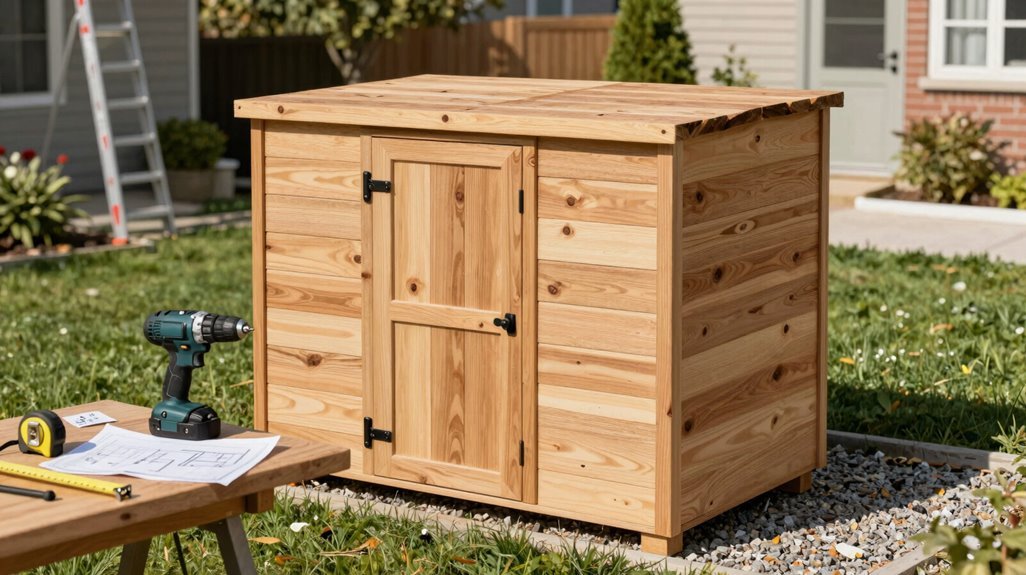
When you’re weighing whether to build your own backyard shed or bring in contractors, labor costs quickly become the decisive factor, often swinging your total budget by thousands. I’ve watched friends wrestle with this choice, and here’s what I’ve learned about navigating DIY vs. professional paths.
1. Contractor Rates: The Premium for Expertise
Hiring pros runs $50–$100 hourly, with prefab kit assembly adding $10–$20 per square foot. You’re paying for speed, precision, and peace of mind, especially when pouring concrete slabs or managing complex site prep.
2. The DIY Trade-Off
Going solo eliminates labor cost entirely but stretches timelines. Prefab kits help here, delivering pre-cut, pre-drilled components that cut assembly time dramatically. I’ve found they’re generally cheaper than custom builds, reducing both design fees and on-site labor.
3. Hybrid Approaches
Many of us tackle the shell ourselves, then hire licensed professionals ($50–$100/hour) for specialized tasks, balancing savings with structural integrity.
Windows, Electricity, and Insulation Upgrades
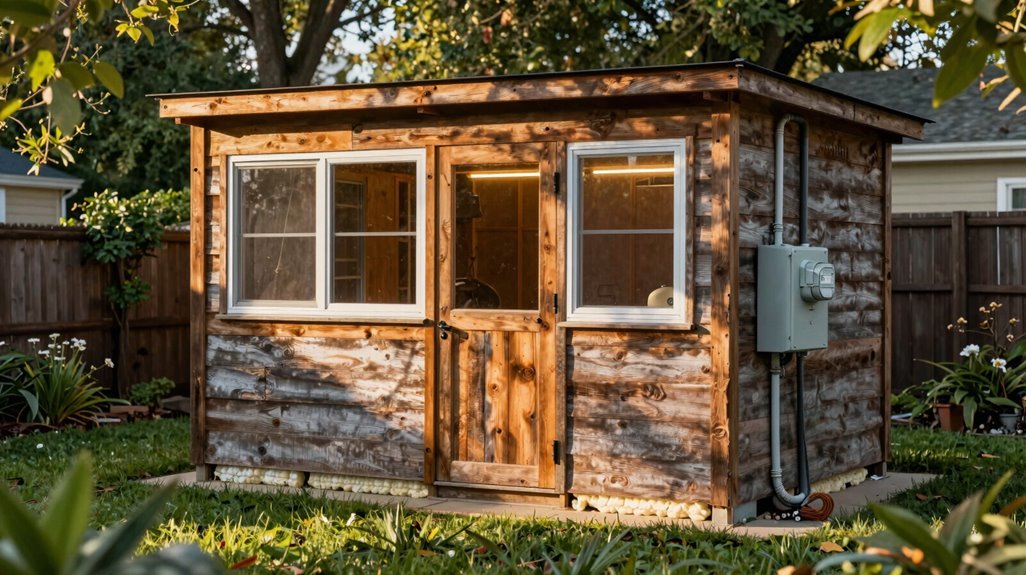
When I’m planning a shed that’ll actually serve as more than storage, say, a studio or guest casita, I know the real money starts flowing with electrical installation costs, insulation, and windows. Running 240-volt service alone can run thousands, especially when trenching conduit across the yard to a subpanel, while batt or spray-foam insulation with decent R-values turns a seasonal box into a four-season refuge.
Add in operable casements or a clerestory bank for daylighting, and I’m looking at framing modifications, flashing details, and glazing upgrades that compound quickly, transforming a $5,000 shell into a $25,000 outbuilding with real architectural presence.
Electrical Installation Costs
Why stop at four walls and a roof when your shed could become a studio, workshop, or guest retreat? Bringing power to your outbuilding transforms it from storage into livable space, but you’ll need professional expertise to do it right.
- Hourly Expertise. Hiring a licensed electrician runs $50–$100 per hour, a worthwhile investment for safety and code compliance. I’ve seen too many DIY attempts fail inspection.
- Scope of Work. Electrical upgrades, outlets, lighting, panel connections, require permits and inspections that add time and cost.
- Hidden Complexity. Running electrical wiring from your home’s main panel involves trenching, conduit, and load calculations most homeowners underestimate.
- The Bottom Line. These improvements significantly raise your per-square-foot investment, though the functionality gained often justifies the expense for serious hobbyists.
Insulation and Windows
How does a basic storage box become a space you actually want to spend time in? You add insulation, windows, and electrical upgrades, transforming four walls into something livable.
1. Insulation: The Thermal Envelope
I pay more for insulated sheds because thicker walls, vapor barriers, and thermal breaks keep temperatures steady year-round. Without this layer, you’re storing garden tools, not hosting friends.
2. Windows: Light and Airflow
Skylights or vented casements cost extra by size and type, but I gain daylight and cross-ventilation, crucial for any space doubling as office or retreat.
3. Electrical Upgrades: Powering Possibility
Licensed electricians run $50–$100 hourly for outlets, lighting, even subpanels. Each addition compounds cost, yet enables evening use and climate control.
Your shed’s purpose, storage versus sanctuary, determines how deeply you’ll invest in these upgrades.
Prefab Kits vs. Custom Builds: Which Saves Money?
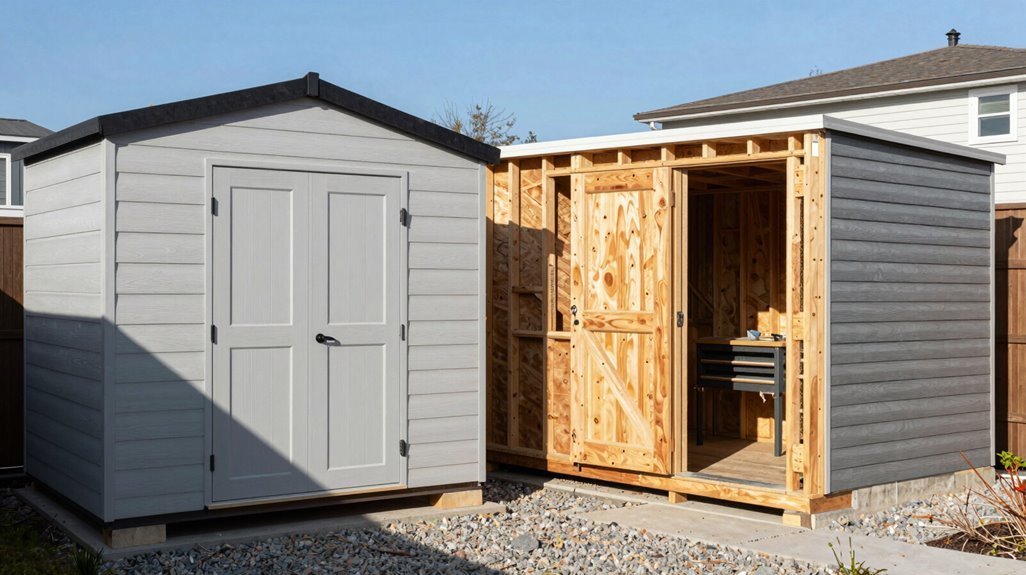
Where exactly does your budget stretch furthest when planning a backyard shed? I’ve crunched the numbers, and here’s my cost comparison breakdown:
1. Upfront Investment: Prefab Kits Dominate
Prefab kits typically run cheaper than custom builds, manufacturers streamline materials, and you’re paying for standardized efficiency. Expect assembly labor adding $10–$20 per square foot depending on your site’s complexity.
2. Labor Reality: Time Equals Money
Custom builds demand skilled carpentry, extended timelines, and premium materials. You’re commissioning bespoke craftsmanship, beautiful, yes, but costly.
3. The DIY Dividend
Handling prefab assembly yourself eliminates professional labor entirely. Meanwhile, fully custom builds remove any reliance on pre-made designs, pushing expenses higher.
4. Value Verdict
For speed and affordability, prefab kits deliver. For tailored dimensions, architectural finishes, and unique features, think cupolas, transom windows, cedar shake, custom builds justify their premium, particularly in design-conscious communities like Portland, Oregon or Austin, Texas.
Permits, Delivery, and Unexpected Costs
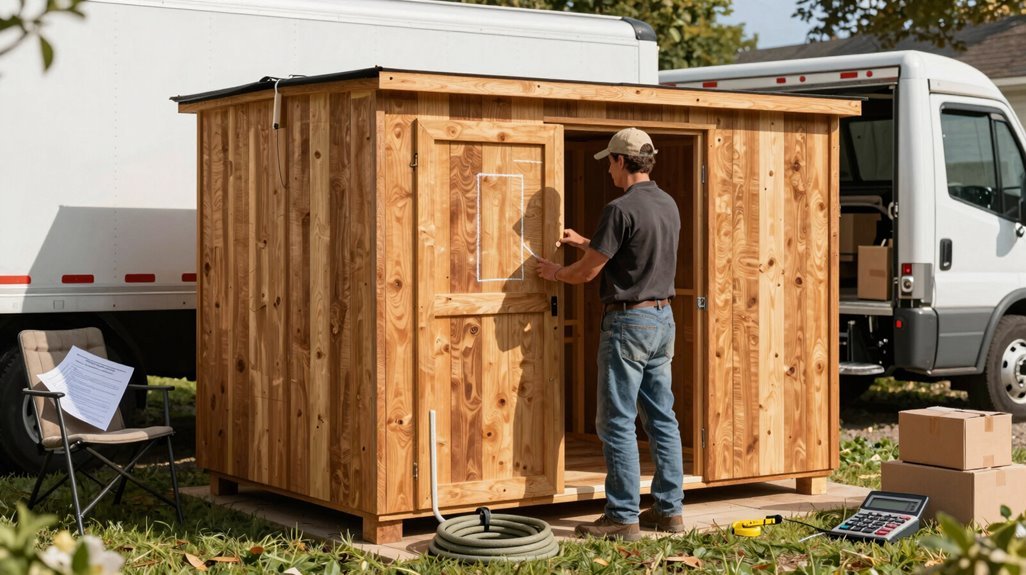
When you’re mapping out your shed budget, it’s easy to fixate on the sticker price and overlook the ancillary expenses that accumulate fast. Permits, logistics, and site preparation can collectively rival the structure itself.
- Permits: I check local codes first, since zoning requirements vary by municipality. Some jurisdictions mandate inspections for structures exceeding 120 square feet, adding $100–$500 in fees.
- Delivery: I coordinate shipping carefully, weighing free nationwide options against terrain challenges that complicate drop-off at narrow or sloped sites.
- Unexpected costs: I budget for land clearing, gravel pads or concrete foundations, and licensed electricians running wiring at $50–$100 hourly. Prefab assembly adds $10–$20 per square foot when terrain demands extra labor.
These hidden line items turn a modest purchase into a substantial investment.
Buy or Build a Shed: Cost Comparison
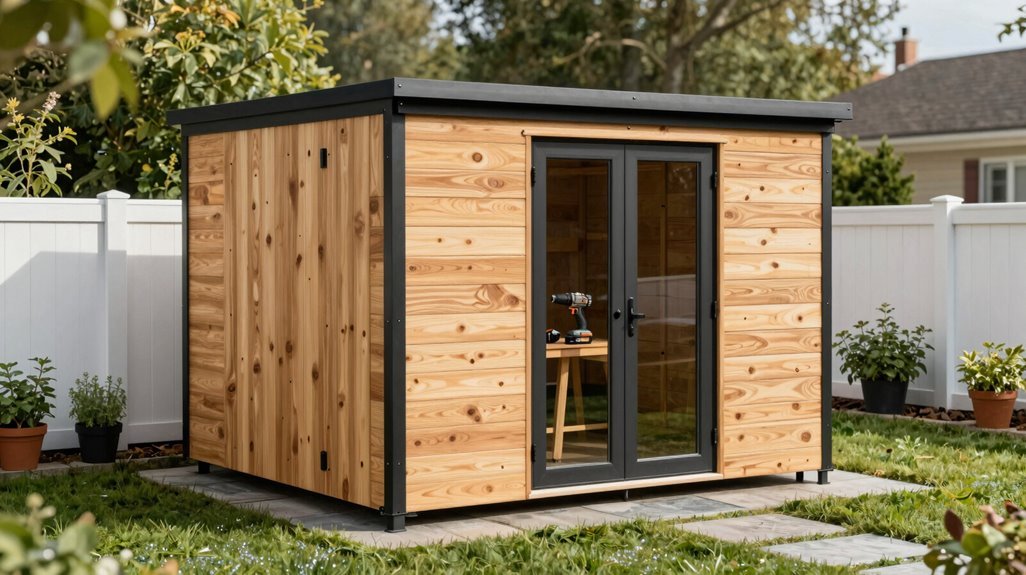
Why wrestle with lumber cuts and zoning headaches when a prefab unit arrives ready to anchor? I’ve crunched the numbers, and here’s what I’ve found.
1. Prefab Kits: Speed Meets Savings
Prefab kits run $20–$150 per square foot, far leaner than custom builds. With professional assembly adding just $10–$20 per square foot, you’re looking at rapid installation without the contractor markup. Labor costs? Minimal, especially if you DIY.
2. Custom Construction: Craftsmanship at a Premium
Going bespoke means builders charging $50–$100 hourly, with installation labor hitting $40–$75 per square foot. Your material choice, vinyl ($200–$5,000), metal ($500–$700), wood ($3,000–$15,000), or brick ($3,200–$30,000), further shapes shed costs.
3. Foundation Reality Check
Gravel pads ($1–$2/sq ft) versus concrete slabs ($10–$12/sq ft), plus site prep, separate budget-friendly from built-to-last.
For most homeowners seeking that ideal backyard retreat, prefab kits deliver belonging without breaking the bank.
Getting Accurate Quotes From Shed Builders
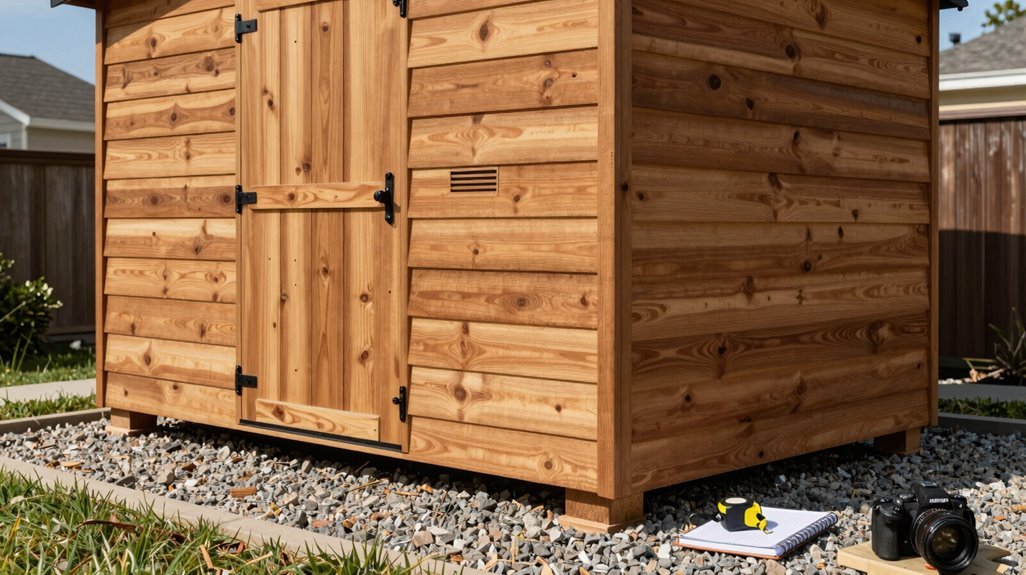
How do you cut through the noise and land a quote that actually reflects your vision? I’ve learned that precise shed quotes demand specificity. Vague requests yield vague numbers, and nobody wants surprises halfway through construction.
When gathering estimates, I always push for itemized breakdowns covering:
- Labor costs running $50–$100 per hour, where complex rooflines or custom joinery multiply hours fast
- Foundation options, gravel pads at $1–$2 per square foot versus concrete slabs at $10–$12, each anchoring your structure differently
- Site preparation realities, from land clearing ($1,266–$3,900) to delivery logistics that prefab kits ($10–$20/sq ft assembly) streamline
I mention intended use, home office, studio, storage, since electrical runs and insulation dramatically shift projections. Comparing three builders minimum, I verify they’ve walked my actual site.
5 Ways to Reduce Your Shed Cost Without Sacrificing Quality
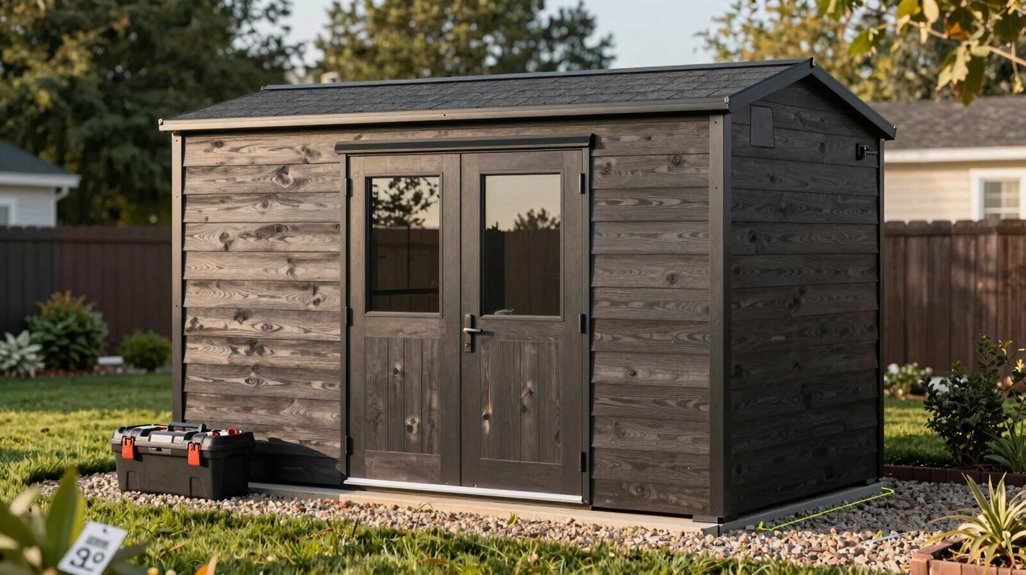
What separates a smart investment from a regrettable shortcut? I’ve learned it’s knowing where to trim without compromising what matters.
1. Size Down, Simplify Up
Choose compact dimensions and clean lines. Pricing runs $20–$150 per square foot, and I’ll tell you, soaring ceilings and complex footprints inflate budgets fast.
2. Embrace the Prefab Shed
Factory-built kits slice labor costs dramatically. Professional assembly adds $10–$20 per square foot, but handling construction myself keeps money where it belongs: in my pocket.
3. Select Smarter Materials
Vinyl ($200–$5,000) or metal ($500–$700) outperforms wood ($3,000–$15,000) for durability, demanding minimal upkeep across seasons.
4. Rethink Your Base
Gravel pads ($1–$2 per square foot) versus concrete ($10–$12) slash foundation costs without sacrificing stability in most climates.
5. Skip the Frills
Resist insulating, wiring, or custom windows until later. Functional upgrades can follow when budget allows.