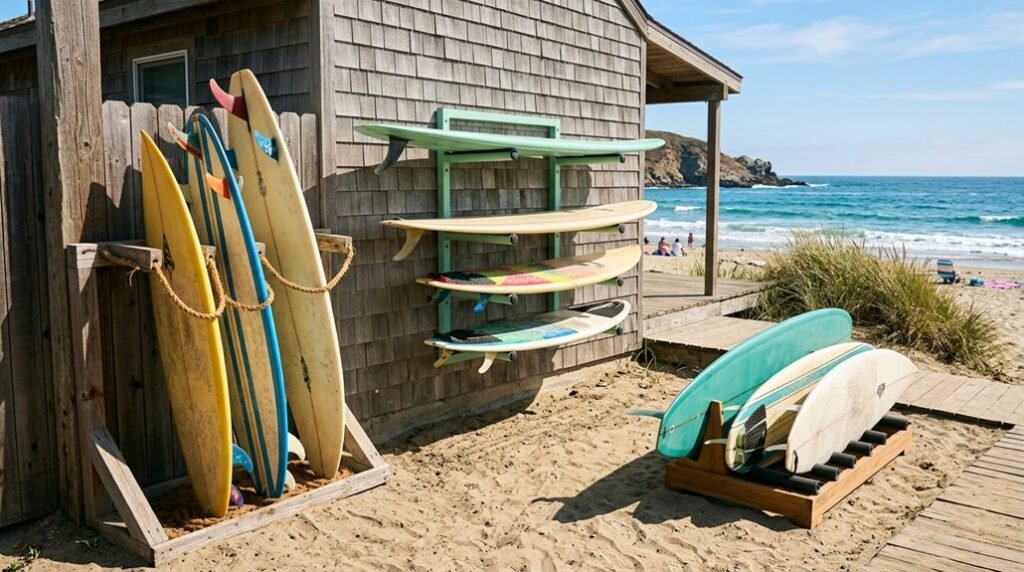
It wasn’t until my third board delaminated that I realized proper storage isn’t optional, it’s architectural necessity. I’ve tested solutions across three climates, from salt-heavy coastlines to desert heat islands, and found durability hinges on elevation, drainage, and UV mitigation. These three approaches balance structural integrity with spatial constraints.
Build an Outdoor Surfboard Rack From One Pallet
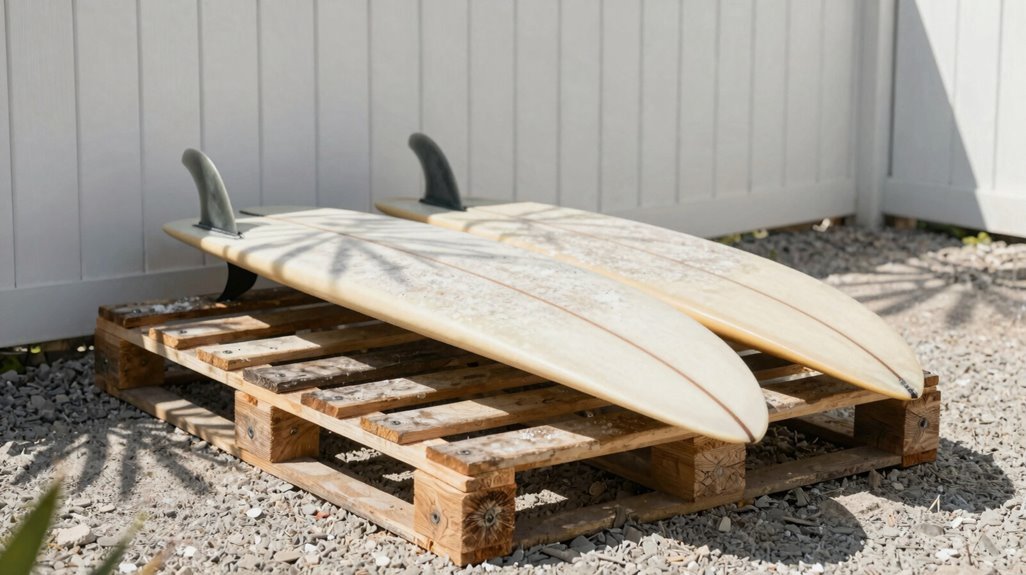
Although I’ve built racks from virgin lumber, nothing matches the raw utility of repurposing a single pallet into weather-resistant surfboard storage. This outdoor storage solution transforms discarded infrastructure into architectural function: minimal cost, maximum character.
1. Source Your Pallet
I hunt for pallets with tight slat spacing (under 2 inches) and minimal splitting, making sure my surfboard rack cradles boards without wobble. Reject water-damaged stock; it’ll fail when you need it most.
2. Engineer the Cradles
I dismantle the pallet, repurposing slats into angled cradle supports. Each rest requires a 15-degree incline, preventing rainwater pooling while allowing drainage.
3. Weatherproof the Assembly
I treat all surfaces with marine-grade sealant, then secure with weather-resistant fasteners. This protects against UV degradation and coastal humidity.
4. Elevate and Drain
I mount boards 6 inches off-ground, creating functional sculpture that breathes.
Mount Exterior Wall Racks When Floor Space Is Tight
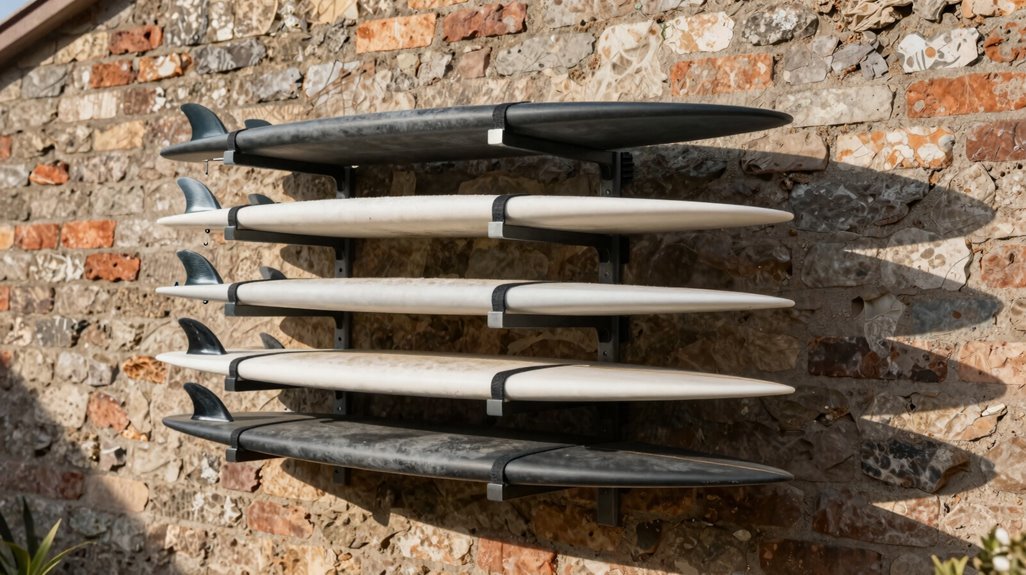
Where does a nine-foot longboard live when your patio measures six feet across? I’ve found my answer in outdoor wall racks: vertical solutions that transform dead wall space into functional storage without sacrificing precious ground area.
Vertical wall racks transform dead space into functional storage without sacrificing precious ground area.
1. Select Two-Arm Exterior Wall Mounts for Structural Integrity
I choose dual-arm systems that cradle the board’s rails, distributing weight along vertical studs. This prevents the dreaded center sag that warps foam and fiberglass over time. For my longboard, I drill mounting points every 16 inches, matching stud spacing, or deploy toggle bolts rated for 75-pound outdoor loads when masonry intervenes.
2. Specify Weatherproof Surfboard Storage Materials
I insist on powder-coated aluminum or treated hardwood with stainless hardware. These are materials engineered to withstand salt air, driving rain, and thermal cycling without corrosion or rot.
3. Prioritize UV Protection in Rack Design
I position boards horizontally, fins-out, beneath eaves or awnings. This minimizes direct sun exposure that degrades resin and yellows foam, extending my craft’s lifespan through brutal summers.
Add Portable Shade for Uncovered Outdoor Spots
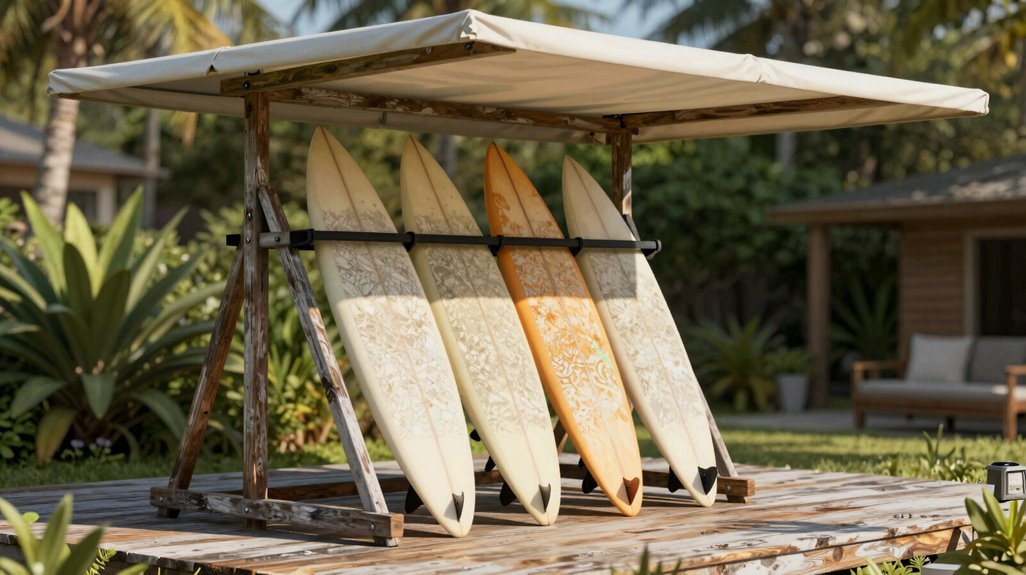
How do I shield my boards when there’s no roofline to hide beneath? I deploy portable shade, transforming exposed patios, driveways, and garden corners into sanctuaries of UV protection.
For surfboard storage demanding flexibility, I’ve found these shade solutions indispensable:
- Pop-up canopies with aluminum frames deploy in minutes, creating 10×10-foot zones of refuge against solar degradation
- Retractable shade sails, triangular or quadrilateral UV-treated fabrics, anchor to exterior walls, adjusting with seasonal azimuth shifts
- Foldable shade cloths, tensioned between posts, filter 90% of radiation while permitting airflow
I position boards in protective bags, elevated off concrete to prevent conductive heat transfer. Wind-rated anchoring matters; I’ve watched insufficiently secured structures collapse in afternoon sea breezes.
Inspect quarterly for fabric fatigue.