
When I set out to build my own backyard workspace last spring, I faced the same question you’re likely weighing now: which shed material actually delivers for your climate, budget, and, let’s be honest, your tolerance for weekend maintenance? I’ve walked lumber yards, compared gauge thicknesses, and watched vinyl panels snap together in under an hour.
What I discovered is that your choice between metal, wood, and resin isn’t just about storage; it’s about how you want your property to function, look, and endure. Here’s how each option breaks down.
Metal, Vinyl, or Wood: How to Choose Your Shed Material
When I’m standing in my backyard, surveying the patch of earth where storage chaos meets architectural potential, I ask myself: what material will actually survive the seasons I’m planning to endure?
I’ve learned that shed materials define everything: durability, weather resistance, and how my storage space actually functions.
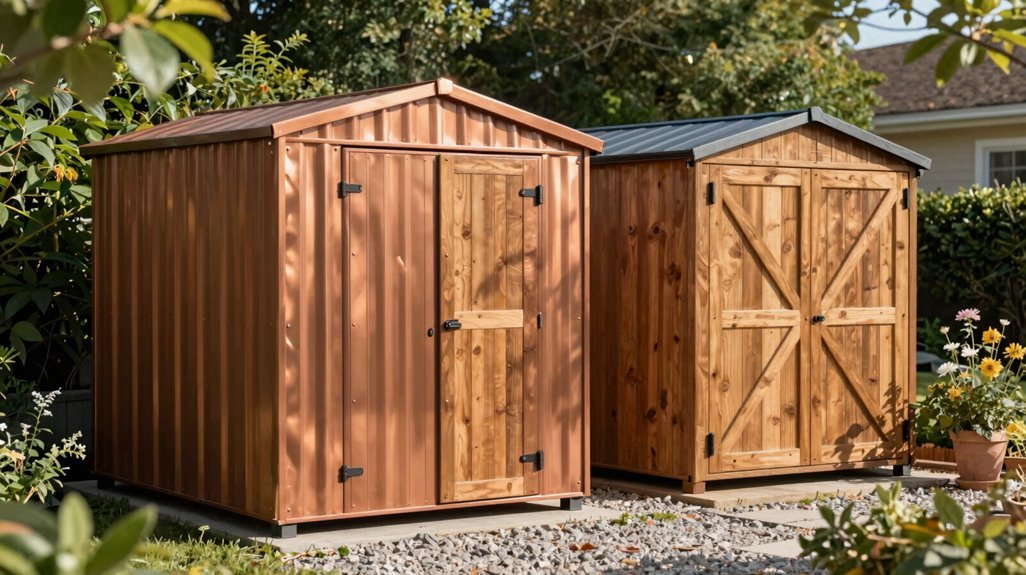
Metal sheds, like Arrow’s electro-galvanized steel Spacemaker and Woodridge lines, offer industrial-grade longevity with minimal upkeep. They’re the pragmatic choice when I’m prioritizing structural integrity over rustic charm.
Industrial-grade longevity meets minimal upkeep: metal sheds deliver structural integrity when rustic charm takes a backseat to pragmatism.
Wood sheds deliver that traditional aesthetic I crave: natural grain textures that complement my garden tools and landscape. The Duramax Woodstore blends this warmth with steel reinforcement for hybrid resilience.
Vinyl sheds, exemplified by Rubbermaid’s high-resin vertical units and Duramax’s weatherproof plastic Arc Lid, provide maintenance-free convenience; no rot, no rust, just clean shed design that endures.
My choice reflects my climate, my labor tolerance, and the architectural statement I’m making.
EZEE Sheds: Half the Build Time for Small Spaces
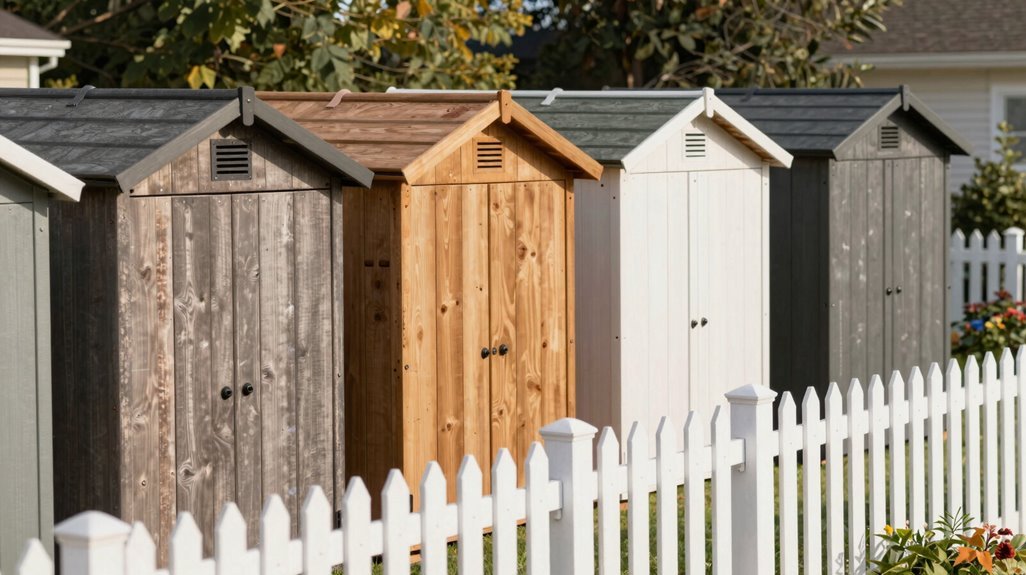
The backyard corner I’ve been eyeing for months, roughly six by five feet of untapped potential, demands a storage solution that won’t consume my entire weekend. That’s where the EZEE Shed by Arrow Storage enters my plans: a steel shed promising half the build time without sacrificing structural integrity.
I’ve examined the Arrow 6×5 EZ6565LVCC in Charcoal and its Cream & Charcoal counterpart, both designed specifically for small spaces where every inch matters. This shed kit arrives with pre-cut panels and a snap-together frame, engineering that changes backyards without the usual construction headaches.
Arrow Storage currently offers these models at clearance pricing, $349.95 for Charcoal, $319.95 for Cream & Charcoal, with free shipping nationwide. For gardeners seeking quick build time and lasting storage shed solutions, this steel construction delivers professional-grade shelter without the weekend sacrifice.
Vertical vs. Horizontal: Matching Shed Design to Your Storage Needs
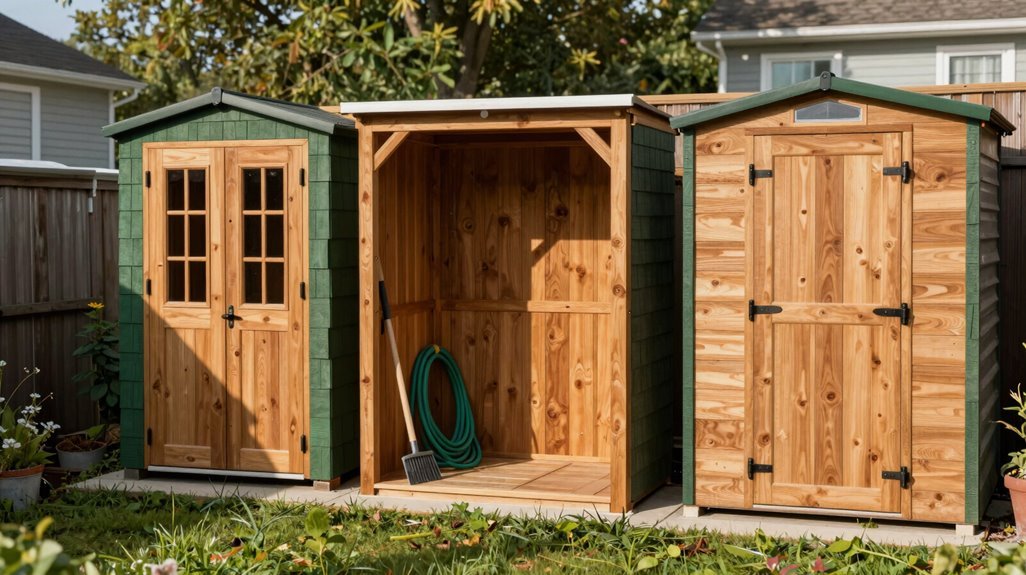
Why let a shed’s silhouette dictate your backyard’s potential? I’ve learned that choosing between vertical designs and horizontal designs means matching your storage needs to your space.
1. Vertical Designs: Skyward Solutions
Vertical garden sheds maximize floor space efficiency through tall, narrow footprints, stacking shelving and tool storage upward while preserving precious ground area. Their tall interior space accommodates mowers and patio furniture without sprawling.
Vertical sheds stack storage skyward, preserving ground space while still fitting mowers and patio furniture inside their tall, efficient footprints.
2. Horizontal Designs: Accessible Low-Profiles
Horizontal configurations emphasize wide door access, prioritizing retrieval of bulkier items like rakes and hoses through lean-to-inspired, shallow footprints.
3. Material Considerations
Whether selecting electro-galvanized steel or resin, durability varies by orientation under weather exposure.
4. Your Decision
Ask yourself: Do you need compact efficiency or easy equipment access? Your answer shapes the right fit.