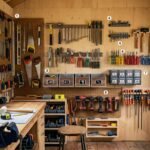
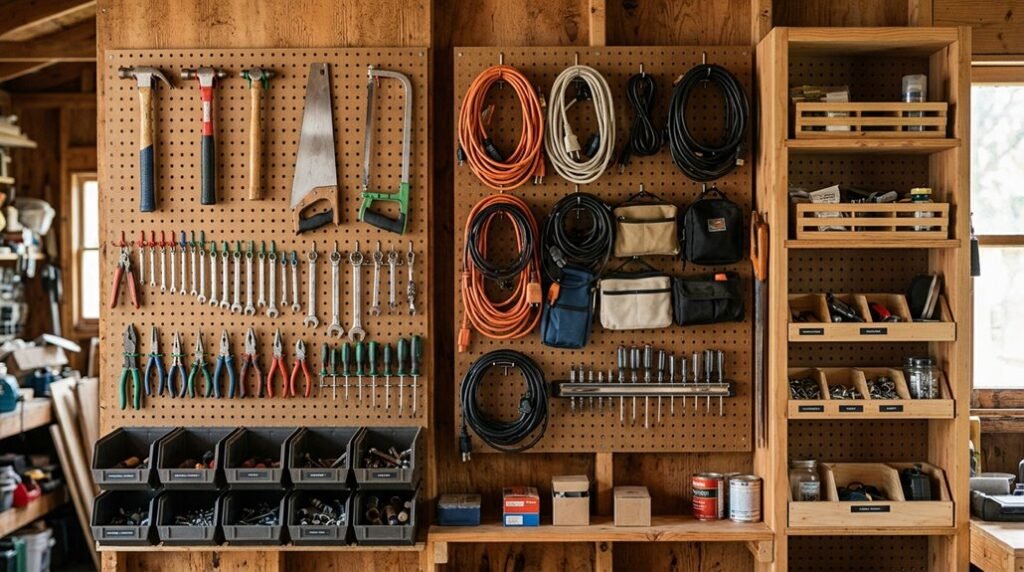
I’ve spent years wrestling with cluttered sheds, tools buried in bins, cords tangled like vines, until pegboard transformed my workflow.
These three strategies reimagine vertical storage: color-coded systems that map function to hue, industrial-grade hardware that defies gravity, and architectural dead zones reclaimed behind doors and in corners.
Each approach balances load-bearing physics with visual clarity, turning utilitarian walls into intuitive command centers.
The question isn’t whether your shed can accommodate more; it’s whether you’ve been looking at empty space all wrong.
Color-Code Your Pegboard Shed Wall by Tool Type
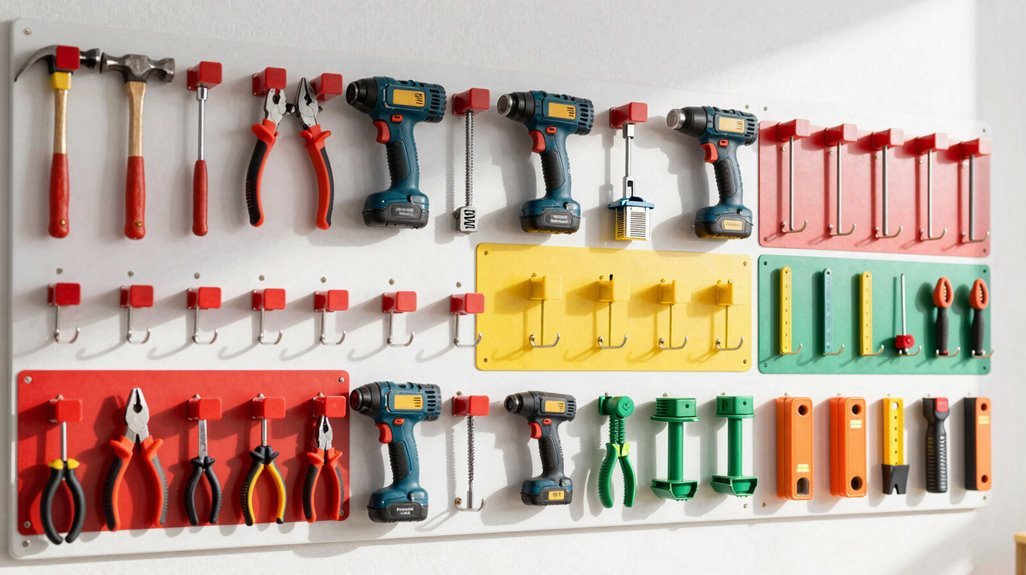
Why fumble through a cluttered shed when color can guide your hand? I color-code my pegboard shed wall by tool type, transforming chaos into intuitive organization. Red hooks cradle cutting tools, blue anchors driving implements, green cradles garden hand tools; each hue a beacon in my storage space.
I paint pegboard backing with weather-resistant enamel, so my color-coded system survives seasons. Matching bins nestle beneath, creating vertical continuity across the wall. I mount label plaques at the pegboard edge; my legend welcomes newcomers into our organized community.
Come summer, I recolor sections: lighter tones for pruning shears, deeper hues for winter maintenance gear. This seasonal flexibility keeps my organization current without hardware changes. Together, we build systems that remember so we don’t have to.
Choose Heavy-Duty Hooks Before Adding Shelves or Bins
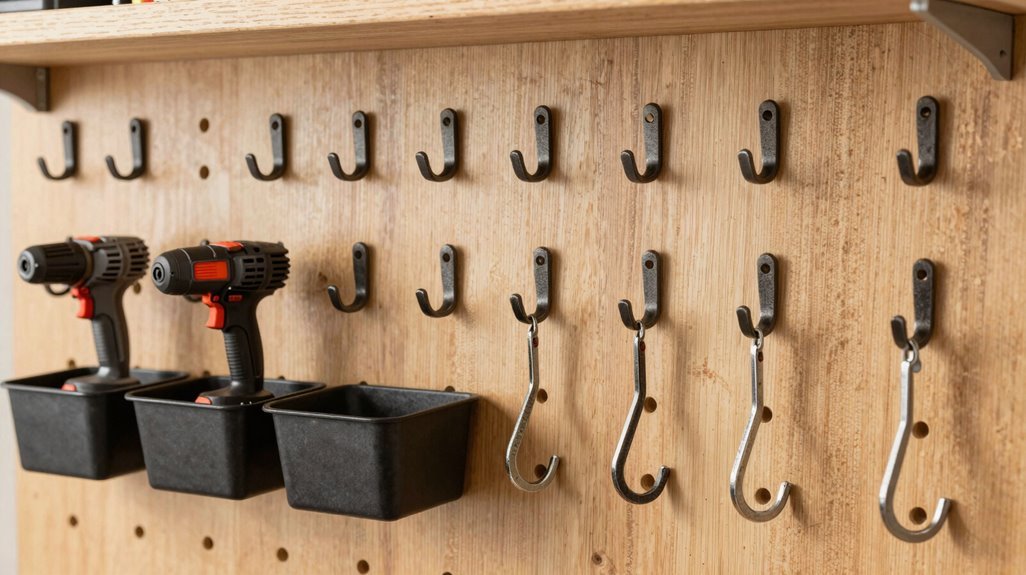
Once my color-coded system maps where everything belongs, I turn my attention to what actually holds it all in place. I select heavy-duty hooks rated for 50–100 pounds each, ensuring my pegboard won’t buckle under rakes, shovels, or power drills. I pair heavy tools with multiple hooks for proper weight distribution, keeping everything flush against the surface.
| What I Protect | How I Feel | Why It Matters |
|---|---|---|
| My grandfather’s level | Grounded in tradition | His craft lives through my hands |
| My daughter’s first hammer | Connected across generations | She’ll inherit this space someday |
| My weekend projects | Capable and prepared | Every tool waits exactly where I left it |
I mount with wall anchors into studs, sometimes adding a backing panel for rigidity. Lower rows hold heavy items; lighter ones rise above.
For true load transfer, I integrate supported rails behind my pegboard, transforming simple tool organization into resilient shed storage before shelving and bins complete the system.
Hide Extra Pegboard Behind Shed Doors and in Corners
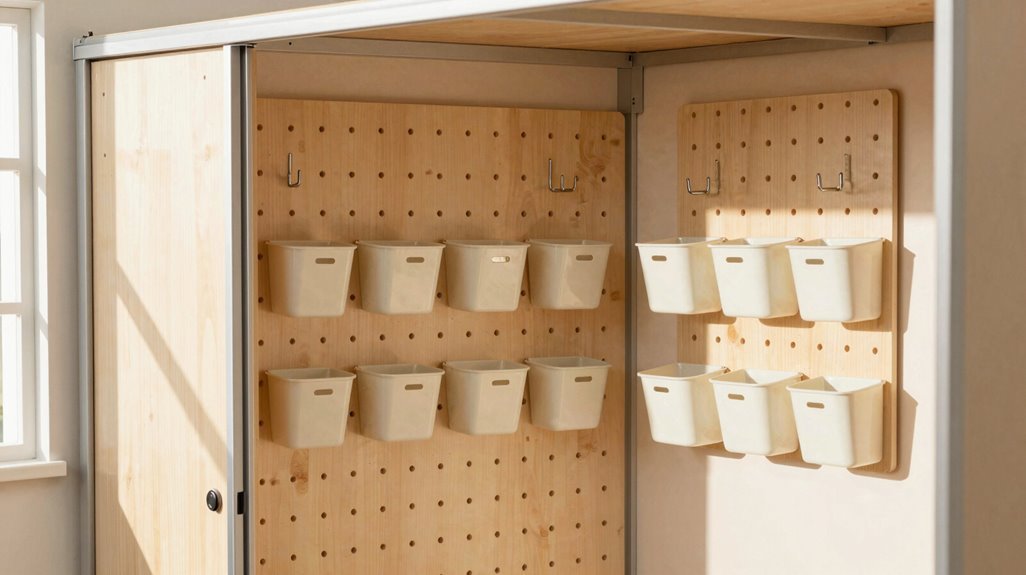
Where else can I reclaim wasted space? I’m looking right at my shed doors and those awkward corners.
1. Door Surfaces: Hidden Vertical Storage
I’m installing pegboard behind doors, transforming dead zones into wall-mounted storage for cords and seasonal gear. With secure mounting into studs, I’m creating tool organization that disappears when I close up.
2. Corner Solutions: Angled Efficiency
I’m fitting corner pegboard sections into 90-degree junctions, building vertical storage for hand tools without consuming floor area. This approach works well for compact sheds everywhere.
3. Organization Systems: Visual Clarity
I’m pairing labeled hooks with color-coded hooks, blue for electrical and red for cutting, so I grab what I need instantly. Small parts live in bins; nothing hides.
Together, these strategies maximize shed storage without expanding my footprint.