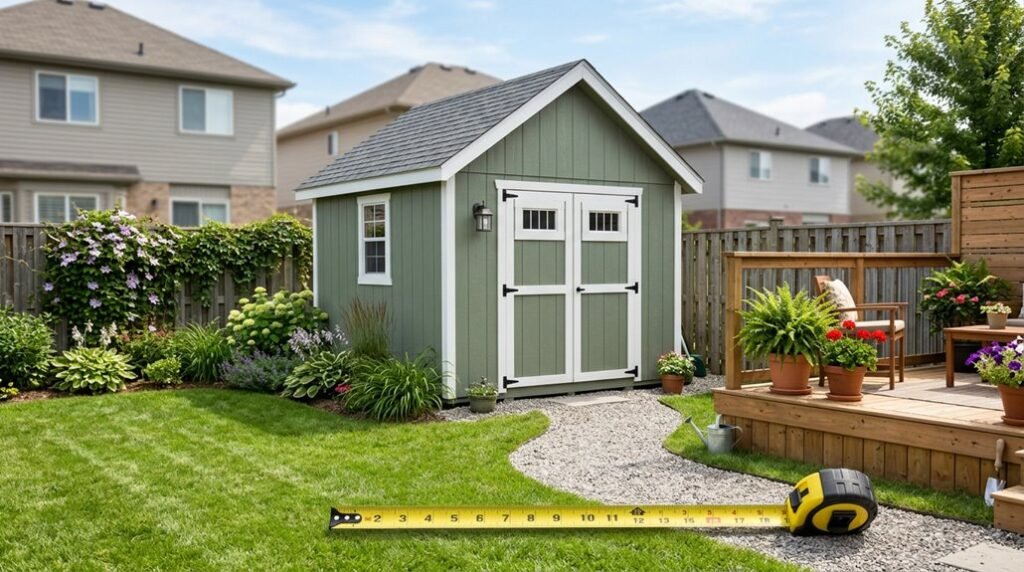
Most homeowners underestimate how much wall thickness steals from interior volume, so an 8×10 shed often yields only 7×9 of usable floor space once framing and siding claim their share.
I’m walking you through the real math of shed sizing, from nominal dimensions to net clear span, because getting this wrong means tripping over your lawnmower for the next decade.
You’ll need to know three things before breaking ground: what you’re storing, where you’re walking, and what your municipality allows.
What Size Shed Do I Need? Start Here
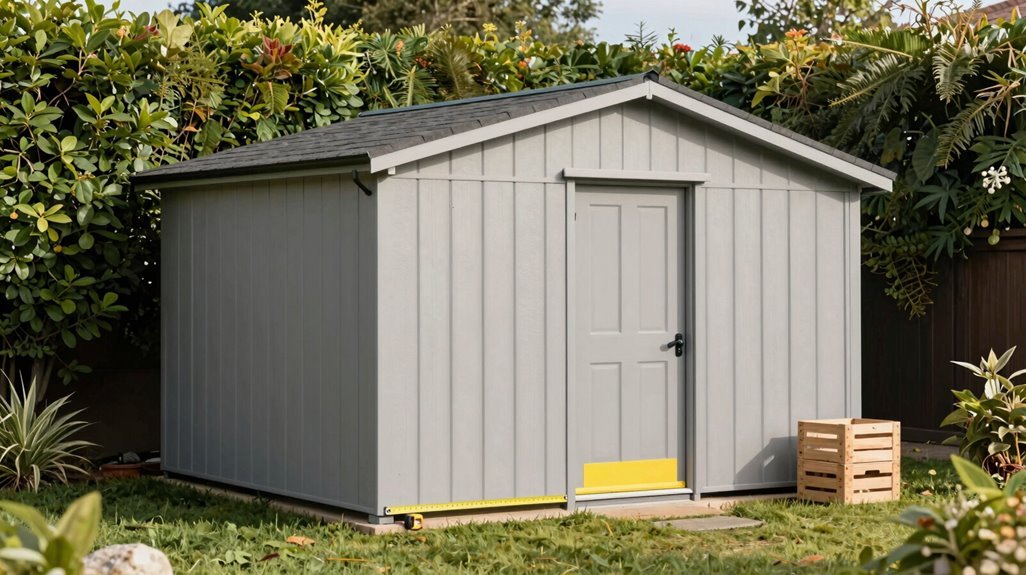
Why start with square footage when what you really need is clarity on purpose? I always begin by asking what my shed must actually do: store garden tools, shelter a workshop, or house a vehicle, because this mission dictates everything that follows.
For storage, I’m looking at small footprints (48–80 sq ft for 6×8 or 8×10 builds), medium spans (96–120 sq ft in 8×12 or 10×12 configurations), or generous volumes (160–192 sq ft at 10×16 or 12×16). These shed sizes aren’t arbitrary; they’re what builders actually stock.
When footprint planning, I leave 25% breathing room for future growth and movement. I check local codes. Many jurisdictions waive permits under 100–120 sq ft, though I always verify with my building department and HOA before breaking ground.
Which Size Category Actually Fits You?
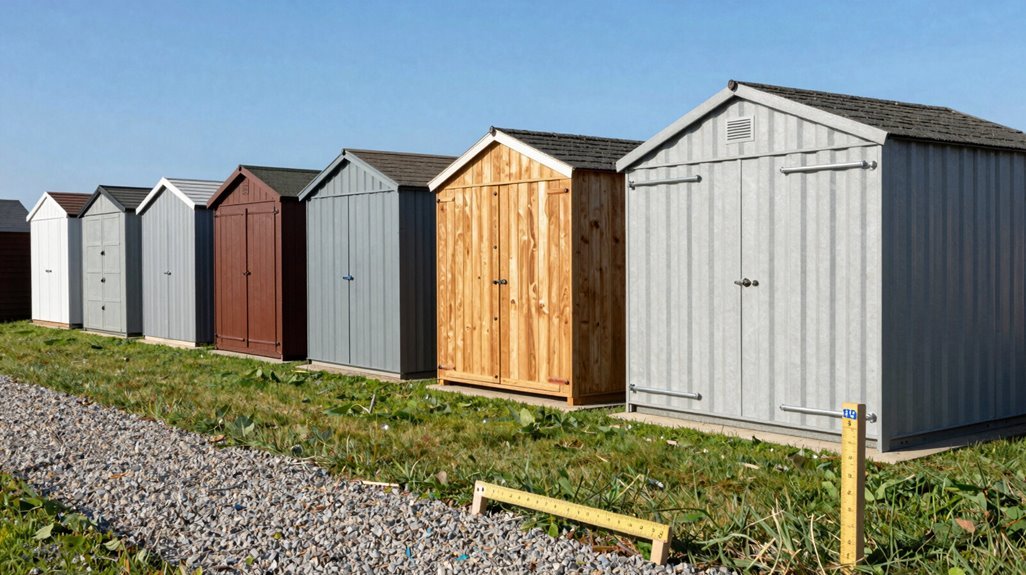
How do you match your ambitions to the right footprint? I guide you through finding where you belong among three distinct shed size categories, each designed for specific storage needs and lifestyle aspirations.
- Compact Havens (6×8 to 8×12): These 80-square-foot retreats shelter your essential yard tools, hoses, and push mowers, perfect when you’re starting your outdoor journey with modest square footage.
- Versatile Mid-Size (8×12 to 10×12): At 96–120 square feet, I’m talking bikes, grills, and organized shelving: your gateway to hobby space without overwhelming your landscape.
- Expansive Studios (10×16 to 12×16): These 160–192-square-foot structures transform into workshops, home gyms, or art studios, where serious creators belong, storing small tractors alongside multiple bikes.
Starting at 10×14, I always recommend adding 25% extra space. Breathing room helps your ambitions never outgrow your sanctuary.
What Will You Store Inside?
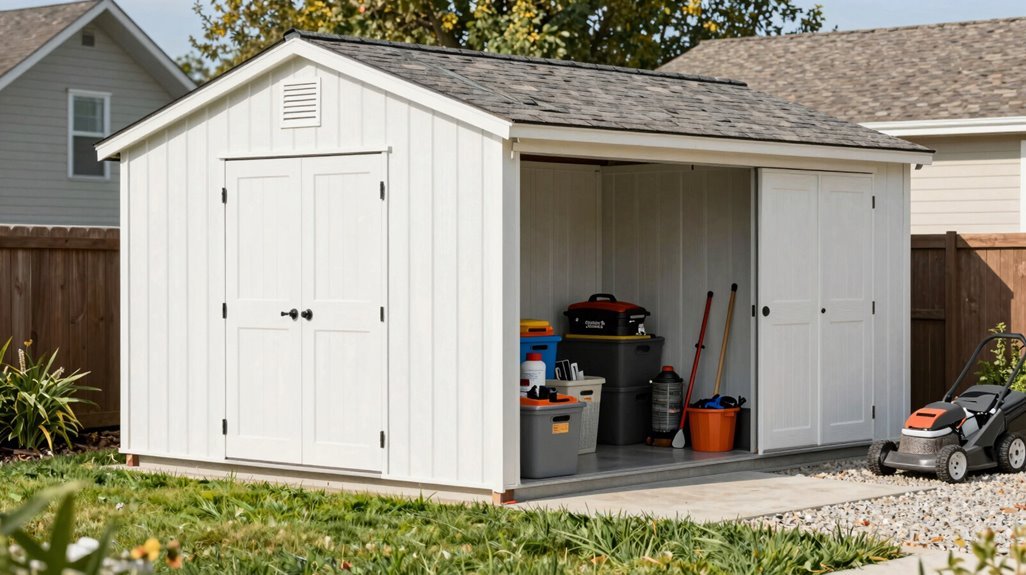
Now that you’ve found your category, let’s look at what actually goes inside. Your storage needs—tools, hoses, bikes, grills, gardening equipment—directly shape the shed dimensions you’ll require.
- Compact Storage (8×8 to 8×12). Basic hand tools, extension cords, and garden hoses fit neatly here. I’ve seen homeowners tuck these sheds against property lines, maximizing remaining yard space.
- Standard Capacity (10×12). A riding mower slides in, though you’re sacrificing flexibility: deck clearance and turning radius consume precious square footage.
- Expansive Solutions (12×16+). Workshop potential emerges here; hobby space accommodates workbenches alongside seasonal gear.
Plan ambitiously. Storage needs compound: today’s minimalism becomes tomorrow’s overflow. Selecting 10×14 or 12×16 now prevents the familiar regret of outgrowing your foundation.
How Much Walking Space Do You Need?
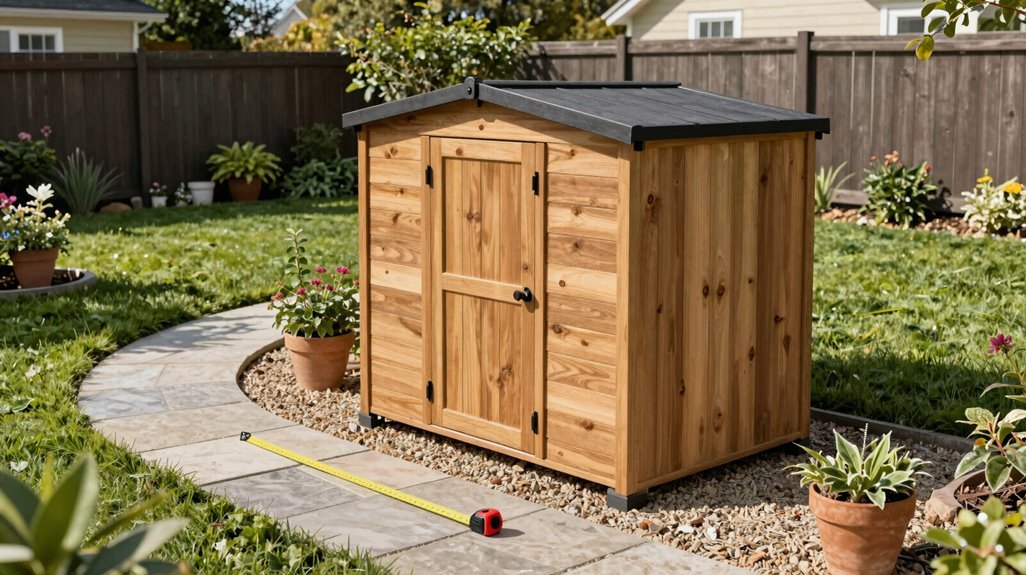
Layout planning demands more than stacking belongings against walls. I need walking space that lets me move freely, without shifting everything to grab a single tool. When considering shed dimensions, I always factor in clearance: two feet minimum for pathways, more if I’m hauling equipment.
- Measure your movement: I account for door swing and turning radius before finalizing any layout.
- Avoid wall-to-wall packing: I leave breathing room between stored items, access matters more than capacity.
- Size-appropriate walkways: In an 8×12 shed, I preserve one usable corridor; in 10×16 or 12×16 spaces, I design multiple clear corridors.
- Plan for the bulky stuff: I make sure bikes, mowers, and seasonal gear remain reachable without excavation.
- Visualize first: I use the Shed Designer to simulate traffic flow, checking comfortable walking space before committing.
Will Your Yard Fit the Shed You Want?
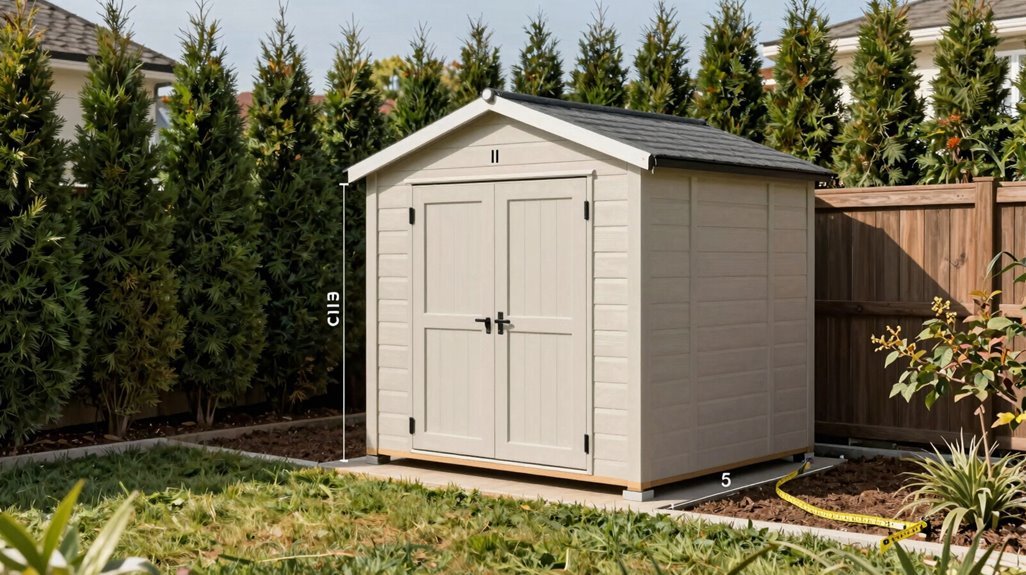
Where exactly will this structure live? I’ve learned that dreaming up the perfect shed size means nothing if it won’t actually fit in my yard space.
Before committing, I’m measuring my proposed location carefully, allowing twelve inches for foundation clearance plus two feet for pathways, confirming both proper fit and access. I’m checking for power lines overhead, tree roots below, house overhangs encroaching, and any obstacles that could block placement or entry.
I’m also using the Shed Designer and 3D layout tools to simulate my belongings inside, confirming my chosen dimensions work for both storage needs and remaining yard space. Standard sheds run 8×12 to 14×20, with larger workshops at 12×16 or 12×20, though I’m confirming local setbacks and HOA rules with my building department before purchasing, since placement restrictions vary by municipality and neighborhood covenant.
Do You Need a Permit for That Shed Size?
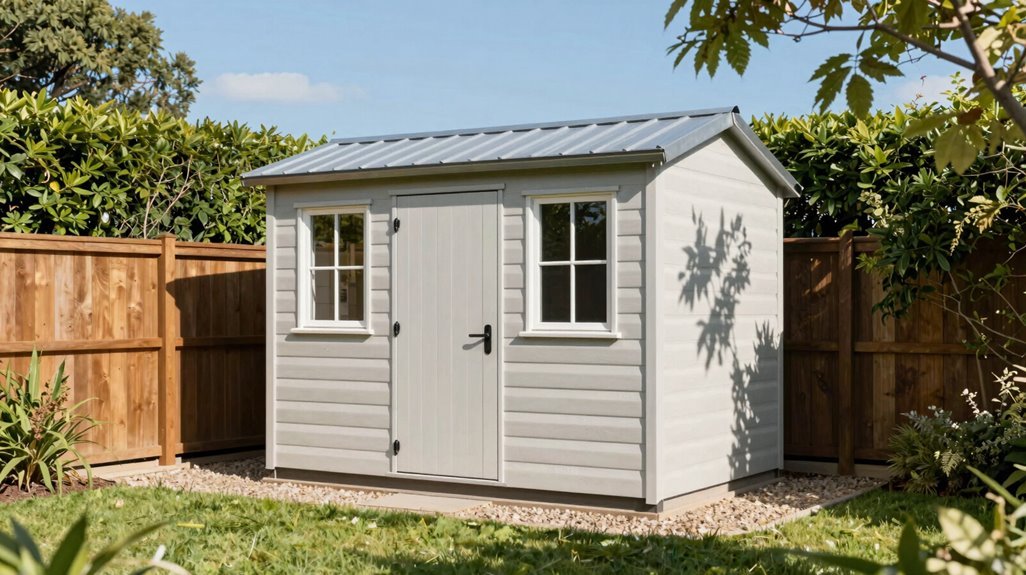
Once I’ve confirmed my yard can accommodate the footprint I’m envisioning, I’m turning my attention to whether the authorities will let me build it at all, because square footage isn’t just about storage capacity. It’s often the line between a simple weekend project and a months-long permitting process.
- Research your local regulations early. Calling the building department saves headaches, not time wasted on non-compliant shed sizes.
- Know the 100-square-foot threshold. My compact 8×8 or 8×10 design often slides under permitting radar in many jurisdictions.
- Measure twice, permit once. That tempting 10×12 expansion might trigger bureaucracy I’d rather avoid.
- Respect the 120-square-foot ceiling. Some counties allow this, but mine might not, so I’m verifying before breaking ground.
- Account for HOA covenants. Even permit-free structures face aesthetic restrictions in planned communities I’d hoped to join.
Will a Riding Mower Fit in Your Shed?
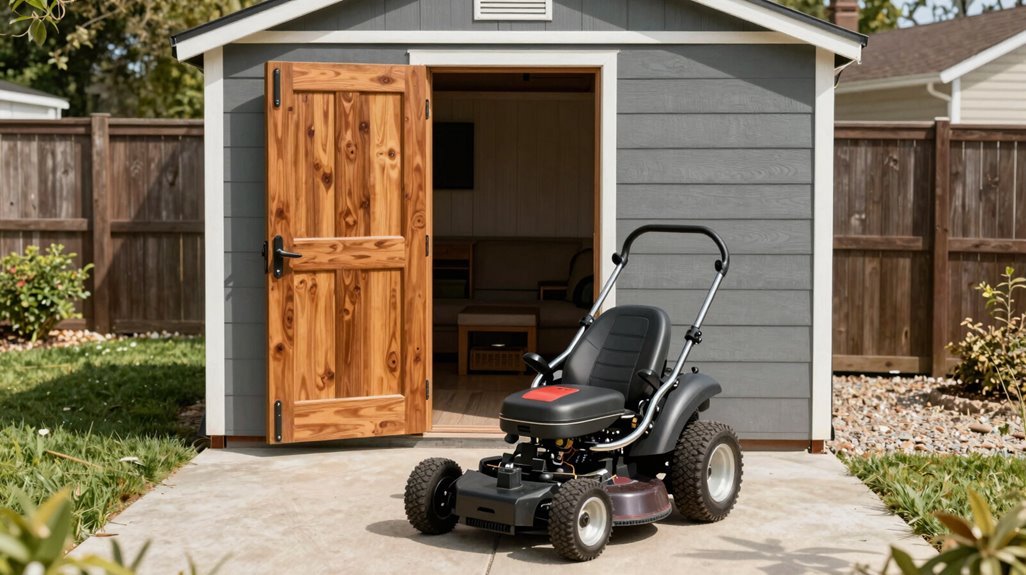
How quickly a modest lawn tractor reshapes your entire shed calculus. I’ve learned that squeezing a riding mower into cramped quarters turns every weekend into a spatial puzzle nobody wants to solve.
| What You Feel | What You Gain |
|---|---|
| Claustrophobia wrestling the mower past garden tools | A 10×16 storage shed with breathing room for both machine and self |
| Frustration when the deck catches the doorframe | Strategic clearance that honors turning radius and dignity |
| Regret watching neighbors upgrade while you’re stuck | 12×18 proportions that welcome future attachments without apology |
| Exhaustion from vertical storage compromises | Lofted designs reclaiming height for seasonal gear |
Taller mowers demand wall height respect, baggers especially. When I plan clearance around my storage shed, I’m not just parking equipment; I’m preserving access, protecting investment, and claiming space that works as hard as I do.
How Much Extra Space Should You Plan For?
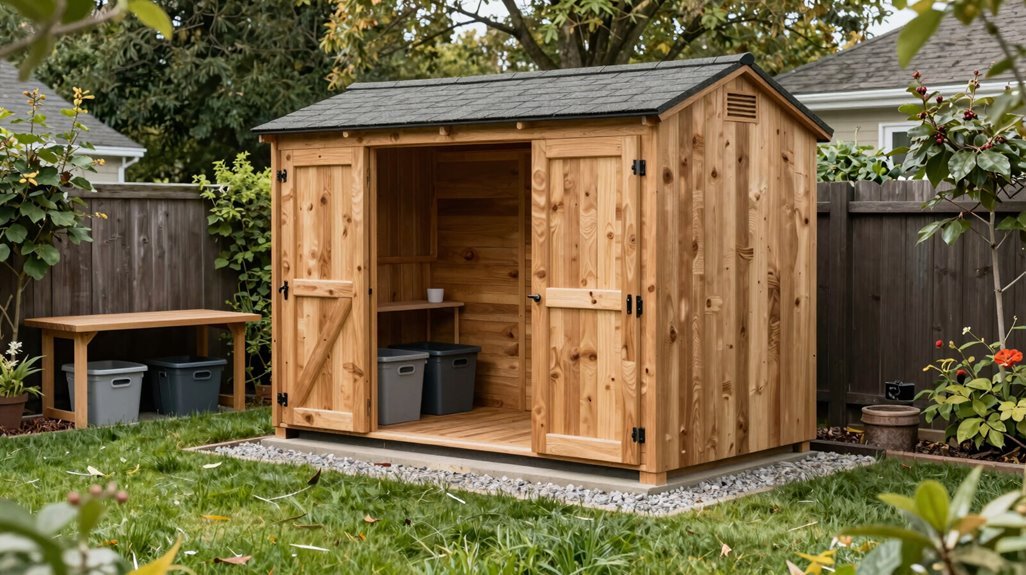
Why settle for a shed that fits only today’s clutter when tomorrow’s ambitions deserve room to breathe? I’ve learned that smart storage planning means building in breathing room, because our collections grow, our hobbies evolve, and our needs shift like seasons across the landscape.
When I’m sizing up shed size, I follow the “25% rule”: start with what fits now, then expand. That 10×14 becomes a 10×18, giving extra space for the kayak I’ll impulse-buy next spring or the potting bench I’ll craft from reclaimed lumber.
Here’s what belongs in your future-proofed sanctuary:
- Vertical expansion, wall-mounted racks and lofted platforms multiply square footage without expanding the footprint
- Circulation corridors, thirty-six-inch aisles between stored items prevent the dreaded Tetris shuffle
- Seasonal rotation zones, dedicated bays for holiday decorations, camping gear, and winter equipment
- Workbench buffer, four feet of clearance around any workspace accommodates material overflow
- Door swing radius, accounting for full arc clearance prevents the frustration of blocked entry
Your shed isn’t merely storage, it’s the architectural extension of your domestic realm.
What Free Tools Calculate Your Exact Shed Size?

Where exactly does your shed sizing journey begin when tape measures and guesswork fall short? I’ve found two indispensable digital companions that transform uncertainty into architectural precision.
1. Square Footage Calculator
This tool computes external square footage from your Length and Width inputs, delivering external dimensions alongside approximate internal square footage, accounting for wall thickness and material specifications. You’ll see outside measurements first, then usable interior space.
2. Shed Size Estimator
This estimator sorts your possessions into tailored categories: Fuel Cans, Bikes, Ladders, Push Mowers, Riding Mowers. It guides you toward small, medium, or large classifications, anticipating future acquisitions through lofts, shelving, overhead expansion. Optional contact assistance connects you with specialists refining calculations.
Both tools accommodate evolving storage narratives, helping your structure expand alongside your needs.