
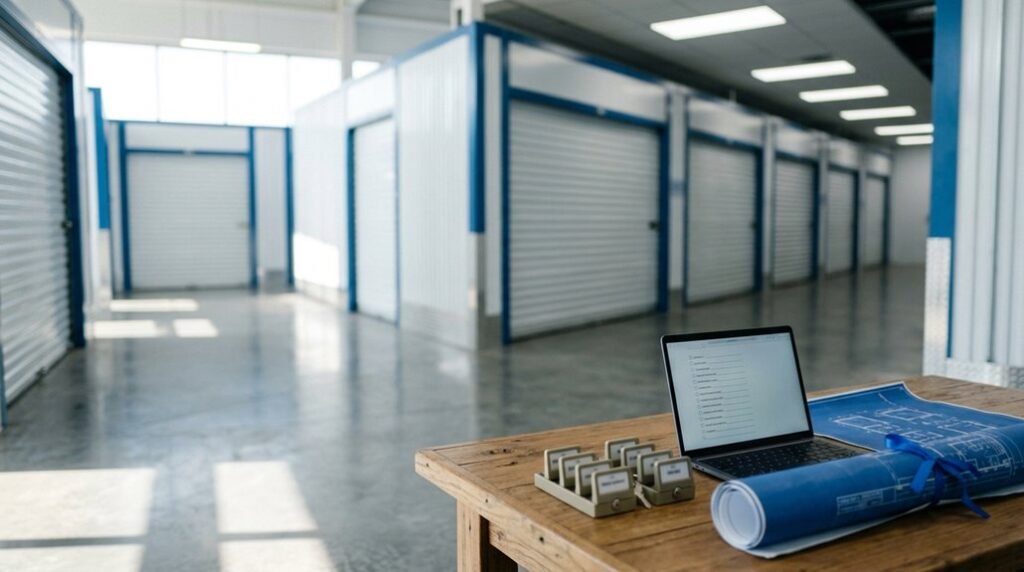
I’ve spent months analyzing cap rates and zoning overlays, and I’m convinced the self-storage sector in 2027 rewards operators who move fast, but methodically. You’ll need to master five distinct phases, each with its own pitfalls: market intelligence, capital structuring, asset acquisition, architectural programming, and revenue operations.
The margins are thinner than they look. I’ll walk you through what I’ve learned, starting with why your first site selection mistake could cost you eighteen months of cash flow.
Research Your Self-Storage Market: Demand, Competition, and Site Selection

Where exactly does one begin when entering a $40 billion industry? I’ve found it starts with rigorous market research, immersing yourself in the self-storage market until patterns emerge. Here’s how I approach it:
- Map Your Target Area. I’m scanning urban corridors within 3–5 miles of residential zones and business districts, noting where renter populations cluster: over 80% of Americans now live in cities, creating sustained demand.
- Gauge Accessibility. I’m prioritizing sites near major thoroughfares, weighing traffic flow and visibility. Architectural site plans mean nothing if customers can’t find you.
- Assess Competition. I’m studying existing facilities’ occupancy rates (70–95% signals healthy markets) and pricing structures, recognizing new builds stabilize in 18–36 months.
- Navigate Zoning Regulations. I’m examining local ordinances early. Permits can derail timelines.
- Conduct Feasibility Analysis. I’m weighing land costs against projected appreciation, determining whether to build ground-up or convert existing structures.
Finance Your Facility: Loans, Investors, and Capital Requirements
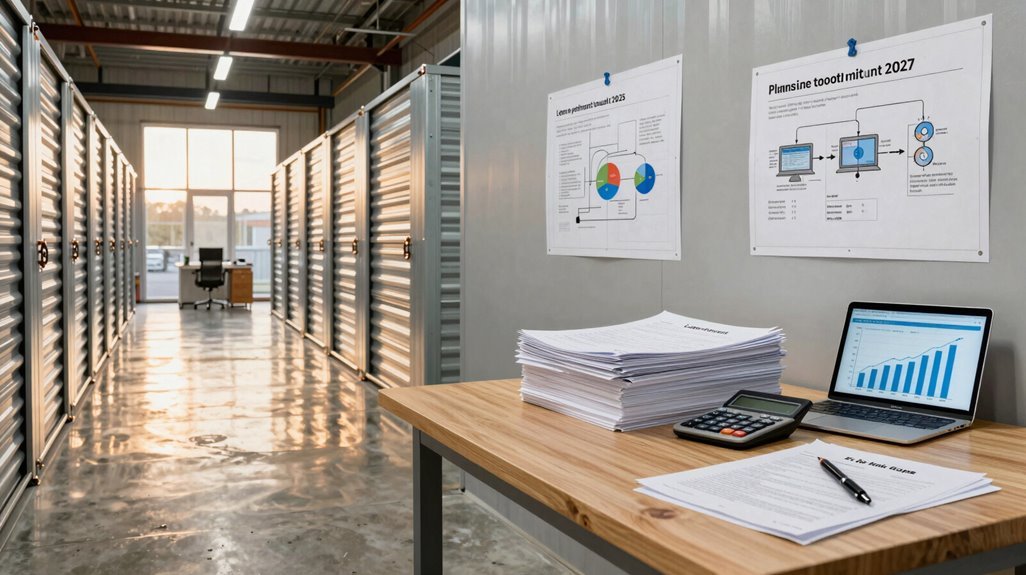
How does a vision translate into steel and concrete? It starts with understanding your capital requirements, and I’m here to walk you through it.
- Map your financing options: Commercial real estate loans, SBA loans, and private lenders each offer different paths; know which aligns with your timeline and risk tolerance.
- Calculate debt service coverage: Lenders scrutinize your DSCR; aim above 1.25 to secure favorable loan terms and protect your equity position.
- Balance debt and equity: Investors bring capital but demand returns; structure partnerships that preserve your control while meeting growth goals.
- Project cash flow precisely: Factor property taxes, staffing, and CapEx into your NOI estimates before approaching any financing source.
With solid numbers and the right mix of debt and equity, you’ll build something lasting; your foundation starts here.
Build, Buy, or Convert: Choose Your Path and Secure the Property
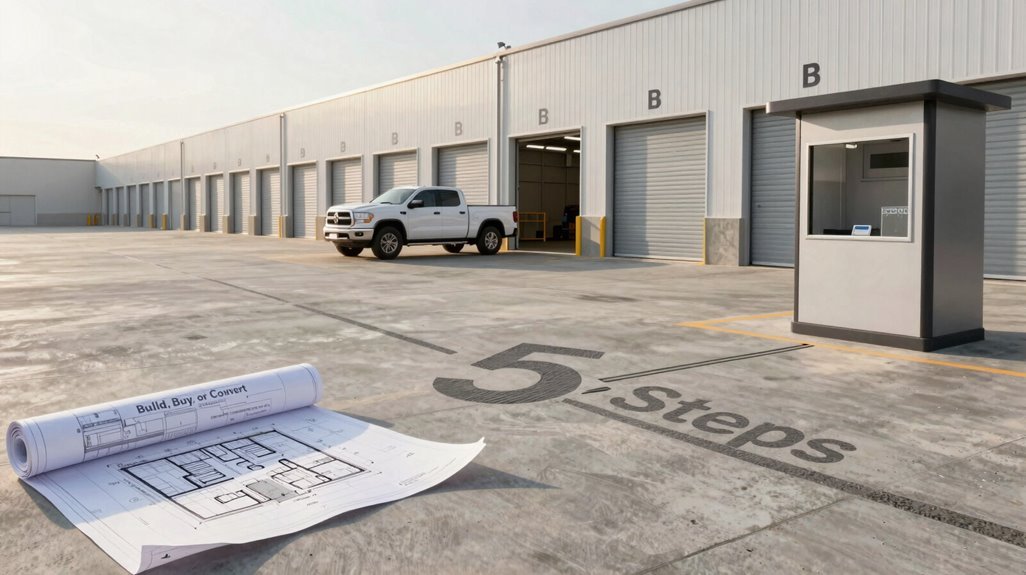
Why commit to a path before weighing what each demands of your capital and patience? I’ve studied the three routes, buy, build, or convert, and each shapes your future differently.
| Path | Advantages | Critical Considerations |
|---|---|---|
| Buy existing facility | Immediate occupancy, known rent roll, established location | Renovation costs, aging infrastructure, limited design flexibility |
| Build new construction | Full control over unit mix, modern access systems, optimized zoning compliance | $45–$130+ per sq ft costs, lengthy permitting, demographic risk |
| Convert property | Lower acquisition costs, adaptive reuse potential, faster timeline | Structural limitations, zoning challenges, retrofitting expenses |
Your location within a strong 3–5 mile radius drives everything. I’m watching population projections, income levels, and accessibility before securing any property. The right choice balances your timeline against long-term profitability. There’s no universal answer, only your calculated risk.
Design for Revenue: Unit Mix, Security, and Operational Systems
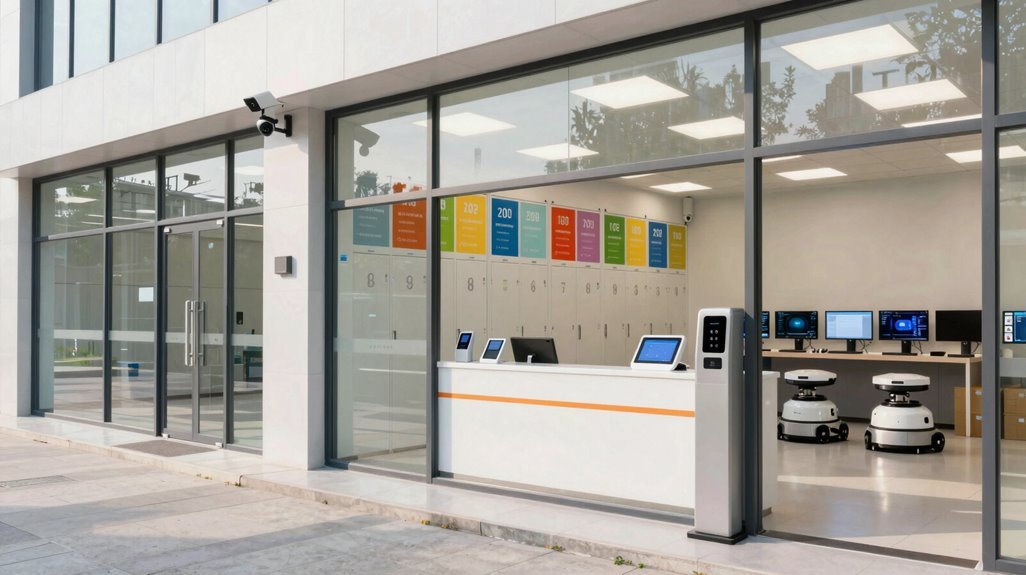
When I’m sizing up a facility’s earning potential, I’m really studying how every square foot pulls its weight, because revenue doesn’t materialize from concrete pads and roll-up doors alone; it emerges from deliberate orchestration of unit dimensions, sight lines, and frictionless customer journeys. Your storage unit design must balance unit mix, compact lockers for apartment dwellers, expansive bays for homeowners, with circulation patterns that minimize wasted corridor space while maximizing leasable square footage. Strategic facility layout isn’t merely functional; it’s the scaffolding upon which profitability rests.
Integrate climate control for temperature-sensitive inventory: wine collectors and document archivists pay premium rents for environmental stability. Deploy smart locks alongside comprehensive surveillance and layered security systems; customers belong where their possessions feel protected. Automate operational systems, mobile gates, digital contracts, autopay, to sustain occupancy rate without draining labor hours. Right-size your mix quarterly; track which units turn fastest, then adapt.
Open Your Storage Business: Marketing, Leasing, and First-Year Growth
Where exactly does a storage facility convert from steel-framed shell to revenue-generating asset? I’ve found it happens when self-storage marketing meets leasing velocity, when doors swing open and units fill with belongings.
My facility marketing strategy centers on market demand: digital campaigns, local partnerships, and streamlined rental rates that compete without racing to the bottom. I’m allocating 6.5% of projected revenue to customer acquisition, building occupancy management systems from day one.
First-year growth demands patience. With startup costs recovered through disciplined storage facility operations, I’m targeting 70% occupancy by month eighteen, knowing NOI accelerates once stabilization hits.
At $9 per square foot, my 50,000-square-foot facility projects $184,500 annual profit, which explains why this industry attracts operators seeking tangible returns on steel and concrete.