A storage unit is a vessel for possibility, holding the overflow of lives in transition, the archives of memory, the tools of ambition. I’ve navigated this system myself, from the first survey of corrugated steel bays to the final click of a padlock.
The process unfolds in measured stages: dimensional decisions, contractual obligations, spatial choreography. Each step demands clarity. What follows maps that journey; eight sequential waypoints from selection to settled belongings, spanning climates from humid Gulf Coast facilities to climate-controlled Denver warehouses. You’ll want to see what comes next.
How Do Storage Unit Rentals Work?
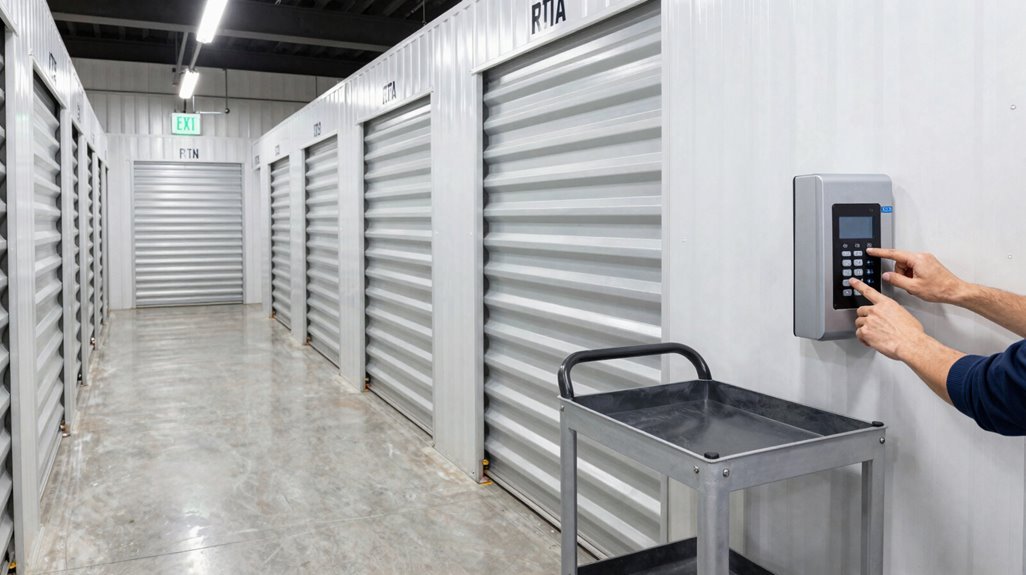
Wondering how you’ll actually secure that extra space? I’ve walked through this process myself, here’s how storage rental works.
1. Choose Your Unit
You’ll select dimensions—5×5, 10×10, or larger—based on what you’re stowing. Facilities offer climate-controlled or standard units.
Match your unit size to your stuff—climate control or standard, your call.
2. Sign the Rental Agreement
This contract locks in your monthly rate, payment schedule, and penalties for late fees. Read carefully; terms vary by location.
3. Receive Access and Security Credentials
You’ll get a gate code or electronic key fob. Purchase a disc lock—cut-resistant, weatherproof—for your unit door.
4. Move In
Load your belongings yourself, organizing strategically for retrieval.
Most agreements run month-to-month, though some require three-month minimums. Insurance? Check your homeowner’s policy first—off-site coverage isn’t automatic.
Self-Storage or Full-Service: Which Should You Choose?
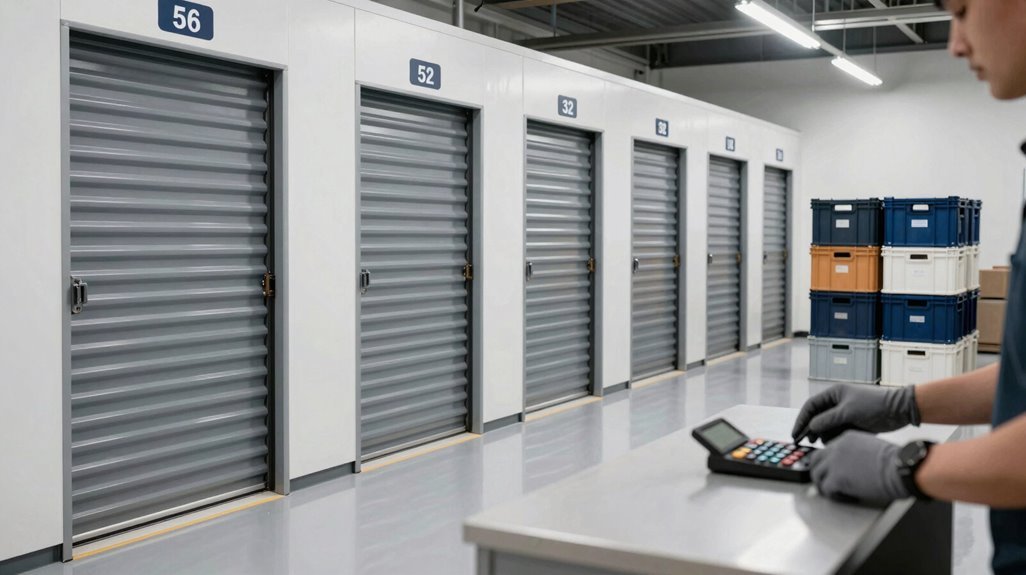
When I’m weighing storage solutions, I find myself torn between the hands-on accessibility of self-storage, where month-to-month flexibility and 10×10 foot units accommodate my car-loaded hauls, and the white-glove convenience of full-service options, which photograph my belongings for digital inventory while navigating Manhattan’s parking-starved streets. Self-storage rewards my DIY approach with lower costs and immediate retrieval, yet full-service eliminates the spatial constraints of my Brooklyn walk-up, dispatching crews to haul my sectional through narrow doorways.
Ultimately, my choice hinges on whether I prioritize architectural freedom, garage-adjacent roll-up doors, or urban adaptability, though both paths demand signed agreements and insurance verification before my possessions cross the threshold.
Self-Storage Advantages
Why settle for storage that doesn’t match your rhythm? I choose self-storage when I need control over my belongings without breaking my budget.
- Month-to-month freedom: I pay only for the months I need, with no long-term contracts locking me in
- 24/7 access on my schedule: I drive up, unlock my unit, and retrieve items whenever inspiration strikes
- Affordable square footage: I get more space per dollar, perfect for furniture, seasonal gear, or inventory
- DIY autonomy: I organize, stack, and document my own contents, building spatial memory of every box’s location
This flexibility suits my lifestyle. I value the architectural simplicity of roll-up doors and concrete floors; functional, honest spaces where I maintain full agency. When I need something at midnight, I don’t wait for a valet.
Full-Service Benefits
When convenience commands my calendar, I pivot toward full-service storage: a valet-style system where logistics dissolve into background noise. I choose this path when belonging to a seamless lifestyle matters more than pinching pennies.
Effortless Transportation. Full-service teams retrieve my belongings from my doorstep, hauling them through narrow vestibules and freight elevators; no rental truck, no loading dock anxiety. I remain present in my space while professionals navigate the urban fabric.
Adaptive Scheduling. I coordinate move-in and move-out through digital portals, selecting windows that respect my commitments. The provider orchestrates timing, turning potential conflicts into synchronized precision.
Digital Inventory Management. Photographed catalogs and searchable databases let me locate my grandmother’s mahogany credenza without unsealing a single crate. I access my archive remotely, maintaining connection to my possessions across distance.
Urban Considerations
The calculus shifts when density defines your environment. When I weigh full-service vs self-storage in tight urban quarters, I’m measuring more than square footage: I’m calculating friction.
- Parking scarcity: Without dedicated loading zones, I’m fighting for curb space, metered spots, or double-parking risks that turn a simple drop-off into urban warfare.
- Transportation gaps: Lacking a vehicle or reliable ride-share access, I’m stranded between my apartment and the facility, watching storage access slip beyond reach.
- Vertical living constraints: Carrying heirlooms up five flights of pre-war stairs, I’m confronting the physical reality of DIY urban storage without elevators or dollies.
- Time economics: Trading premium rates for valet pickup, I’m buying back hours otherwise lost to traffic, permits, and the logistics of navigating dense street grids.
I choose self-storage when my building has freight elevators and street parking; I surrender to full-service when the city conspires against my independence.
Which Storage Unit Type Do You Need?
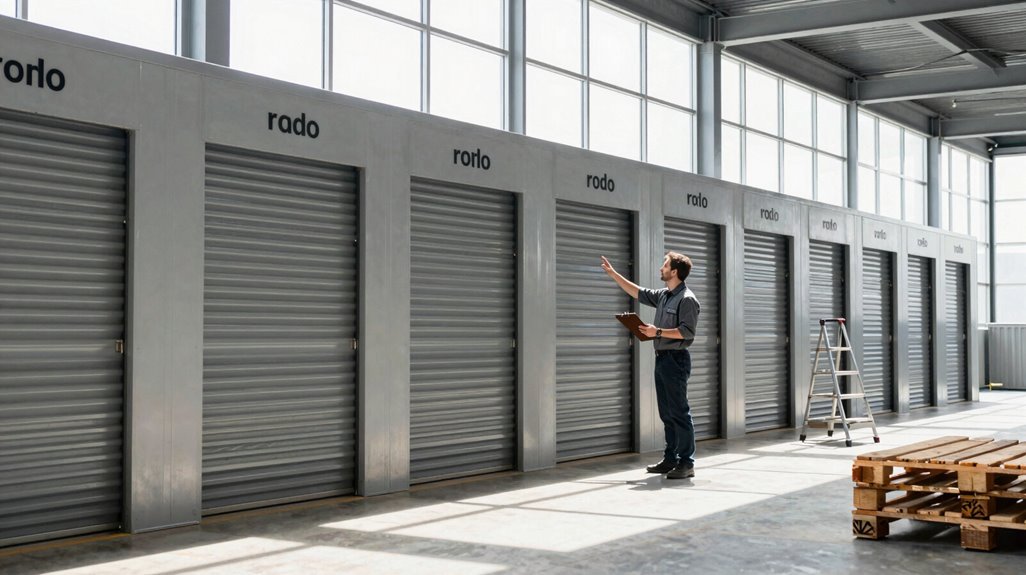
Selecting the right storage unit depends on what you’re storing, how often you’ll need access, and whether your belongings require environmental protection. I’ll walk you through these questions now.
- Climate-Controlled Units: Located within a building’s interior envelope, these maintain stable temperature and humidity levels. I recommend these for wooden furniture, electronics, documents, and textiles. These materials remain vulnerable to warping, mildew, or degradation. The masonry construction and HVAC integration provide superior security against both environmental fluctuations and unauthorized entry.
- Drive-Up Access Units: Offering ground-level, exterior-facing bays with roll-up metal doors, these prioritize convenience over environmental buffering. I find these ideal for contractors, seasonal equipment rotation, or bulk goods where atmospheric stability matters less than loading efficiency. Consider these for construction materials, patio furniture, or commercial inventory.
- Vehicle Storage: Purpose-built for automotive assets, ranging from open-air paved lots to fully enclosed garages with reinforced concrete pads. Whether sheltering a vintage coupe or an RV exceeding thirty feet, I’ve seen facilities accommodate virtually any chassis configuration.
What Size Storage Unit Fits Your Belongings?
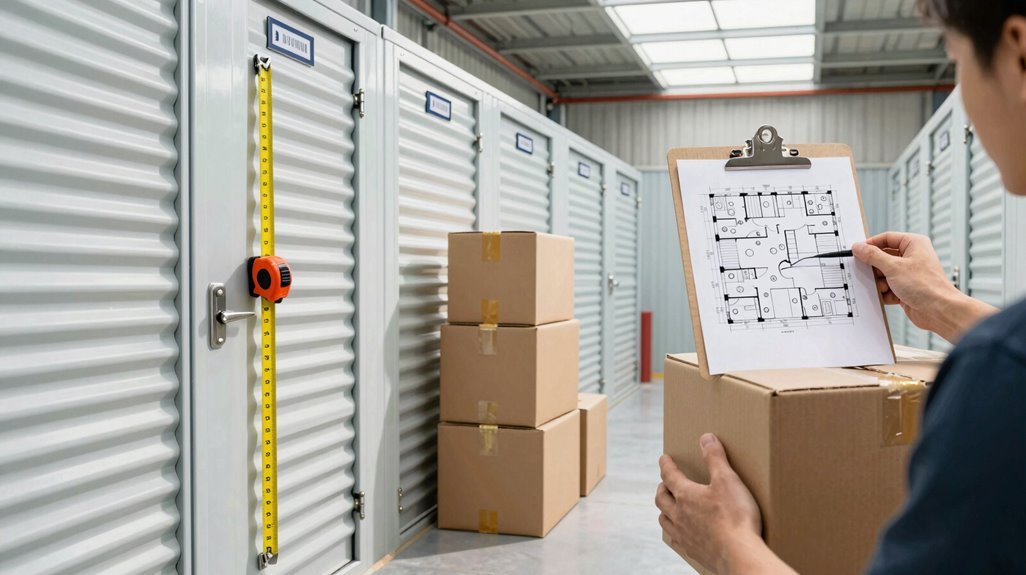
Every cubic foot you rent should earn its keep, which is why I’m starting our sizing conversation with tape measures, inventory spreadsheets, and a hard look at your future needs. I begin by cataloging every box, appliance, and furniture piece, those oddly shaped lamps, the sectional’s disassembled frame, creating a comprehensive inventory that reveals the true spatial footprint of my possessions.
- Measure twice, store once: I stack my inventory dimensions against a reliable size guide, comparing my pile to standard unit size offerings: 5×5 closets, 10×10 rooms, 10×30 garages, each with distinct cubic capacities.
- Doorway logistics matter: I’m factoring my rental truck’s clearance, ensuring my belongings slide from vehicle to vault without architectural friction.
- Expert validation helps: After my calculations, I’m consulting facility professionals who refine my unit size selection.
- Future-proofing counts: I’m reserving 15% extra capacity for the belongings I haven’t acquired yet, avoiding cramped vertical stacks.
How Much Does a Storage Unit Cost?
Someone’s monthly budget for storage, mine included, hinges on variables I can’t ignore once I’ve settled on square footage. Storage unit pricing reflects this interplay between size and duration, with most facilities offering monthly contracts that let me adapt as life shifts.
1. Base Rates and Structure
My unit’s cost scales with dimensions. Climate-controlled interiors command premiums over drive-up access, their HVAC systems preserving sensitive materials.
2. Flexibility in Commitment
Month-to-month arrangements dominate self-storage, though some operators impose minimum terms (three months, typically). Weekly options exist sporadically; check regional availability.
3. Beyond the Advertised Price
Late fees compound quickly; defaults risk denied entry and liens against stored property. I factor these contingencies into my architectural calculations of space and cost.
How Do Storage Contracts and Payments Work?
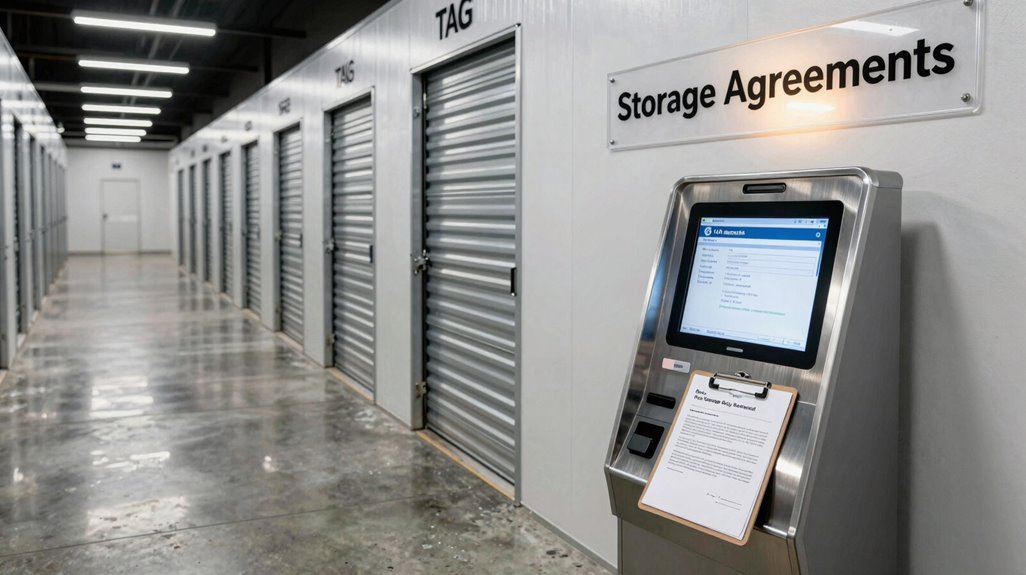
When I’m ready to commit to a storage unit, I’m not just leasing square footage; I’m entering a binding agreement that structures my access, my obligations, and my financial exposure over time. My storage rental typically operates month-to-month, though some facilities impose minimum terms; three months, perhaps, locking me into a defined temporal framework from my start date onward.
The rental agreement governs everything: rents, deposits, my rights and responsibilities, cancellation protocols, and value limits on stored goods. It restricts certain contents and defines access rules I must follow.
Payment falls due monthly on my agreement date, and missing it triggers a facility-specific late fee. Repeated failures risk lien enforcement, even auction of my possessions.
- Digital Convenience: I pay online, reserving and scheduling move-ins through web portals; this streamlines my engagement with the facility’s operational infrastructure.
- Climate Architecture: Indoor units offer controlled environments; HVAC systems maintain thermal stability, while outdoor drive-ups prioritize vehicular accessibility over environmental protection.
- Contract Literacy: I scrutinize every clause, understanding that this document binds me legally, shaping my spatial relationship for months ahead.
- Financial Discipline: I calendar my due dates, avoiding that punitive late fee through automated payments; this protects my belongings and my budget simultaneously.
What Security Features Should Your Storage Unit Have?
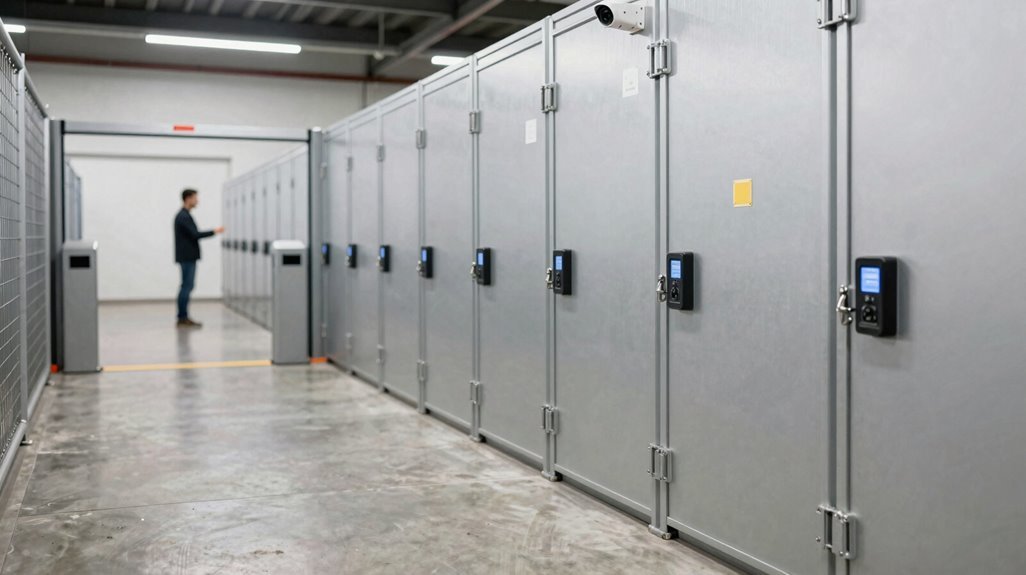
When I’m selecting a storage facility, I scrutinize its physical security architecture: fencing, lighting, and individual unit locks, alongside electronic surveillance networks and access control systems that regulate entry through coded gates or keycard readers. These three pillars; physical barriers, camera coverage, and restricted access; form the defensive perimeter protecting my belongings from unauthorized intrusion.
I’ll break down what each security layer actually does, where vulnerabilities typically hide, and how to evaluate a facility’s protective standards before signing any contract.
Physical Security Measures
Where exactly does your trust reside when you leave belongings behind a roll-up door? I find mine anchored in the layered architecture of modern facilities, where surveillance cameras sweep corridors in continuous arcs, access controls validate identity at every threshold, and perimeter security creates a fortified envelope around the entire property.
Gate-coded entry points: your unique credential opens one barrier while logging your presence; facilities near industrial zones favor this dual-function approach.
Fenced exteriors with strategic lighting: welded steel mesh (typically 8-foot height) eliminates shadowed hiding spots along property lines.
Climate-controlled interior halls: restricted-access corridors behind secondary locked doors, common in converted warehouse districts.
Mandatory lock standards: facilities increasingly require disc or cylinder locks, inspecting aisle clearances during routine rounds.
Surveillance Systems
Though I’ve already walked through the physical barriers protecting my belongings, I know cameras form the nervous system of any serious facility: capturing, recording, witnessing.
When I’m evaluating surveillance cameras, I don’t just glance at ceiling mounts and assume coverage. I ask pointed questions: where are the blind spots, how long do recordings persist, who monitors the feeds? These security measures create the architectural framework of trust I need before entrusting my possessions to strangers.
I verify that access control points, entry gates, elevator lobbies, corridor intersections, sit beneath unblinking lenses. I confirm perimeter fencing aligns with camera sightlines, eliminating shadowed recesses where intrusion might flourish unnoticed.
Before signing, I review posted protocols and request documentation of recording retention policies. Visible surveillance cameras, supplemented by on-site management and patrols, change a mere warehouse into a sanctuary where my belongings, and I, truly belong.
Access Control Options
How exactly does a facility decide who enters its gates, and when? I’ve learned that modern access control systems, gate codes, keycards, biometric readers, form the architectural backbone of secure storage, filtering visitors before they reach your unit.
- Gate codes : unique PINs assigned to each tenant, creating accountability trails while eliminating unauthorized entry
- Surveillance integration : cameras monitoring entry points, capturing license plates and facial data in real time
- Perimeter fencing : steel mesh barriers, typically 8–10 feet, establishing clear spatial boundaries around the facility
- Lighting infrastructure : LED arrays illuminating drive aisles, eliminating shadow zones where intrusion might occur
I always verify whether my location offers 24/7 access or restricted hours; some facilities lock down entirely overnight. Beyond the facility’s systems, I confirm my individual unit features robust locking mechanisms. Your belongings deserve this layered protection; we’re all seeking that sense of security within these concrete and steel envelopes.
What Can You Store (and Not Store)?
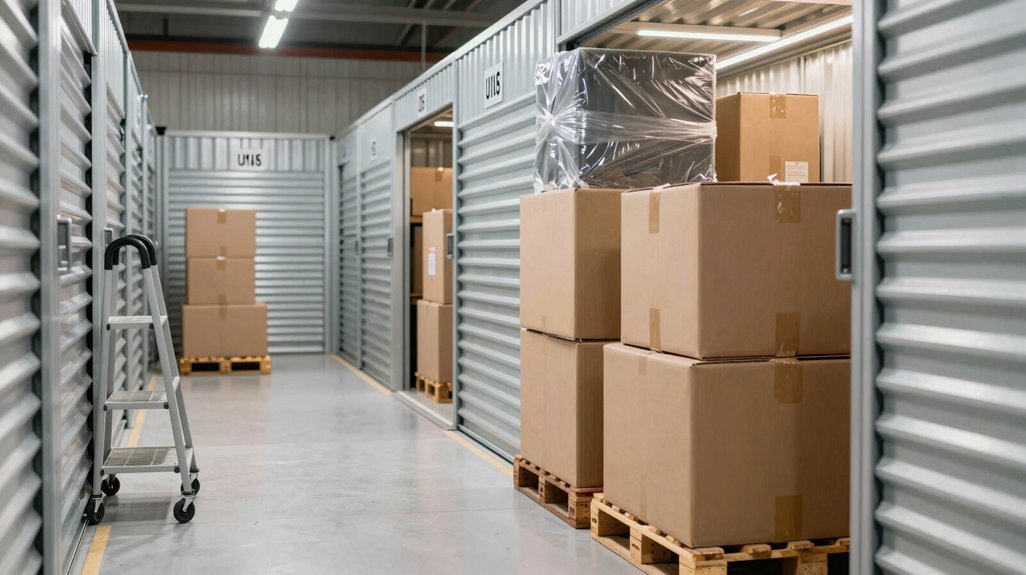
When I’m clearing out my home, I ask what actually belongs inside a storage unit, and what must stay out. Storage facilities welcome household goods, furniture, seasonal decorations, clothing, business equipment, documents, and inventory. For sensitive belongings, antique woodwork, electronics, photographs, I choose Climate Controlled units maintaining 65–85 degrees, protecting against warping and mildew.
- Permitted Items. My furniture, archived files, and recreational gear find shelter here. Specialized units accommodate vehicles, cars, RVs, boats, motorcycles, offering covered, drive-up access without temperature regulation.
- Prohibited Contents. I never store Illegal items, hazardous materials, perishables, or anything emitting strong odors. State and federal laws forbid living units or conducting business from these spaces.
- Climate Considerations. When preserving heirlooms or inventory, I prioritize Climate Controlled environments over standard outdoor units. Structural integrity depends on stable conditions.
How to Pack Your Storage Unit Properly
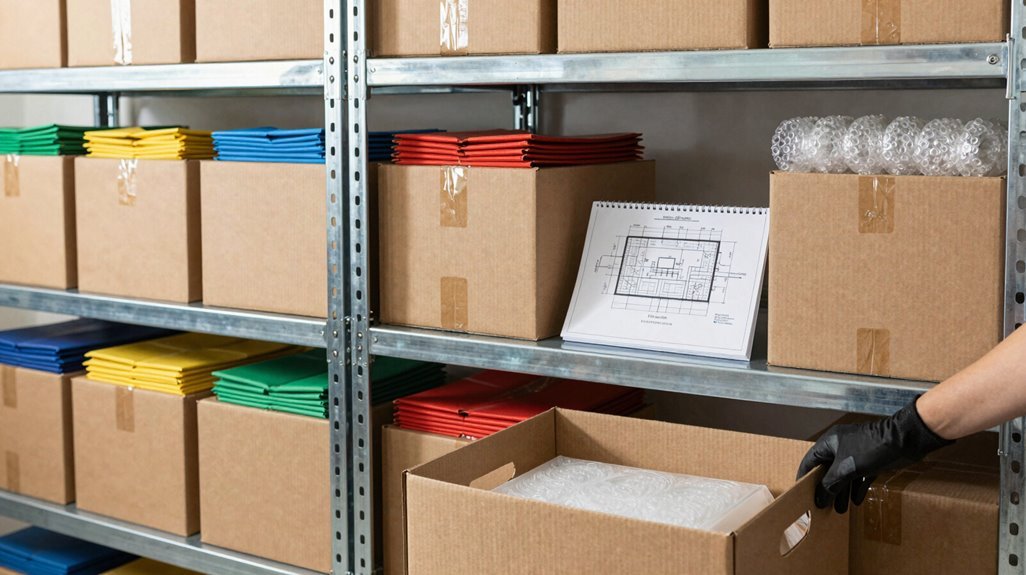
Where do I begin when transforming a jumbled collection of belongings into an organized, accessible archive? I start with smart packing, sealing every box against dust, wrapping furniture legs in protective padding, and building from the ground up.
- Foundation First: I place pallets beneath stored goods, allowing airflow while elevating the structural base of my unit’s inventory.
- Vertical Strategy: I position heavier items below, lighter and fragile items above; never stacking breakables atop one another.
- Spatial Efficiency: I maximize space utilization by filling dresser drawers and appliance cavities, reducing box count through integrated storage solutions.
- Access Architecture: I design a central aisle, positioning frequently needed items toward the front; creating navigable pathways through my personal archive.
I label everything clearly. I protect what matters.
Do You Need Storage Unit Insurance?
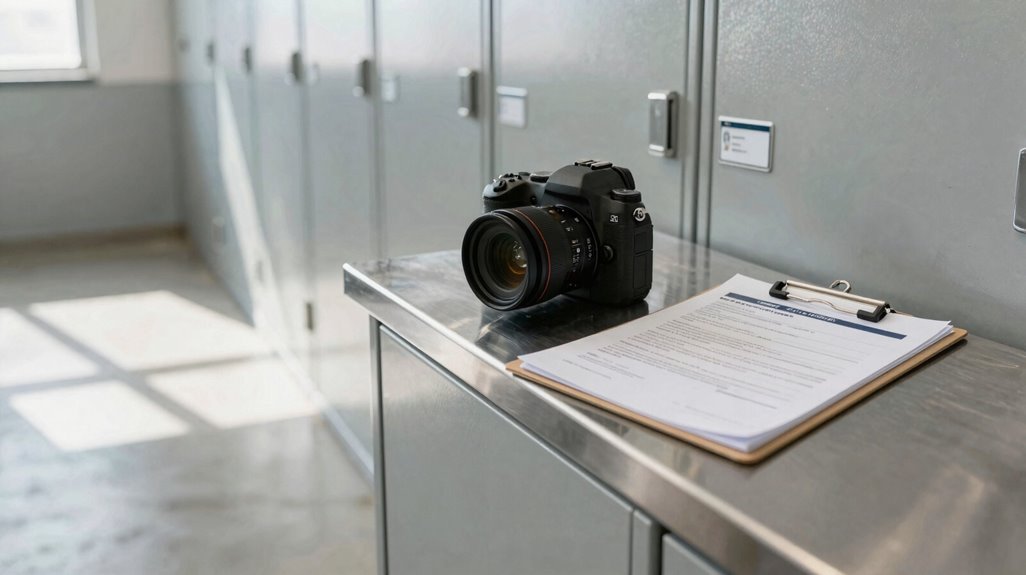
Once I’ve built my unit’s physical architecture, elevated foundations, vertical load distribution, and navigable access corridors, I confront the invisible infrastructure protecting everything inside.
1. Understanding Your Current Coverage
I review my homeowner’s or renter’s policy first. Most offer off-premises coverage limiting personal property to roughly 10% of total coverage, often insufficient for a fully furnished storage unit. I call my agent, discussing deductibles, exclusions, and replacement-value clauses before committing.
2. Evaluating Facility Options
Many facilities provide affordable self-storage insurance, convenient, but I compare terms carefully. I examine per-item limits, theft protection, and climate-related damage clauses alongside external providers.
3. Securing Adequate Protection
I calculate total replacement costs: furniture, documents, heirlooms, ensuring my insurance matches actual value, not just monthly premiums. This coverage transforms my unit from vulnerable space into a true extension of home.
How to Move Your Belongings Into Storage

The shift from secured, insured space to fully utilized storage demands strategic choreography: mapping every cubic foot before a single box crosses the threshold. I begin my storage unit reservation by cataloging every item; boxes, appliances, furniture; seeking professional size recommendations to avoid cramped quarters or wasted vertical volume. The move-in process crystallizes once I select my method: DIY packing and loading with my own vehicle, or delegating to full-service movers who understand spatial efficiency.
Reserve your unit online or in person, securing a durable lock and verifying insurance requirements before your move-in date arrives. Design your packing plan with a central aisle; keep frequently accessed belongings near the threshold, repurposing dresser drawers as auxiliary compartments. Inspect the unit’s condition upon arrival, documenting any discrepancies before unloading begins. Verify door codes, unit dimensions, and precise location within the facility’s architectural layout.
On move-in day, I confirm every detail; measurements, materials, access protocols; making sure my belongings find their proper place within this communal infrastructure of transitional spaces.